
For people on a GLP-1 medication, the best calorie counting app is one that makes logging quick, shows protein and water as clearly as calories, and keeps doses and side effects in the same place. Appetite is often lower on these drugs, so the risk is usually eating too little of the right foods, not too much. A calorie total alone can’t show that. This guide covers what to look for, and why.
GLP-1 medications slow how quickly the stomach empties, and many people feel less hungry and eat smaller meals as a result (Cleveland Clinic). That changes what you need from a food log. Your prescriber decides your medicine and dose; an app only helps you keep a record you can bring to appointments.
Why tracking food on a GLP-1 is different
Counting calories for a drug that lowers appetite is not the usual “eat less” exercise. Three things change:
- Meals get smaller. Cleveland Clinic notes that a stomach that empties more slowly has less room for a large meal, and eating too much can bring on nausea and reflux (Cleveland Clinic).
- Protein is easy to miss. A Cleveland Clinic endocrinologist advises prioritizing protein and working with a dietitian to set how much you need, because lower hunger can make it hard to eat enough (Cleveland Clinic). We don’t give a gram target here, since it depends on your body and health.
- Fluids can slip. The same Cleveland Clinic article warns that when you’re less driven to eat, you may also forget to drink. The Wegovy label also reports cases of acute kidney injury, mostly in people who became dehydrated from nausea, vomiting or diarrhea (Wegovy prescribing information, section 5.5).
Real-world results vary a lot: a Cleveland Clinic study of people prescribed semaglutide or liraglutide found long-term weight change differed by the drug, the reason it was prescribed, the dose and how long people stayed on it (Cleveland Clinic newsroom). Logging helps you see your own pattern rather than an average.
What to look for in a calorie counting app
Quick, low-effort logging
If a meal takes minutes to enter, most people stop. When you’re eating small portions, a ten-minute entry for a few bites feels pointless. Look for an app that lets you re-use recent meals, scan a barcode, or describe a meal in a sentence, whichever you will actually keep doing. Consistency over weeks matters more than precision in any single entry.
Protein, not just calories
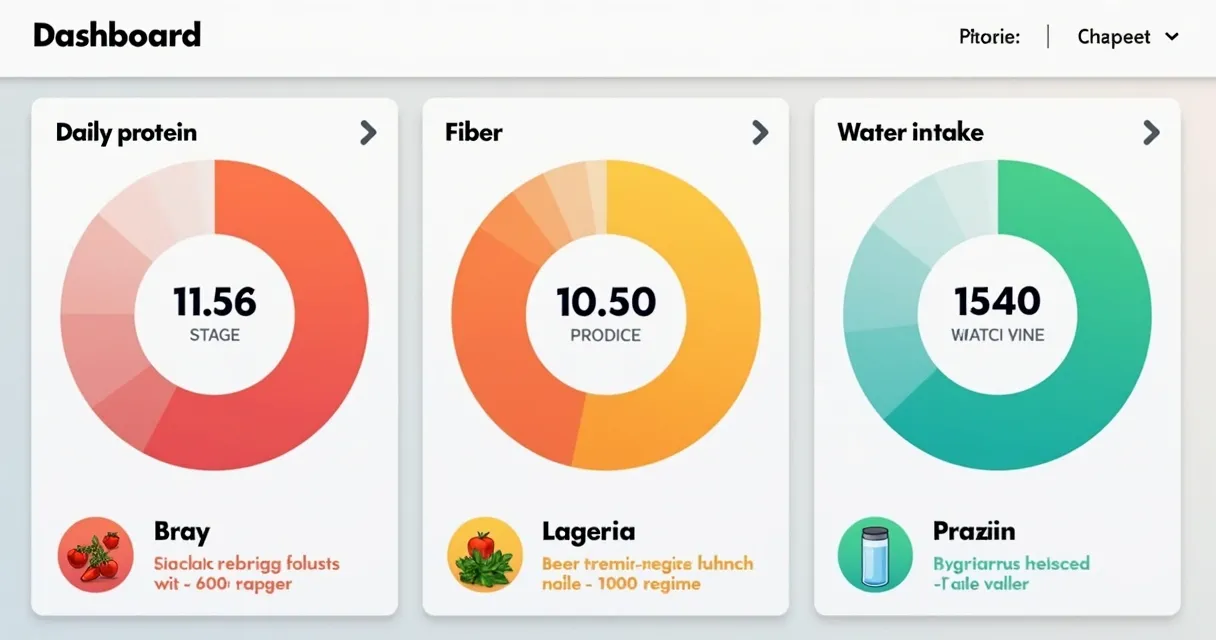
A calorie total can look “right” while protein is low. Choose an app where protein is visible per meal and per day, and use the number to talk with your prescriber or a dietitian, not as a target to chase on your own. Our guide to tracking GLP-1 weight loss covers what else is worth logging.
Water and fiber
Hydration is part of managing digestive side effects, and Cleveland Clinic suggests sipping through the day and setting reminders if you forget. It also advises being careful with fiber right after a dose if you already feel bloated (Cleveland Clinic).
Doses and side effects in the same place
Food is only one part of the picture. Many people also want to log the injection day and dose, how they felt afterwards, and their weight. Seeing these side by side shows you things like “nausea after a high-fat dinner two days after my shot”, which is exactly what you can take to your prescriber. For a full list of effects and when to call a clinician, see GLP-1 side effects: what to expect and how to manage them.
Calories, protein and meal size: how the pieces fit
| What you log | Why it helps on a GLP-1 |
|---|---|
| Meals and portions | Shows how much you are actually eating when appetite is low |
| Protein per day | Helps you and your dietitian check that you are not under-eating protein |
| Water and other fluids | Makes dehydration easier to catch before it worsens side effects |
| Injection day and dose | Lets you line up symptoms with dose changes |
| Side effects and timing | Gives your prescriber specifics instead of “I felt sick sometimes” |
| Weight, measured the same way | Shows the trend; single days are noisy |
Keep the habit kind
Tracking food can make some people anxious about numbers. The WHO’s 2025 guideline on GLP-1 medicines says that structured behavioral support, including healthy diet and physical activity, may be offered alongside the medication, and rates the evidence for that as low-certainty (WHO). Treat your log as information, not a score. If counting makes eating feel stressful, tell your care team and ask for another approach. A weekly look at trends is enough for most people.
Check how an app treats your health data
Weight, medications and eating habits are sensitive. Before you commit to any tracker, read its privacy policy: what is stored on your device and what is sent to a server, whether you can export or delete your data, and whether it is shared with advertisers.
Where Mingo fits
Mingo is a GLP-1 tracker for iPhone and Android where you can log shots and doses, food and protein, side effects and weight in one place. It doesn’t replace your doctor or give medical advice. Get the app if you want a single log to bring to appointments, or read how a food tracker built around GLP-1 support can fit your routine.
Key takeaways
- On a GLP-1, the useful food log shows protein, water and meal size, not only calories.
- Logging has to be fast enough to survive small meals and low appetite.
- Keep doses, side effects and weight next to food so patterns are visible.
- Ask your prescriber or a dietitian for protein and fluid targets; don’t guess.
- Check any app’s privacy policy before you enter health data.
Frequently asked questions
What is the best calorie counting app for GLP-1 users?
There isn’t one best app for everyone. Look for fast logging, visible protein and water, and a way to record doses and side effects alongside food. Try an app for a couple of weeks and keep the one you actually open every day.
Do I need to count calories on a GLP-1?
Not necessarily. Some people log only protein and water, or only a few meals, and that can still help. Ask your prescriber or dietitian what level of tracking suits your situation.
How much protein should I eat on a GLP-1?
It depends on your age, weight, activity and health, so we don’t give a number here. Cleveland Clinic recommends working with a dietitian to find the right amount, and eating protein first at meals if you fill up quickly.
How accurate are calorie tracking apps?
Accuracy depends on the food database and on how carefully you estimate portions. Even careful logs are approximate, so look at weekly trends rather than treating one day’s total as exact.
Can a tracking app replace medical advice?
No. An app gives you a record. Dose changes, side effects and anything that worries you belong with your prescriber.


