
Zepbound contains tirzepatide, which activates both the GIP and GLP-1 receptors. Wegovy contains semaglutide, which activates the GLP-1 receptor. Both are once-weekly injections approved for weight management in adults. In the one head-to-head randomized trial, tirzepatide produced more weight loss than semaglutide at 72 weeks (-20.2% vs -13.7%) in adults with obesity without diabetes (SURMOUNT-5, NEJM 2025). Which one suits you is a decision for you and your prescriber.
Below is a side-by-side look at Zepbound vs Wegovy based on the FDA-approved prescribing information. It is general information, not medical advice.
At a glance
| Zepbound | Wegovy (injection) | |
|---|---|---|
| Active ingredient | tirzepatide | semaglutide |
| How it works | GIP and GLP-1 receptor agonist | GLP-1 receptor agonist |
| Maker | Eli Lilly | Novo Nordisk |
| Approved uses | Weight reduction and long-term maintenance in adults with obesity, or with overweight plus a weight-related condition; moderate to severe obstructive sleep apnea in adults with obesity | Weight reduction and long-term maintenance (adults and ages 12+ with obesity; adults with overweight plus a condition); lowering major cardiovascular event risk in adults with established CV disease and obesity or overweight; MASH with moderate to advanced fibrosis |
| Schedule | Once weekly | Once weekly |
| Start dose | 2.5 mg for 4 weeks | 0.25 mg for 4 weeks |
| Titration | Raise by 2.5 mg after at least 4 weeks | Steps 0.5, 1, 1.7 mg every 4 weeks |
| Maintenance dose | 5, 10 or 15 mg | 1.7 mg or 2.4 mg (2.4 recommended); up to 7.2 mg if more weight reduction is indicated |
| Forms | Pens, single-dose and multi-dose vials, KwikPen | Single-dose pens and syringes, FlexTouch pen |
Sources: Zepbound prescribing information, sections 1, 2.1, 2.2 and 3; Wegovy prescribing information, sections 1, 2.2 and 3. Wegovy is also available as a daily tablet; see Wegovy pill: use, benefits and side effects.
How they work
Both drugs mimic gut hormones that affect appetite and blood sugar, and both delay gastric emptying. The labels warn that this can change the absorption of other oral medicines. Tirzepatide acts on two receptors, GIP and GLP-1, while semaglutide acts on GLP-1 alone (Zepbound label, section 1; Wegovy label, section 1). Whether the second receptor explains the difference in results is a question for researchers; the labels do not claim it.
For more on the semaglutide side, see Ozempic vs Wegovy, and for tirzepatide, see tirzepatide weekly injection.
What the trials show
Head to head. SURMOUNT-5 randomized 751 adults with obesity but without type 2 diabetes to the maximum tolerated dose of tirzepatide (10 or 15 mg) or semaglutide (1.7 or 2.4 mg) once weekly. At 72 weeks the average weight change was -20.2% with tirzepatide and -13.7% with semaglutide, and waist circumference fell by 18.4 cm versus 13.0 cm. Gastrointestinal events were the most common adverse events in both groups, mostly mild to moderate and mainly during dose escalation. The trial was open-label and funded by Eli Lilly (PubMed). A 2026 meta-analysis of 12 studies also found greater weight loss with tirzepatide, with high heterogeneity and some observational data limiting conclusions (PubMed).
Each label’s own trials. These come from separate placebo-controlled trials, so they are not directly comparable:
- Zepbound, Study 1 (no type 2 diabetes): average change from baseline of -15.0%, -19.5% and -20.9% at 5, 10 and 15 mg at 72 weeks, versus -3.1% with placebo (Zepbound label, Table 2).
- Wegovy 2.4 mg, Study 2 (no type 2 diabetes): -14.9% at 68 weeks versus -2.4% with placebo (Wegovy label, Table 8).
- In people with type 2 diabetes, weight loss is lower in both programs: Zepbound -12.8% and -14.7% at 10 and 15 mg versus -3.2% placebo (Study 2), and Wegovy -9.6% versus -3.4% (Study 3).
Individual results vary widely. All of these trials included diet and activity counseling.
Approved uses
The main difference in labeled uses: Zepbound lists weight reduction and moderate to severe obstructive sleep apnea in adults with obesity. Wegovy lists weight reduction, a cardiovascular risk reduction indication in adults with established cardiovascular disease and obesity or overweight, and a MASH indication (approved under accelerated approval, which depends on confirmatory evidence). Wegovy is also approved for weight reduction in ages 12 and older with obesity. For weight reduction, both labels cover adults with obesity, or with overweight plus at least one weight-related condition.
Dosing and missed doses
Both start low and step up, which the labels say is to lower the risk of stomach side effects. Wegovy’s escalation runs 0.25, 0.5, 1 and 1.7 mg at 4-week steps before maintenance; Zepbound rises 2.5 mg at a time after at least 4 weeks. See the Zepbound dosage schedule for the full table.
Missed-dose rules differ, so follow the label for your drug:
- Zepbound: take it as soon as possible within 4 days (96 hours); after that, skip it (label, section 2.3).
- Wegovy injection: if the next dose is more than 2 days away, take it as soon as possible; if less than 2 days away, skip it. If two or more consecutive doses are missed, the label says to restart escalation at a lower dose (label, section 2.4).
Side effects compared
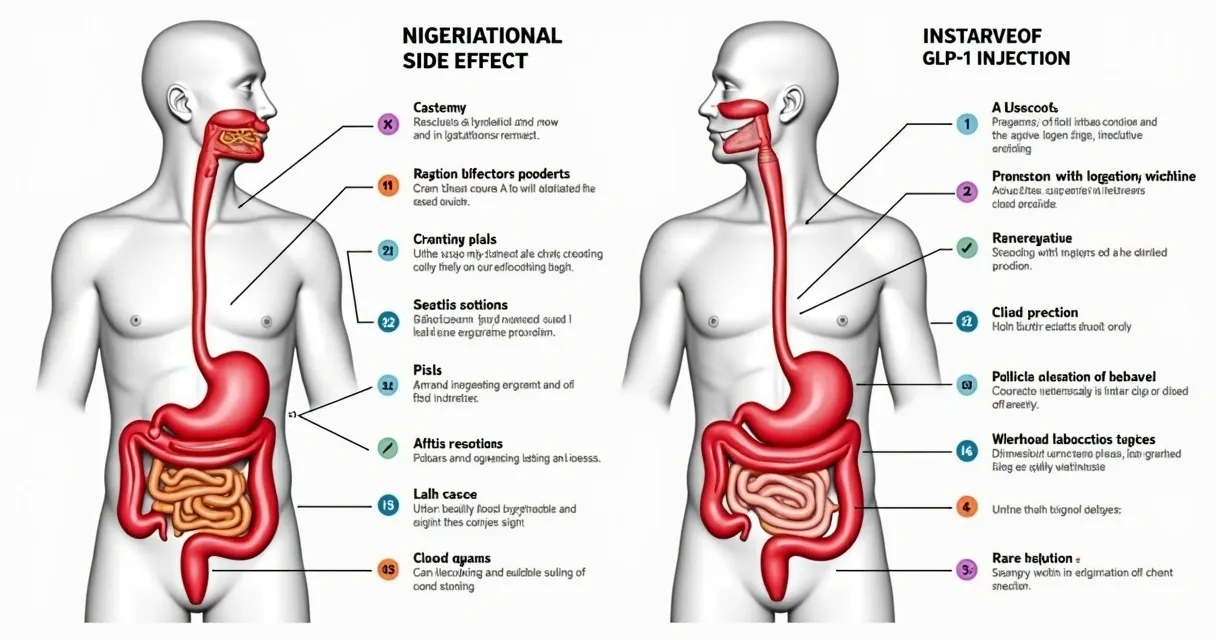
Both are most commonly associated with gastrointestinal reactions. The two labels report them from different trial pools, so use the numbers as a rough guide, not a ranking:
| Reaction | Zepbound 5 / 10 / 15 mg | Placebo | Wegovy 2.4 mg | Placebo |
|---|---|---|---|---|
| Nausea | 25% / 29% / 28% | 8% | 44% | 16% |
| Diarrhea | 19% / 21% / 23% | 8% | 30% | 16% |
| Vomiting | 8% / 11% / 13% | 2% | 24% | 6% |
| Constipation | 17% / 14% / 11% | 5% | 24% | 11% |
Sources: Zepbound label, Table 1; Wegovy label, Table 3.
Both labels carry a boxed warning about thyroid C-cell tumors seen in rodents, and both contraindicate use with a personal or family history of medullary thyroid carcinoma or MEN 2. Both list acute pancreatitis, acute gallbladder disease, acute kidney injury from dehydration, severe gastrointestinal reactions, hypersensitivity and diabetic retinopathy complications among their warnings. Talk to your prescriber if you have any of these conditions, and seek care for severe abdominal pain, repeated vomiting or signs of dehydration. More in GLP-1 side effects: what to expect and how to manage them.
Cost, access and switching
Prices depend on country, insurance and programs, and they change often, so we do not quote figures. Ask your prescriber and pharmacist what is covered for you. If you are considering switching from one drug to the other, do it only with your prescriber: we did not find a switching protocol between Zepbound and Wegovy in either label, so your prescriber decides the starting dose and follow-up.
Tracking your treatment
Whichever you use, a record helps: the date and dose of each shot, side effects after dose changes, food and protein, and weight. Mingo is a GLP-1 tracker for iPhone and Android that logs shots and doses, food and protein, side effects and weight in one place. It does not replace your doctor. Get the app.
Key takeaways
- Zepbound is tirzepatide (GIP and GLP-1); Wegovy is semaglutide (GLP-1). Both are weekly injections for weight management.
- In the head-to-head SURMOUNT-5 trial, tirzepatide produced more weight loss than semaglutide at 72 weeks (-20.2% vs -13.7%).
- Labeled uses differ: Zepbound adds sleep apnea; Wegovy adds cardiovascular risk reduction and MASH.
- Dosing steps and missed-dose rules differ, so follow the label for your drug.
- Side effects are mostly gastrointestinal and similar in kind. Your prescriber helps you choose.
Frequently asked questions
What is the difference between Zepbound and Wegovy?
Zepbound (tirzepatide) activates GIP and GLP-1 receptors; Wegovy (semaglutide) activates GLP-1 receptors. Their approved uses, dosing steps and missed-dose rules also differ. Both are once-weekly injections used with diet and activity.
Which is more effective for weight loss?
In the head-to-head SURMOUNT-5 trial in adults with obesity without type 2 diabetes, average weight loss at 72 weeks was greater with tirzepatide (-20.2%) than with semaglutide (-13.7%). Individual results vary, and the right drug depends on your health and tolerance.
What are the side effects of each?
Both mostly cause gastrointestinal effects such as nausea, vomiting, diarrhea and constipation, most often during dose escalation. Both labels also warn about pancreatitis, gallbladder disease, dehydration affecting the kidneys and thyroid C-cell tumors in rodents. Report severe or lasting symptoms to your prescriber.
How much do Zepbound and Wegovy cost?
It depends on your country, insurance and pharmacy, and prices change. Ask your prescriber and pharmacist about coverage for the specific drug and dose.
Can I switch from Wegovy to Zepbound?
Only with your prescriber. We did not find a switching protocol in either label, so your prescriber will choose the starting dose and plan follow-up.


