
One molecule, several medicines
Semaglutide is the active ingredient in several medicines from Novo Nordisk that differ in what they’re approved for, how they’re taken and the doses used. In the US today there are two weekly injections and three daily tablets:
| Medicine | Form | Approved for | Doses |
|---|---|---|---|
| Ozempic | Weekly injection | Type 2 diabetes (blood sugar, heart and kidney risk) | 0.25, 0.5, 1, 2 mg |
| Wegovy | Weekly injection | Weight reduction, heart-risk reduction, MASH | 0.25 to 2.4 mg; 7.2 mg for some adults |
| Wegovy pill | Daily tablet | Weight reduction, heart-risk reduction | 1.5, 4, 9, 25 mg |
| Rybelsus | Daily tablet | Type 2 diabetes | 3, 7, 14 mg |
| Ozempic tablets | Daily tablet | Type 2 diabetes | 1.5, 4, 9 mg |
Sources: Ozempic, Wegovy and Rybelsus and Ozempic tablets prescribing information. “Ozempic tablets” is the name given in January 2026 to the newer oral formulation that had been sold as Rybelsus; the original Rybelsus tablets remain, and the two aren’t substitutable milligram for milligram (FDA letter).
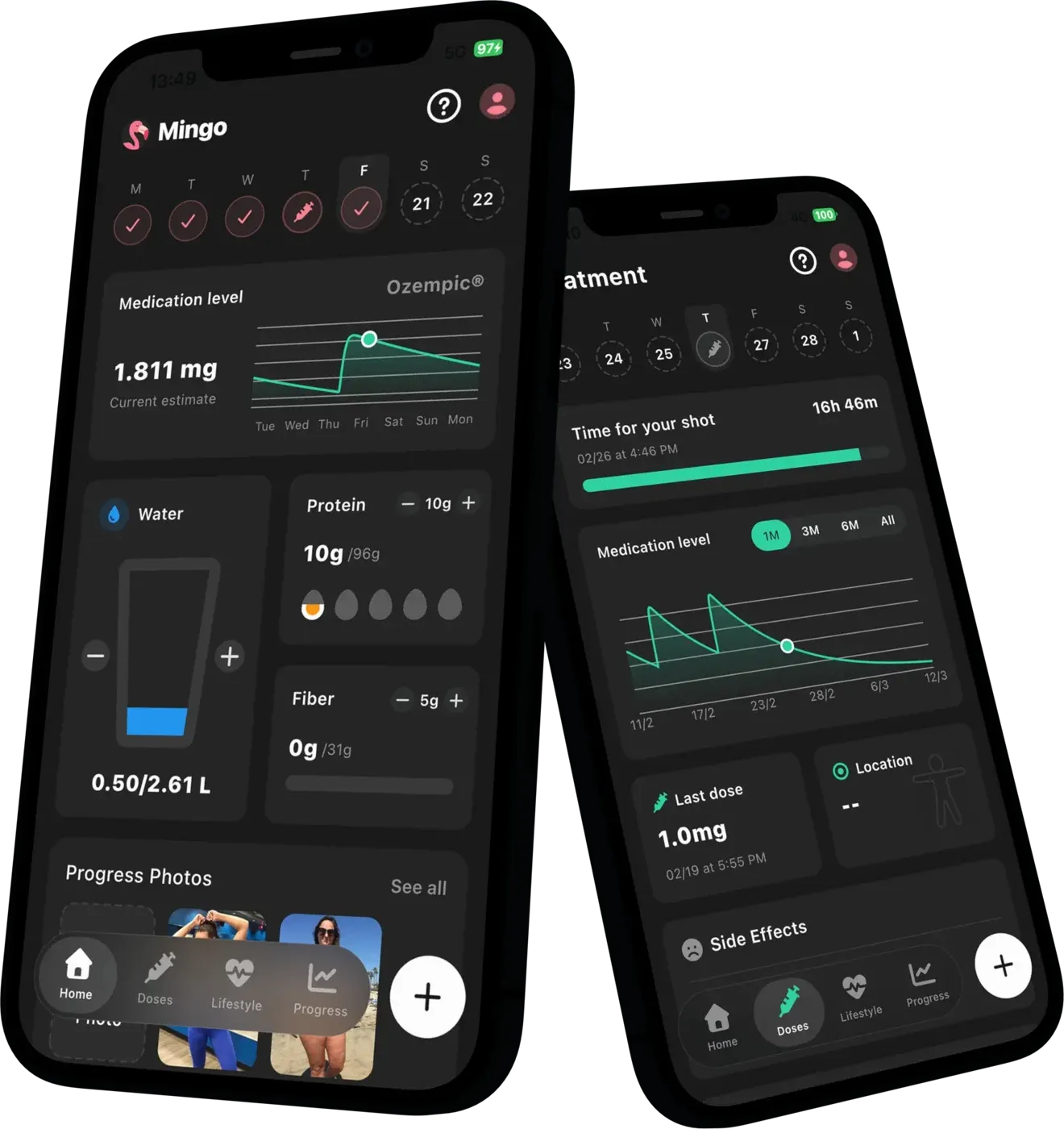
Whichever one you take, the molecule’s half-life is about one week, which is why the injections are weekly and why semaglutide stays in the body for weeks after the last dose. Mingo uses that half-life to draw its estimated medication-level curve from the doses you log.
Weekly shots: what to log
For Ozempic and Wegovy, log the dose and the site each week. Both labels set four-week steps: 0.25 mg to start, then up to 0.5 mg and beyond as your prescriber decides. For the full schedules, see our Ozempic tracker and Wegovy tracker pages. Side effects are mostly digestive and tend to follow the shot and each dose increase: in the Wegovy weight-loss trials, nausea affected 44% of people on 2.4 mg against 16% on placebo (Wegovy prescribing information).
Daily tablets: the morning routine
Oral semaglutide only works well if it’s taken the same careful way every morning. The labels for the Wegovy pill, Rybelsus and Ozempic tablets share the same rules: take one tablet on an empty stomach in the morning, with no more than 4 ounces of plain water, swallow it whole, and wait at least 30 minutes before eating, drinking anything else or taking other oral medicines. If you miss a tablet, skip it and take the next one the following day.
In Mingo, set the schedule to every day and choose a time that fits your morning. The reminder arrives then, and a nudge two hours later tells you if the dose wasn’t logged. Our guides to the Wegovy pill and Rybelsus cover each tablet in detail.
Compounded semaglutide
Some people use semaglutide made by a compounding pharmacy. The FDA states that compounded drugs are not FDA-approved, meaning the agency doesn’t review them for safety, effectiveness or quality before they’re sold (FDA). The FDA declared the semaglutide injection shortage resolved on February 21, 2025, and the temporary flexibility it had given compounders has since ended (FDA).
Mingo lists compounded semaglutide so your log is accurate, and accepts any dose in milligrams. It doesn’t convert syringe units or concentrations; that math belongs to your pharmacist and prescriber.
Switching between semaglutide medicines
People move from Ozempic to Wegovy, from the injection to the pill, or from Rybelsus to Ozempic tablets. The labels give specific switching rules, for example starting the 25 mg Wegovy tablet one week after the last 2.4 mg injection, and they all depend on your prescriber’s decision. In Mingo, change the medication in your treatment settings and keep logging: the timeline keeps your whole history, so the effect of the switch on side effects and weight is visible in one chart.
What Mingo doesn’t do
Mingo doesn’t recommend a brand, a dose or a switch, and it doesn’t convert between oral and injected doses. Its medication-level curve is calculated, not measured. It’s a record of what you took and how you felt, made to be shared with the people who prescribe your treatment.


