
One molecule, two brands
Tirzepatide acts on two hormone receptors, GIP and GLP-1, where semaglutide acts on one. Eli Lilly sells it under two names with the same strengths and the same weekly schedule, approved for different uses (Mounjaro and Zepbound prescribing information):
| Mounjaro | Zepbound | |
|---|---|---|
| US approval | Type 2 diabetes; heart-risk reduction in type 2 diabetes | Weight management; obstructive sleep apnea with obesity |
| Starting dose | 2.5 mg | 2.5 mg (starting only) |
| Maintenance | 2.5 to 15 mg | 5, 10 or 15 mg (weight); 10 or 15 mg (sleep apnea) |
| Missed dose | Within 4 days | Within 4 days |
Outside the US the picture changes: in the UK and the European Union, Mounjaro is also authorised for weight management (EMA). For the details of each brand, see our Mounjaro tracker and Zepbound tracker pages.
Six dose steps, four weeks apart
Every tirzepatide treatment starts at 2.5 mg once a week. The dose can then rise by 2.5 mg, each step after at least four weeks on the current dose, up to 15 mg. That makes six possible doses, and your prescriber decides how many of them you need. Side effects tend to rise with the dose: in the Zepbound weight-reduction trials, nausea affected 25%, 29% and 28% of people on 5, 10 and 15 mg, against 8% on placebo (Zepbound prescribing information).
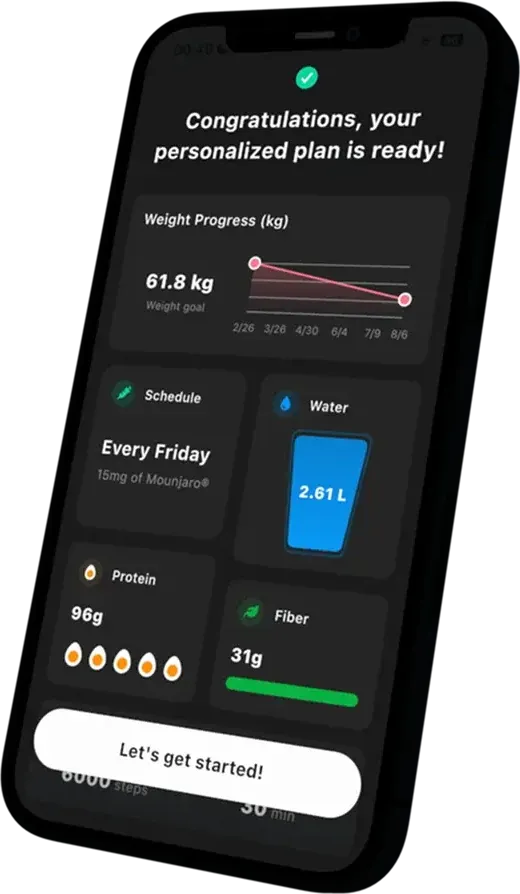
That’s why a dose-by-dose record is useful. Mingo saves the dose with every shot and colors the weight chart by dose, so after a few months you can see which step brought the most change and which one brought side effects. The labels also advise people on birth control pills to switch to a non-oral method, or add a barrier method, for 4 weeks after starting and after each dose increase, so the dates of your increases matter for that too.
What the trials found
In SURMOUNT-1, adults with obesity lost on average 15.0%, 19.5% and 20.9% of their body weight after 72 weeks on 5, 10 and 15 mg, against 3.1% on placebo (Jastreboff et al., NEJM 2022). In SURMOUNT-5, which compared the highest tolerated doses of tirzepatide and semaglutide, the averages were 20.2% and 13.7% after 72 weeks (Aronne et al., NEJM 2025). Those are group averages; your log shows your own trend. Our tirzepatide guide explains how the medicine works.
Pens, KwikPens, vials and compounded tirzepatide
Mounjaro and Zepbound come as single-dose pens and single-dose vials, and as KwikPens and multi-dose vials that hold four weekly doses. Single-dose pens and vials can be kept out of the refrigerator, up to 30 °C (86 °F), for a total of 21 days; a KwikPen or multi-dose vial is discarded 30 days after first use or after four doses.
Some people use tirzepatide from a compounding pharmacy. The FDA states that compounded drugs are not FDA-approved and that it doesn’t review them for safety, effectiveness or quality (FDA). It declared the tirzepatide injection shortage resolved in December 2024, and the temporary flexibility it had given compounders has ended (FDA). Mingo lists compounded tirzepatide and accepts any dose in milligrams, but it doesn’t convert syringe units or concentrations.
What Mingo doesn’t do
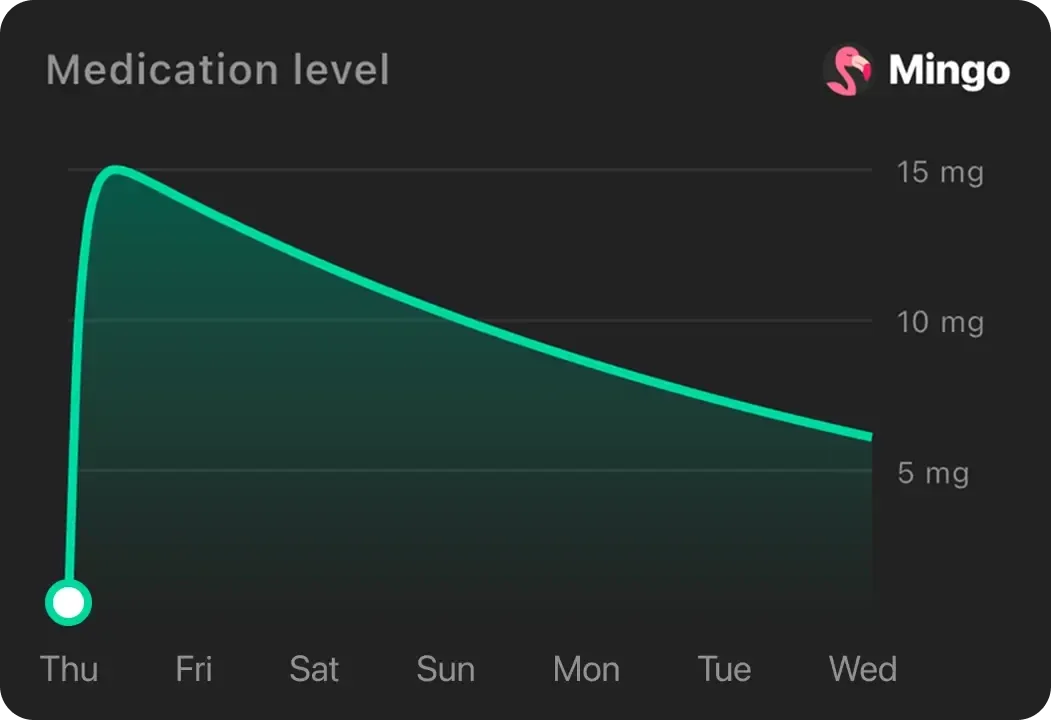
Mingo doesn’t pick your brand or dose, doesn’t do unit conversions and doesn’t measure tirzepatide in your blood: the level curve is calculated from the doses you log. It keeps the record of doses, symptoms, food and weight that helps you and your prescriber decide.


