
How is Ozempic started and increased?
Ozempic starts at 0.25 mg once a week for four weeks. That first dose helps the body get used to the medicine; the label says it isn’t meant to control blood sugar. After four weeks it goes up to 0.5 mg, and from there your prescriber decides whether you need more (Ozempic prescribing information):
| Step | Weekly dose | When |
|---|---|---|
| Start | 0.25 mg | Weeks 1 to 4 |
| Usual dose | 0.5 mg | From week 5 |
| If more control is needed | 1 mg | After at least 4 weeks on 0.5 mg |
| If still more is needed | 2 mg (maximum) | After at least 4 weeks on 1 mg |
People with type 2 diabetes and chronic kidney disease usually stay at 1 mg, after at least four weeks on 0.5 mg. Because each step lasts weeks, a simple log of the date you started each dose answers the question most appointments begin with: “how long have you been on this dose?”
What is Ozempic approved for?
In the US, Ozempic is approved for adults with type 2 diabetes. The label lists three uses: improving blood sugar along with diet and exercise, lowering the risk of heart attack, stroke and cardiovascular death in people with type 2 diabetes and heart disease, and, since January 2025, lowering the risk of kidney decline, kidney failure and cardiovascular death in people with type 2 diabetes and chronic kidney disease (FDA approval letter).
Ozempic isn’t approved for weight loss. The same medicine, semaglutide, is sold for weight reduction as Wegovy, with a different dose schedule (Wegovy prescribing information). Our Ozempic vs Wegovy guide explains the differences, and our Wegovy tracker page covers that medicine.
There is also a tablet: since January 2026, the newer formulation of oral semaglutide for type 2 diabetes is called Ozempic tablets, taken once a day in 1.5, 4 or 9 mg (Rybelsus and Ozempic tablets prescribing information). The original Rybelsus tablets (3, 7 and 14 mg) are a separate product, and the two aren’t interchangeable milligram for milligram.
Which Ozempic side effects should you track?
In the placebo-controlled type 2 diabetes trials, digestive effects were the most common, and they were more frequent at the higher dose (Ozempic prescribing information, adverse reactions table):
| Side effect | Placebo | Ozempic 0.5 mg | Ozempic 1 mg |
|---|---|---|---|
| Nausea | 6.1% | 15.8% | 20.3% |
| Vomiting | 2.3% | 5.0% | 9.2% |
| Diarrhea | 1.9% | 8.5% | 8.8% |
| Abdominal pain | 4.6% | 7.3% | 5.7% |
| Constipation | 1.5% | 5.0% | 3.1% |
Rating these from 0 to 10 for a few days after each shot, and after each dose increase, shows whether they settle or keep coming back. Ozempic carries the same boxed warning as other semaglutide products about thyroid C-cell tumors seen in rodents, and it must not be used by people with a personal or family history of medullary thyroid carcinoma or with MEN 2. Our GLP-1 side effects guide lists the symptoms that need a call to your prescriber.
For the full list by dose, the warnings and when to call your prescriber, see our Ozempic side effects guide.
What if you miss an Ozempic dose?
Ozempic has a wider window than some other weekly medicines. If you remember within five days of the missed day, take it as soon as you can. If more than five days have passed, skip it and take the next dose on your regular day. You can also move your shot day, as long as the two doses are at least two days apart (Ozempic prescribing information).
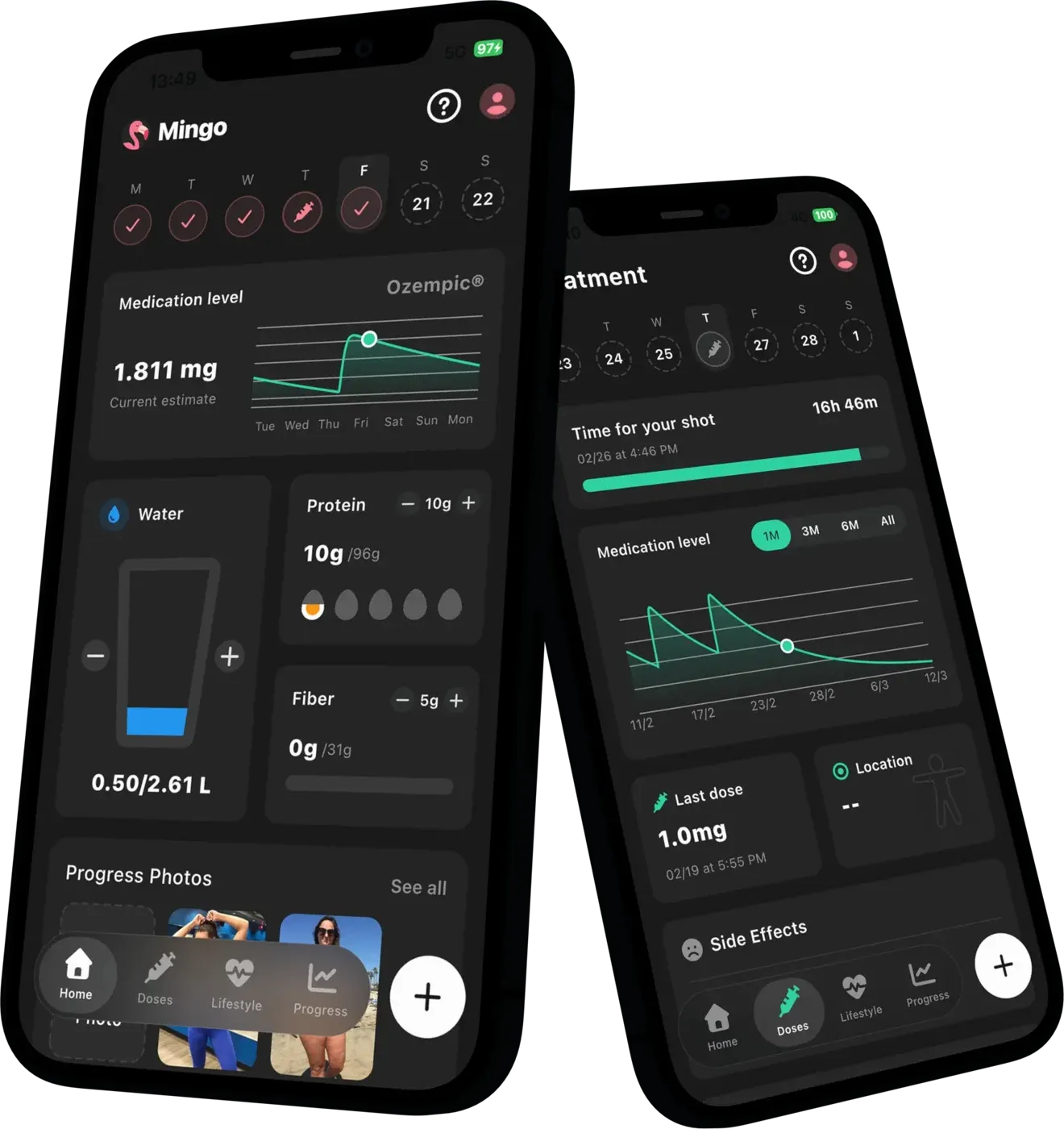
Mingo helps with the remembering part: its reminder arrives at your chosen time, and a second nudge comes two hours later if no dose was logged. If you move your shot day, change it in Mingo’s treatment settings so the reminders follow.
How should you store Ozempic pens?
Before the first use, keep the pen in the refrigerator at 2–8 °C (36–46 °F). After the first use, the pen can be kept for 56 days either at room temperature between 15 and 30 °C (59–86 °F) or in the refrigerator. Don’t freeze it, and keep the cap on when you’re not using it (Ozempic prescribing information). A note in Mingo with the date you opened a pen is an easy way to know when it’s due to be replaced.
What Mingo doesn’t do
Mingo doesn’t log blood sugar, and it doesn’t set or change your dose. The medication-level curve is an estimate from the doses you enter, not a lab measurement. Your prescriber and your diabetes care team make the treatment decisions; Mingo keeps the record you bring to them. For how quickly Ozempic tends to act, see when Ozempic starts working.


