
The most common Mounjaro side effects are digestive: nausea, diarrhea, less appetite, vomiting, constipation, indigestion and stomach pain. As a group they rose with the dose in the trials, and most nausea, vomiting and diarrhea came while the dose was being raised. The boxed warning is about thyroid tumors seen in rats. Call your prescriber about severe stomach pain, or vomiting or diarrhea that won’t stop.
Mingo is a GLP-1 tracker app; this guide summarizes the prescribing information and published trials and is not medical advice.
Most numbers below come from the US Mounjaro label, which reports trials in adults with type 2 diabetes. If you’re in the UK or EU and take Mounjaro for weight loss, your trials were different: see the section for you below. For what Mounjaro is approved for, see our Mounjaro guide.
How common are Mounjaro side effects at each dose?
The Mounjaro prescribing information (section 6.1) pools two placebo-controlled trials in adults with type 2 diabetes. In SURPASS-1, Mounjaro was the only diabetes medicine. In SURPASS-5, it was added to basal insulin, with or without metformin. Together that’s 718 people on Mounjaro for a mean of 36.6 weeks, with a mean age of 58.
Table 1 of the label, revised August 2026, lists the reactions reported at least once by 5% or more of people on Mounjaro, and more often than on placebo. Low blood sugar is covered separately below.
| Side effect | Placebo (N=235) | 5 mg (N=237) | 10 mg (N=240) | 15 mg (N=241) |
|---|---|---|---|---|
| Nausea | 4% | 12% | 15% | 18% |
| Diarrhea | 9% | 12% | 13% | 17% |
| Decreased appetite | 1% | 5% | 10% | 11% |
| Vomiting | 2% | 5% | 5% | 9% |
| Constipation | 1% | 6% | 6% | 7% |
| Indigestion (dyspepsia) | 3% | 8% | 8% | 5% |
| Stomach (abdominal) pain | 4% | 6% | 5% | 5% |
For all digestive side effects combined, the label gives 37.1% at 5 mg, 39.6% at 10 mg and 43.6% at 15 mg, against 20.4% on placebo. Digestive side effects led 3.0%, 5.4% and 6.6% of people to stop treatment, against 0.4% on placebo. Burping, gas, reflux and bloating were less common: each was reported by 3.3% or fewer at any dose, and by 0.4% or fewer on placebo.
Other groups differed. In SURPASS-CVOT, a heart-outcomes trial in which 6,647 adults with type 2 diabetes and established heart or blood vessel disease took Mounjaro, the label reports decreased appetite in 17%, constipation in 13%, vomiting in 12% and abdominal pain in 10%, without a breakdown by dose. In children 10 and older with type 2 diabetes, vomiting, abdominal pain and low blood sugar were more common than in adults (section 8.4).
From the same placebo-controlled pool, the label also reports:
- Injection-site reactions: 3.2% on Mounjaro, 0.4% on placebo.
- Allergic (hypersensitivity) reactions, sometimes severe, such as hives and eczema: 3.2% against 1.7%.
- A faster heart rate: a mean rise of 2 to 4 beats per minute, against 1 beat per minute on placebo.
The label’s own caveat: rates from one drug’s trials can’t be compared directly with another drug’s, and may not match everyday use. For other GLP-1 labels, see GLP-1 side effects by drug.
When do Mounjaro side effects start, and how long do they last?
The label says the majority of nausea, vomiting and diarrhea reports came during dose escalation and decreased over time. Mounjaro starts at 2.5 mg once a week and, if needed, goes up in 2.5 mg steps at least 4 weeks apart; the label says that schedule is meant to reduce the risk of digestive side effects (section 2.1).
Mounjaro also slows how fast your stomach empties. The label says this delay is largest after the first dose and shrinks over time (section 8.3). In the EU product information, most digestive side effects in the diabetes trials were mild (74%) or moderate (23.3%).
Neither label reports how many days a bout of nausea lasts, or in which week it usually settles. The way to see your own pattern is to log it: rate each symptom on the days you feel it, mark your dose day and each dose step, and compare the weeks.
Easing nausea, constipation, diarrhea and heartburn
These tips come from the Mounjaro Medication Guide, Cleveland Clinic’s guide to GLP-1 digestive side effects (written for GLP-1 medicines in general) and the NIDDK. They don’t replace your prescriber’s advice.
Nausea
- Eat smaller meals, slowly. Cleveland Clinic notes that a big meal on a GLP-1 can bring on nausea and reflux.
- Eat lighter before your first dose and your first dose increase. That means not skipping meals, but limiting high-fat, greasy and sugary foods, according to Cleveland Clinic.
- Stay upright after eating. Cleveland Clinic suggests staying upright for 30 minutes after a meal, and says ginger or peppermint tea without sweetener may settle your stomach.
- Ask about anti-nausea medicine if nausea keeps coming back after your shot (Cleveland Clinic).
Vomiting, diarrhea and fluids
- Drink fluids. The Medication Guide warns that diarrhea, nausea and vomiting can cause dehydration, which may cause kidney problems, and that drinking fluids helps reduce that chance.
- Replace salts as well as water. For diarrhea, Cleveland Clinic suggests fluids with electrolytes, soft, bland, low-fiber foods, and limiting caffeine, alcohol and dairy drinks. Ask your prescriber before taking an over-the-counter remedy.
- Sip between meals if drinking at mealtimes fills you up too fast (Cleveland Clinic).
Constipation
- Water, a walk and a footstool. Cleveland Clinic lists drinking water, a few minutes of movement and a footstool on the toilet. Your provider may suggest a stool softener or laxative.
- Time your fiber. Fiber can help constipation, but Cleveland Clinic advises going easy on high-fiber foods right after your dose if you already feel bloated or full.
- Don’t wait out severe constipation. The label lists reports since approval of severe constipation, including fecal impaction, and of intestinal blockage (section 6.2). The Medication Guide asks you to tell your provider about stomach problems that are severe or won’t go away.
Heartburn and reflux
- Leave time before lying down. The NIDDK says eating meals at least 3 hours before you lie down may help reflux at night.
- Raise your head in bed 6 to 8 inches, with a foam wedge or extra pillows under your head and upper back (NIDDK).
- Watch common triggers. The NIDDK lists high-fat and spicy foods, coffee and other caffeine, chocolate, mint, alcohol, citrus fruits and tomatoes.
- Antacids are for mild symptoms. The NIDDK says not to use them daily or for severe symptoms without your doctor.
If side effects make treatment hard, Cleveland Clinic notes that a prescriber may raise your dose more slowly or suggest other options. Don’t change your dose on your own.
What are the serious side effects of Mounjaro?
Section 5 of the label lists these warnings:
- Thyroid C-cell tumors (boxed warning). Tirzepatide caused thyroid C-cell tumors in rats. It is not known whether it causes them, including medullary thyroid carcinoma (MTC), in people. Mounjaro must not be used if you or a family member has had MTC, or if you have multiple endocrine neoplasia syndrome type 2 (MEN 2).
- Pancreatitis. In clinical studies, 13 adults on Mounjaro had 14 confirmed events of acute pancreatitis (0.23 patients per 100 years of exposure), against 3 on comparison treatments (0.11).
- Low blood sugar when used with insulin or a sulfonylurea (see below).
- Serious allergic reactions, including anaphylaxis and angioedema (swelling under the skin).
- Kidney injury from dehydration, reported after approval, mostly in people who had nausea, vomiting or diarrhea. Some needed dialysis.
- Severe digestive reactions, in 1.3% at 5 mg, 0.4% at 10 mg and 1.2% at 15 mg, against 0.9% on placebo. Mounjaro isn’t recommended for people with severe gastroparesis.
- Diabetic eye disease. Retinopathy has temporarily worsened with fast improvement in blood sugar; people with a history of it should be monitored.
- Gallbladder disease, such as gallstones: 0.6% on Mounjaro, 0% on placebo.
- Food getting into the lungs during anesthesia or deep sedation, rarely reported with GLP-1 medicines. Tell every provider you take Mounjaro before a procedure.
- Never share a KwikPen, even with a new needle: it can pass on blood-borne infections.
When to call your prescriber or get emergency care
These come from the Mounjaro Medication Guide:
- Stop Mounjaro and get medical help right away if you have signs of a serious allergic reaction: swelling of your face, lips, tongue or throat, problems breathing or swallowing, severe rash or itching, fainting or feeling dizzy, or a very rapid heartbeat.
- Stop Mounjaro and call your provider right away if you have severe pain in your stomach area that won’t go away, with or without nausea or vomiting. You may feel it from your abdomen to your back.
- Tell your provider right away if nausea, vomiting or diarrhea doesn’t go away, or if you have signs of gallbladder problems: pain in your upper stomach, fever, yellowing of your skin or eyes, or clay-colored stools.
- Tell your provider about stomach problems that are severe or won’t go away, changes in your vision, or a lump or swelling in your neck, hoarseness, trouble swallowing or shortness of breath.
Taking Mounjaro for weight in the UK or EU
In the UK and the EU, Mounjaro is licensed for weight management as well as type 2 diabetes. The EU product information (section 4.1) covers adults with a BMI of 30 or more, or 27 to under 30 with at least one weight-related condition, alongside a reduced-calorie diet and more physical activity. The UK regulator’s guidance on GLP-1 medicines lists Mounjaro as licensed for both uses. In the US, Mounjaro is licensed only for type 2 diabetes, and the same medicine is sold for weight as Zepbound.
The table above comes from people with diabetes. For a placebo-controlled weight-management trial in adults without type 2 diabetes, the EU product information (section 4.8) reports:
- Any digestive side effect: 55.6% at 5 mg, 60.8% at 10 mg and 59.2% at 15 mg, against 30.3% on placebo.
- Nausea: 24.6%, 33.3% and 31.0%, against 9.5%.
- Diarrhea: 18.7%, 21.2% and 23.0%, against 7.3%.
- Stopped for a digestive side effect: 1.9%, 4.4% and 4.1%, against 0.5%.
Most were mild (60.8%) or moderate (34.6%), and nausea, vomiting and diarrhea were again more frequent while the dose was being raised. A different trial in a different population can’t be ranked against the diabetes table, but it is the closer match if you take Mounjaro for weight. The EU product information also notes that dizziness, low blood pressure and hair loss mainly apply to people with overweight or obesity.
For the full table at each dose, read Table 1 of the Zepbound prescribing information (revised August 2026), which pools the SURMOUNT-1 and SURMOUNT-2 weight-loss trials, or our Zepbound side effects guide. For how the two brands of tirzepatide compare, see tirzepatide side effects.
The MHRA adds that digestive side effects such as nausea, vomiting and diarrhea make up most of its Yellow Card reports for GLP-1 medicines, and sometimes cause dehydration that needs hospital care.
Does Mounjaro make birth control pills less effective?
It may. The US label says Mounjaro may make birth control pills work less well because it slows stomach emptying (section 8.3). If you take the pill, the label advises switching to a non-oral method, or adding a barrier method such as condoms, for 4 weeks after you start Mounjaro and for 4 weeks after each dose increase. Hormonal birth control that isn’t taken by mouth shouldn’t be affected, the label says (section 7.2).
In the UK, the MHRA gives the same four-week advice, explaining that the pill may work less well in people with overweight or obesity, and adds that switching to a coil or an implant is an alternative. The EU product information doesn’t carry the four-week advice: it reports lower pill hormone levels after a single 5 mg dose and doesn’t consider the drop clinically relevant. Wherever you live, ask your prescriber which method fits you.
On pregnancy, the EU product information and the MHRA both say to stop tirzepatide at least 1 month before a planned pregnancy. The US label asks you to tell your provider if you are pregnant or plan to become pregnant.
Low blood sugar: who is at risk and what to log
On its own, Mounjaro rarely caused low blood sugar in the diabetes trials. In SURPASS-1, over 40 weeks, no one on Mounjaro alone had blood sugar below 54 mg/dL, against 1% on placebo (Table 2 of the label). The risk is higher when Mounjaro is combined with insulin or a sulfonylurea:
- With basal insulin (SURPASS-5, 40 weeks): blood sugar below 54 mg/dL in 16%, 19% and 14% at 5, 10 and 15 mg, against 13% on placebo. Severe low blood sugar, needing another person’s help, occurred in 0%, 2% and 1%, against 0%.
- With a sulfonylurea, in a trial of up to 104 weeks: below 54 mg/dL in 13.8%, 9.9% and 12.8%, and severe in 0.5%, 0% and 0.6%.
The label says lowering the dose of the sulfonylurea or insulin may reduce the risk, a decision for your prescriber. For readers taking Mounjaro for weight with type 2 diabetes, the EU product information reports a weight-management trial in which low blood sugar (below 54 mg/dL) occurred in 10.3% of people on tirzepatide who also took a sulfonylurea, against 2.1% of those who didn’t, with no severe episodes.
The Medication Guide lists these signs: dizziness or light-headedness, sweating, confusion or drowsiness, headache, blurred vision, slurred speech, shakiness, fast heartbeat, anxiety, irritability or mood changes, hunger, weakness and feeling jittery.
What to log: the NIDDK says skipping or delaying meals, eating too few carbohydrates, being sick, more exercise than usual and alcohol without food can all lower blood sugar in people with diabetes, especially those taking insulin or a sulfonylurea. It also suggests asking your care team how to check your blood sugar. When you have a low, note the time, your reading if you took one, what you last ate and when, and the days since your dose. Since decreased appetite is a common Mounjaro side effect, skipped meals are worth noting too.
Keeping a side-effect log in Mingo
Mingo is the GLP-1 tracker we make, and it supports Mounjaro, Zepbound, compounded tirzepatide and other GLP-1 medicines. It has 18 built-in symptoms, each rated on a 0 to 10 slider, including nausea, constipation, diarrhea, stomach pain, bloating, heartburn, sulfur burps, suppressed appetite, fatigue and injection-site reaction. Vomiting isn’t built in, so add it as your own symptom, as you can with low blood sugar or anything else. Each symptom can be charted against your estimated medication level, which Mingo calculates from the doses you log with a half-life model. It is an estimate, not a blood test.
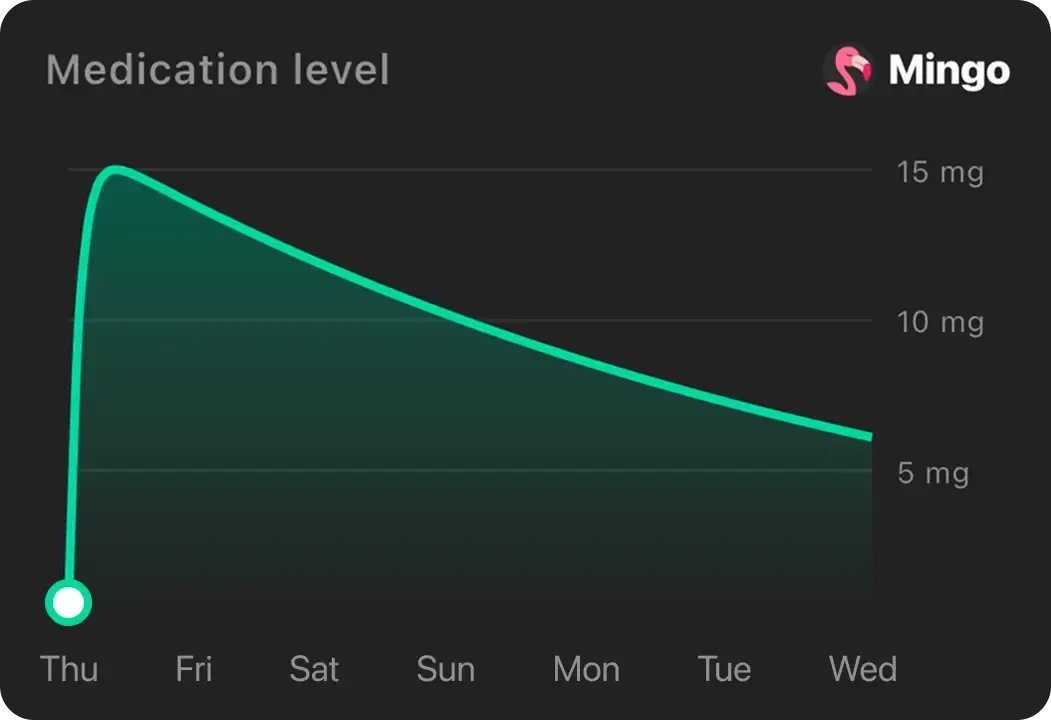
Log each shot with the dose, the injection site on a body map of 12 sites (with optional left and right alternation) and notes. Reminders arrive on dose day, with an optional heads-up before and a nudge 2 hours later if the dose isn’t logged. Your weight chart is colored by the dose you were on, with a marker at each new dose, so dose steps are easy to spot. Meals can be logged by photo, voice, text or barcode, with daily protein, fiber and water targets; photos, voice notes and descriptions go to Mingo’s server to estimate nutrients, while the log stays on your phone, with no account.
Before an appointment, export a PDF report of your doses, estimated levels, weight, food and side effects for any period. Mingo Pro is needed to log new entries after the first ones; reminders, the medication-level chart and the PDF report stay free. See how Mingo tracks Mounjaro.
Sources
- Eli Lilly and Company. Mounjaro (tirzepatide) prescribing information and Medication Guide, revised August 2026. DailyMed.
- Eli Lilly and Company. Zepbound (tirzepatide) prescribing information, revised August 2026. DailyMed.
- European Medicines Agency. Mounjaro product information (summary of product characteristics and package leaflet), accessed October 31, 2026.
- Medicines and Healthcare products Regulatory Agency. GLP-1 medicines for weight loss and diabetes: what you need to know, updated February 5, 2026.
- Rosenstock J, et al. Tirzepatide in patients with type 2 diabetes (SURPASS-1). Lancet, 2021.
- Dahl D, et al. Tirzepatide added to insulin glargine (SURPASS-5). JAMA, 2022.
- Frías JP, et al. Tirzepatide versus semaglutide once weekly in type 2 diabetes (SURPASS-2). New England Journal of Medicine, 2021.
- Cleveland Clinic. How to manage the digestive side effects of GLP-1 medications, September 9, 2026.
- NIDDK. Eating, diet and nutrition for GER and GERD, Treatment for GER and GERD and Low blood glucose.
Frequently asked questions
Does Mounjaro cause more side effects than Ozempic?
The main head-to-head trial in type 2 diabetes, SURPASS-2, gave 1,879 adults with type 2 diabetes who were already taking metformin either tirzepatide (5, 10 or 15 mg) or semaglutide 1 mg, the active ingredient in Ozempic, for 40 weeks. Nausea was reported by 17% to 22% on tirzepatide and 18% on semaglutide, diarrhea by 13% to 16% and 12%, and vomiting by 6% to 10% and 8%. Higher semaglutide doses were not part of that trial.
Can Mounjaro cause hair loss?
The US label lists hair loss (alopecia) among reports received after approval, where the frequency can't be estimated. The EU product information rates it as common, meaning up to 1 in 10 people, mainly in people treated for weight management. If you notice it, note when it started and which dose you were on, and tell your prescriber.
Can Mounjaro make you tired?
Fatigue isn't in the US label's table for the diabetes trials, but the label reports it in 10% of people on Mounjaro in SURPASS-CVOT, a long heart-outcomes trial in adults with type 2 diabetes and established heart or blood vessel disease. The EU product information lists fatigue as common in its diabetes and weight-management trials. If you also take insulin or a sulfonylurea, the NIDDK lists tiredness among the signs of low blood sugar, so mention it to your prescriber.
Should I stop Mounjaro before surgery?
Don't stop it on your own. The US label says there isn't enough data to know whether pausing Mounjaro or changing fasting rules lowers the risk of food getting into the lungs under anesthesia or deep sedation, and asks you to tell your healthcare providers you take it before any planned procedure. The UK regulator, the MHRA, also says to keep taking it as usual and not to stop without talking to your doctor first.
How do I report a Mounjaro side effect?
In the US, the label lists two options: the FDA's MedWatch program at 1-800-FDA-1088 or fda.gov/medwatch, and Eli Lilly at 1-800-545-5979. In the UK, use the MHRA's Yellow Card scheme. In the EU, the product information points to each country's national reporting system. Tell your prescriber as well.


