What tirzepatide does to the pill
Zepbound and Mounjaro slow down how fast the stomach empties. A pill swallowed in that window reaches the gut, and the blood, later than usual. Lilly measured it: after a single 5 mg dose of tirzepatide, the peak level of a combined pill’s hormones (ethinyl estradiol and norgestimate) fell by 55% to 66%, the total amount absorbed fell by 20% to 23%, and the peak came 2.5 to 4.5 hours late (Zepbound prescribing information, section 12.3).
The same label says the delay is largest after the first dose and shrinks over time. Each dose increase brings a smaller version of it back, which is why the window restarts after every step up, not just once at the start.
Which methods count as backup
The label gives two ways to stay covered during a window:
- Switch to a non-oral method. Hormonal methods that aren’t swallowed (an implant, a hormonal coil, the patch, the ring or the shot) “should not be affected”, in the label’s words, because nothing has to pass through the stomach. A copper coil has no hormones at all.
- Keep the pill and add a barrier method, such as condoms, for the 4 weeks.
Not every method protects you from day one, so if you switch, ask your prescriber when the new one starts working. The UK’s regulator, the MHRA, makes the same point in its GLP-1 guidance.
How the windows add up
Both labels start at 2.5 mg and go up 2.5 mg at a time, with at least 4 weeks on each dose. Zepbound’s label moves to 5 mg after the first 4 weeks; Mounjaro’s goes up only if more blood sugar control is needed. If every step comes at the earliest point, each new 4-week window opens the day the last one closes, so a pill user needs backup without a break for about 24 weeks: from the first 2.5 mg dose until 4 weeks after the first 15 mg dose.
Most people don’t move that fast. Staying longer on a dose leaves gaps where the label asks for nothing extra, and that’s what the planner shows when you enter your own dates. Going back down to a lower dose isn’t an “escalation”, and the label doesn’t ask for a window then; if you go up again afterwards, that increase does start one.
Wegovy and Ozempic are different
Semaglutide also slows the stomach, but its labels don’t ask for backup birth control. In the clinical pharmacology studies, semaglutide didn’t change the absorption of oral medicines, a combined pill (ethinylestradiol and levonorgestrel) included, to any clinically relevant degree (Ozempic prescribing information, sections 7.2 and 12.3). Many pages online still apply the tirzepatide rule to Wegovy and Ozempic; the labels don’t.
Where semaglutide is stricter is pregnancy: the Wegovy and Ozempic labels say to stop at least 2 months before a planned pregnancy, because the medicine takes a long time to leave the body.
Planning a pregnancy: what the US labels and the UK say
| US label | MHRA (UK) | |
|---|---|---|
| Zepbound | No time set; stop once a pregnancy is recognized | Stop at least 1 month before trying |
| Mounjaro | No time set; use in pregnancy only if the benefit justifies the risk | Stop at least 1 month before trying |
| Wegovy | Stop at least 2 months before | Stop at least 2 months before |
| Ozempic | Stop at least 2 months before | Stop at least 2 months before |
The MHRA also asks anyone who could get pregnant on these medicines to use contraception through that wash-out period (MHRA guidance). Enter the date you’d like to start trying in the planner to see the last-dose date for your medicine. Plan the timing with your prescriber rather than on your own.
If you get pregnant while taking it
Call your prescriber. The Zepbound label says weight loss offers no benefit in pregnancy and to stop the medicine once a pregnancy is recognized. Lilly and Novo Nordisk run pregnancy registries that collect outcomes for people exposed during pregnancy: 1-844-524-0039 for Zepbound and 1-877-390-2760 for Wegovy, both listed in the labels.
Keeping the dates straight
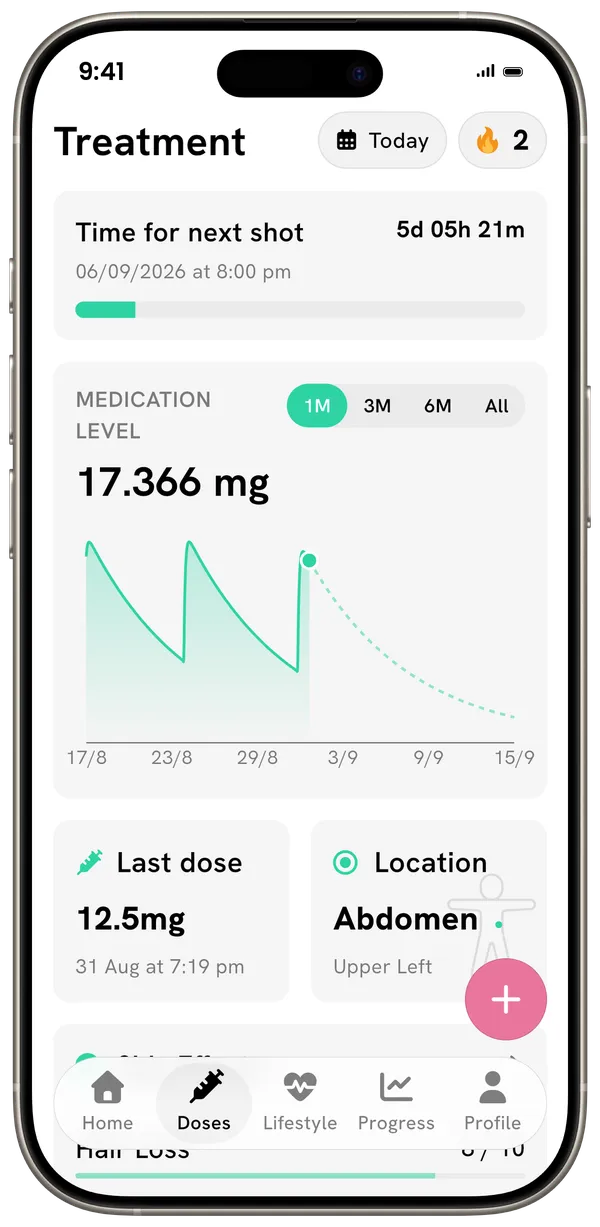
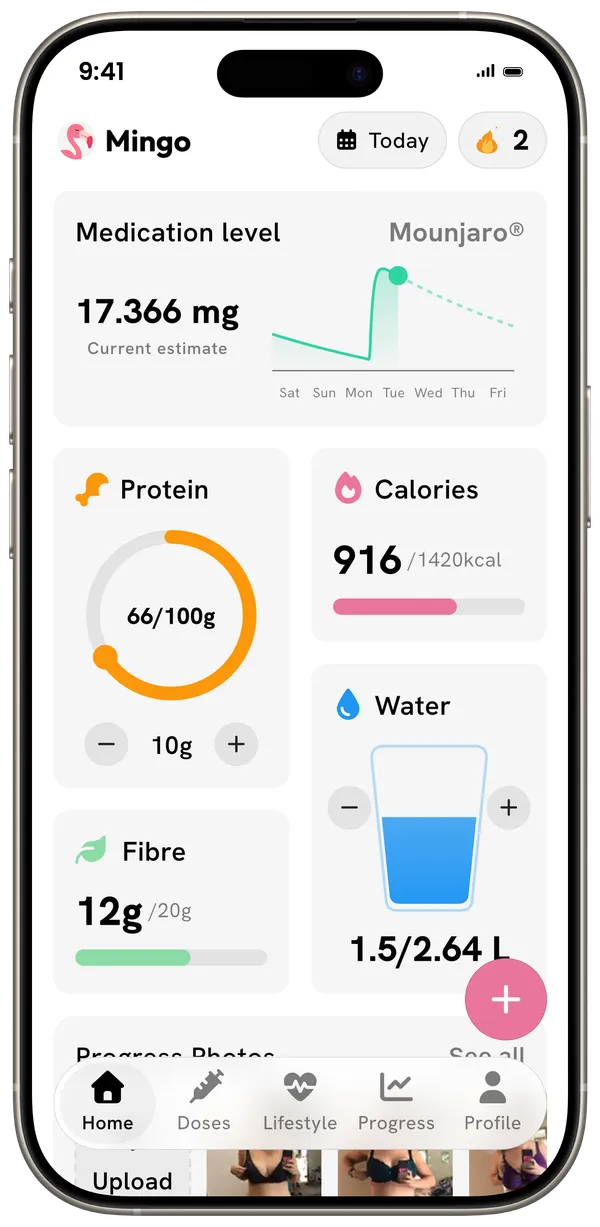
Every window counts from the day of a dose change, which is easy to forget a month later. In Mingo each dose is logged with its date and strength, so the day you moved up to a new dose is always in your history, and shot-day reminders keep the steps on schedule.


