Why protein matters more on a GLP-1 medicine
GLP-1 medicines such as semaglutide (Ozempic, Wegovy) and tirzepatide (Mounjaro, Zepbound) work partly by making you feel full sooner and hungry less often. That’s how they help you eat less, but it also means meals shrink across the board, protein included. When you lose weight quickly, part of what you lose is lean mass, not just fat, which is why nutrition experts put protein first on GLP-1 treatment (joint advisory, 2025).
A protein target doesn’t replace your plan with your prescriber or a dietitian. It gives you a number to aim for each day, so that eating less doesn’t mean eating too little of what protects your muscle.
How the calculator works
The calculator multiplies your current weight by a protein factor that rises with your activity level, then applies three limits:
| Activity level | Protein per kg of body weight | Cap |
|---|---|---|
| Sedentary | 1.2 g/kg | 100 g a day |
| Lightly active | 1.3 g/kg | 110 g a day |
| Active | 1.4 g/kg | 130 g a day |
| Very active | 1.6 g/kg | 150 g a day |
- A floor of 80 g a day, so a smaller body or a sedentary week doesn’t push the target too low.
- A cap for each activity level, so a high body weight doesn’t produce a target that’s hard to eat and isn’t needed.
- Never more than 2 g per kg of body weight.
These numbers follow the 2025 joint advisory from the American College of Lifestyle Medicine, the American Society for Nutrition, the Obesity Medicine Association and The Obesity Society, which suggests 1.2 to 1.6 g/kg a day, or about 80 to 120 g, during active weight loss on GLP-1 medicines (Mozaffarian et al., 2025). A separate 2025 Delphi consensus of obesity specialists landed in the same place, at 1.2 to 1.5 g/kg (Sievenpiper et al., 2025).
The advisory also notes that using actual body weight can overestimate protein needs in people with a lot of body fat. That’s what the caps are for: at higher weights, the target stops at a level you can realistically eat, instead of growing with every kilo.
Your target will change as you lose weight
Because the target uses your current weight, it moves as the scale moves. For a sedentary person the cap of 100 g applies at any weight above about 83 kg (184 lb); below that, the target falls by about 1.2 g for each kilo lost, until it reaches the 80 g floor around 67 kg (147 lb). Recalculating every few kilos keeps it honest. In the Mingo app the target updates on its own when you log a new weight.
Spreading it across the day
Small portions make it hard to catch up on protein in one big meal, so it helps to spread it out. The calculator divides your daily target by the number of meals you choose. Many people on GLP-1 medicines aim for about 25 to 30 g per meal (Noronha et al., 2025). Roughly what 25 to 30 g looks like:
| Food | About 25–30 g of protein |
|---|---|
| Greek yogurt, plain, nonfat | 1 cup (about 250 g) |
| Eggs | 4 large eggs |
| Chicken breast, cooked | 3½ oz (about 100 g) |
| Canned tuna in water | 1 small can (about 100 g drained) |
| Firm tofu | 1 cup (about 180 g) |
| Protein shake | 1 shake (check the label) |
Typical values; brands and preparation vary, so check the label.
On days you can’t eat much
Digestive side effects, and with them low appetite, are most common when you start and in the weeks after each dose increase. On the days you can barely eat:
- Protein first. Eat the protein part of a meal before the rest.
- Choose dense foods. Greek yogurt, cottage cheese, eggs, fish and protein shakes pack a lot of protein into a small volume.
- More, smaller meals. Four small meals can be easier than three normal ones.
- Sip, don’t flood. Drink between meals rather than with them, so liquids don’t fill you up.
If nausea or low appetite keeps you well below your target most days, tell your prescriber. The dose charts explain what the labels allow when a dose is hard to tolerate, for example the tirzepatide dosage chart.
What this calculator doesn’t do
It doesn’t account for kidney disease, pregnancy, or a medical diet your care team has set; in those cases their target comes first. It also doesn’t change with your medicine or dose: we haven’t found guidance that sets protein by GLP-1 dose, so we don’t pretend to. And it isn’t a substitute for a dietitian, who can look at what you actually eat.
Track it next to your doses
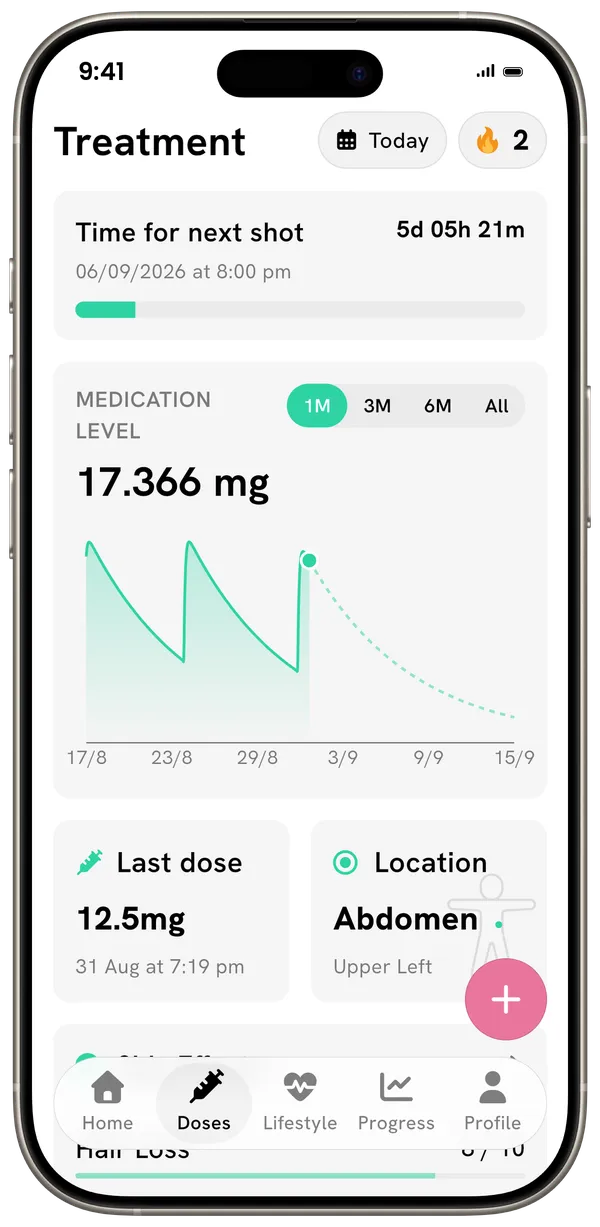
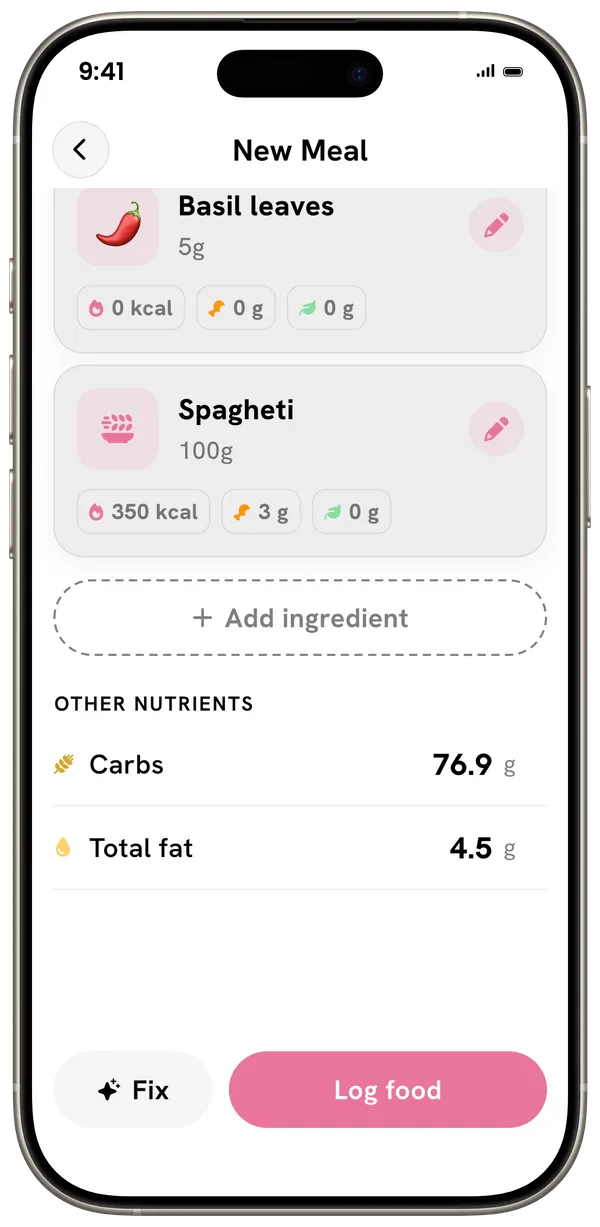
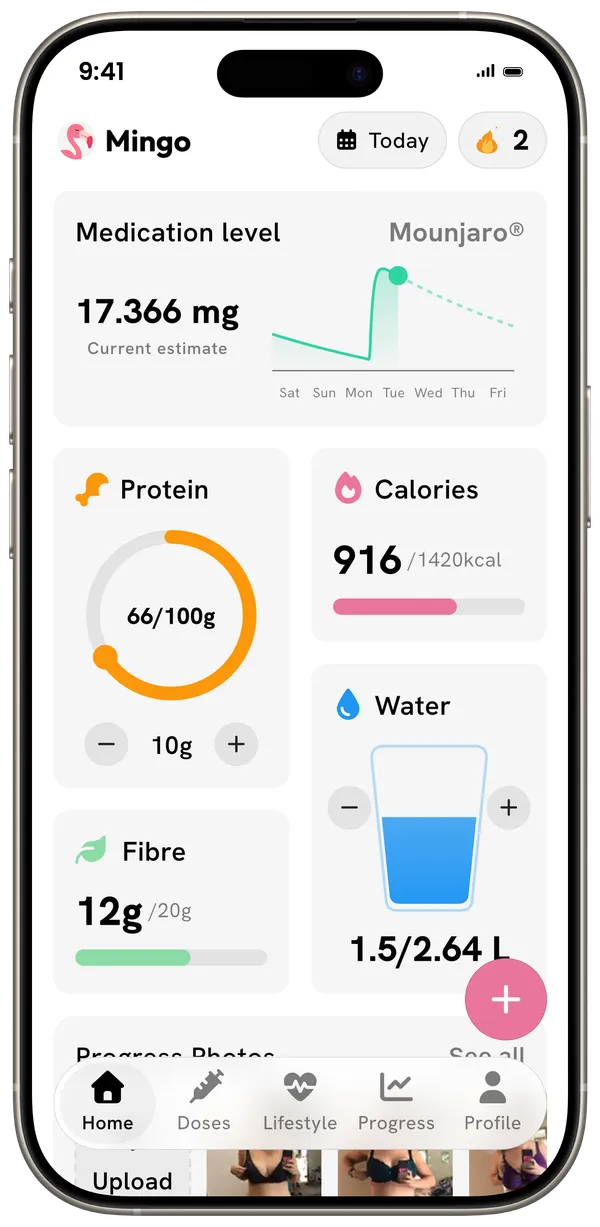
In the Mingo app, this same target is set during onboarding from your weight and activity level. You log meals by photo, voice, text or barcode, and each day’s protein shows against the target, next to your doses, side effects and weight, so you can see whether the low-appetite days after a shot are the ones where protein drops.


