How long does it take to work? Two different things happen on two different clocks. The medicine acts from the first shot, but the results people ask about, weight and blood sugar, were measured weeks or months later. This page keeps the two apart and only puts a week on the timeline when a label or a named trial gives one.
Working and noticing it aren’t the same week
From the first injection, the medicine is in your blood and acting. Each label gives the timing:
| Tirzepatide (Zepbound, Mounjaro) | Semaglutide (Wegovy, Ozempic) | |
|---|---|---|
| Highest level after a shot | About 24 hours (8 to 72 hours) | 1 to 3 days |
| Level stops building up | After 4 weeks of weekly doses | After 4 to 5 weeks (Ozempic label) |
| Starting dose | 2.5 mg | 0.25 mg |
Daily pills work on a shorter clock:
| Semaglutide tablets (Wegovy pill, Rybelsus, Ozempic tablets) | Orforglipron (Foundayo) | |
|---|---|---|
| Highest level after a tablet | About 1 hour | 4 to 8 hours |
| Level stops building up | After 4 to 5 weeks of daily tablets | After about 1 week |
| Starting dose | 1.5 mg (Wegovy pill, Ozempic tablets), 3 mg (Rybelsus) | 0.8 mg |
Sources: section 12.3 of the Zepbound, Ozempic, Rybelsus and Ozempic tablets and Foundayo prescribing information. The Wegovy label gives the peak for the shot and the pill, but no time for the steady level.
Feeling less hungry, the change most people notice first, has no week in any label. The labels describe how it happens (the medicine acts on brain areas that regulate appetite and lowers how much people eat) but not when. Pages that promise “within 24 to 72 hours” or “2% by week 4” aren’t quoting a label.
The first month is a starting dose
Every one of these medicines starts low and steps up no sooner than every 4 weeks (shots) or 30 days (pills). That’s why the first month rarely looks like the trial results: you’re not yet on the dose the trials were about.
| Medicine | Earliest maintenance dose | Highest dose, at the earliest |
|---|---|---|
| Zepbound | 5 mg, after 4 weeks | 15 mg, after 20 weeks |
| Mounjaro | 2.5 mg can already be continued | 15 mg, after 20 weeks, if needed |
| Wegovy | 2.4 mg, after 16 weeks (1.7 mg is also an option) | 7.2 mg, after 20 weeks, for some adults |
| Ozempic | 0.5 mg, after 4 weeks | 2 mg, after 12 weeks, if needed |
| Wegovy pill | 25 mg, after 90 days | 25 mg, after 90 days |
| Rybelsus | 7 mg, after 30 days | 14 mg, after 60 days, if needed |
| Ozempic tablets | 4 mg, after 30 days | 9 mg, after 60 days, if needed |
| Foundayo | 5.5 mg is the dose the label steps you up to, after 60 days | 17.2 mg, after 150 days, if needed |
These are minimums. Staying longer on a step is common and moves every later date back. The Zepbound, Mounjaro, Wegovy and Ozempic dosage charts show every step.
The weeks the trials actually measured
Trials weigh people at set visits, but the labels only report a few of those weeks. These are all of them for weight loss, in adults without diabetes who also had diet and activity counseling:
| After | Medicine | Average weight loss | Who |
|---|---|---|---|
| 20 weeks | Wegovy | 10.6% | STEP 4: people who finished 16 weeks of dose steps and reached 2.4 mg |
| 36 weeks | Zepbound | 20.9% | SURMOUNT-4: people who finished 36 weeks, 93% of them on 15 mg |
| 68 weeks | Wegovy 2.4 mg | 14.9% (placebo 2.4%) | STEP 1 |
| 72 weeks | Wegovy 7.2 mg | 18.8% (placebo 3.9%) | STEP UP |
| 64 weeks | Wegovy pill 25 mg | 13.6% (placebo 2.4%) | OASIS 4 |
| 72 weeks | Zepbound 5, 10, 15 mg | 15.0%, 19.5%, 20.9% (placebo 3.1%) | SURMOUNT-1 |
| 72 weeks | Foundayo 5.5, 9, 17.2 mg | 7.4%, 8.3%, 11.1% (placebo 2.1%) | Foundayo Trial 1 |
The 20 and 36-week figures count only people who were still on the medicine at that point, so they flatter the average a little. No label reports an earlier weight result for the pills. For what the end-of-trial numbers mean for your own weight, and how widely people varied, use the GLP-1 weight loss calculator.
Why the dose increases can feel rough
Every label here says the same thing in slightly different words: most nausea, vomiting and diarrhea in the trials was reported while the dose was going up. The Zepbound, Mounjaro and Foundayo labels add that it became less common over time. On the timeline, every dose step is a week to expect it, and a reason some people stay on a step longer. Read more in GLP-1 side effects: what to expect and how to manage them.
Ozempic, Mounjaro and Rybelsus: blood sugar is the measured result
Ozempic (shot and tablets), Mounjaro and Rybelsus are approved in the US for type 2 diabetes, so their trials measured HbA1c, a 3-month average of blood sugar:
- Ozempic (SUSTAIN 1, on its own): after 30 weeks, HbA1c fell 1.4 points on 0.5 mg and 1.6 points on 1 mg, from about 8.1%.
- Mounjaro (SURPASS-1, on its own): after 40 weeks, HbA1c fell 1.8, 1.7 and 1.7 points on 5, 10 and 15 mg, and weight fell 6.3, 7.0 and 7.8 kg.
- Rybelsus (semaglutide tablets Trial 1, on its own): after 26 weeks, HbA1c fell 1.2 points on 7 mg and 1.4 points on 14 mg, from about 8%, and weight fell 2.3 and 3.7 kg. The label says Ozempic tablets 4 and 9 mg give the same amount of semaglutide in the blood as Rybelsus 7 and 14 mg.
Your prescriber tracks this with lab tests, usually a few months apart. For the first months on Ozempic in more detail, see how long it takes for Ozempic to work.
On Zepbound, Mounjaro or Foundayo and taking the pill?
Tirzepatide and orforglipron slow down how fast the stomach empties, most after the first dose, which can make birth control pills less reliable. The Zepbound and Mounjaro labels say to switch to a non-oral method or add a barrier method for 4 weeks after starting and for 4 weeks after each dose increase; the Foundayo label says the same for 30 days. The timeline puts those end dates on your calendar. The labels say hormonal methods you don’t swallow, like patches, rings, implants and injections, shouldn’t be affected.
Keeping your own timeline
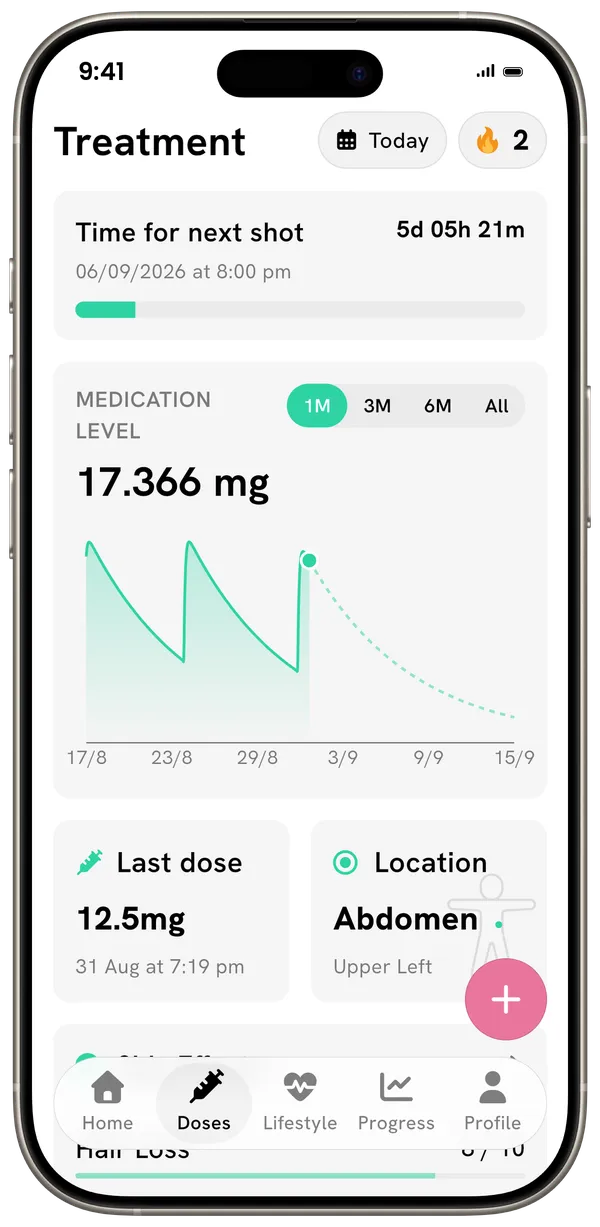
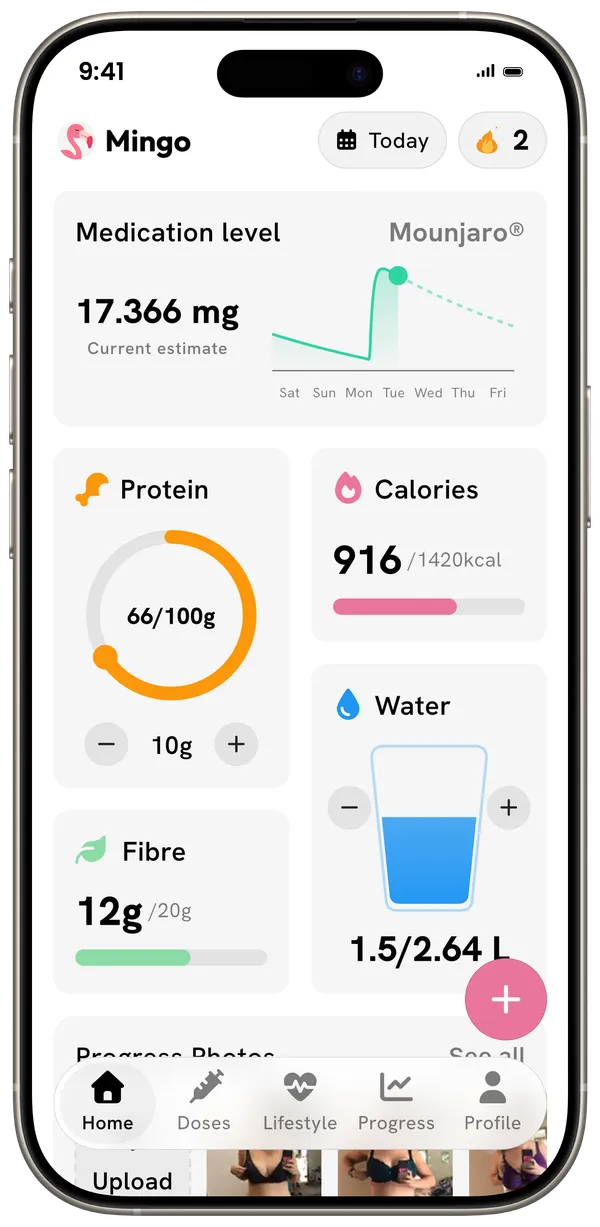
The trials can tell you what happened on average at week 20 or 36; they can’t tell you how your week 3 is going. In Mingo you log each shot, your weight and how you feel, rating symptoms like nausea from 0 to 10. After a few logs it shows how many days after a dose your symptoms tend to peak, next to an estimate of your medication level based on the doses you logged. If a shot slips, the missed dose calculator has each label’s rule.


