How your BMI is worked out
BMI is your weight in kilograms divided by the square of your height in meters. Someone 1.68 m tall (5 ft 6 in) who weighs 86 kg (190 lb) has a BMI of 86 ÷ (1.68 × 1.68) = 30.5. The calculator converts pounds, stone and feet for you, and rounds to one decimal, the number a prescriber would write down. It uses the same formula and the same category lines as the Mingo app.
| BMI | Adult category (CDC) |
|---|---|
| Under 18.5 | Underweight |
| 18.5 to 24.9 | Healthy weight |
| 25 to 29.9 | Overweight |
| 30 to 34.9 | Obesity, class 1 |
| 35 to 39.9 | Obesity, class 2 |
| 40 or more | Obesity, class 3 |
These categories are for adults 20 and over (CDC). For children and teens, BMI is read as a percentile for age and sex instead.
Label wording versus the numbers you see online
Most pages say the Wegovy label requires “a BMI of 30, or 27 with a condition”. The current US labels don’t print those numbers in their indication. They say Wegovy and Zepbound are for adults “with obesity” or “with overweight in the presence of at least one weight-related comorbid condition”. The numbers come from the trials described further down the same labels, which enrolled people with a BMI of 30 or more, or 27 to under 30 plus a condition such as dyslipidemia, high blood pressure, sleep apnea or cardiovascular disease (Wegovy and Zepbound prescribing information). The UK licences do print them, as a starting BMI (Mounjaro and Wegovy SmPCs).
| Medicine | Approved for weight? | Who, in the label’s words | BMI lines used |
|---|---|---|---|
| Wegovy injection (US) | Yes | Adults with obesity, or overweight with 1+ weight-related condition; ages 12+ with obesity | 30, or 27 to 29.9 with a condition (trials); 95th percentile for teens |
| Wegovy tablets (US) | Yes | Adults with obesity, or overweight with 1+ weight-related condition | 30, or 27 to 29.9 with a condition (trials) |
| Zepbound (US) | Yes | Adults with obesity, or overweight with 1+ weight-related condition; also sleep apnea in adults with obesity | 30, or 27 to 29.9 with a condition (trials) |
| Ozempic (US) | No | Adults with type 2 diabetes | None |
| Mounjaro (US) | No | Adults and children 10+ with type 2 diabetes | None |
| Mounjaro (UK licence) | Yes | Adults, starting BMI 30+, or 27 to under 30 with a condition | 30, or 27 to 29.9 with a condition |
| Wegovy (UK licence) | Yes | Adults, starting BMI 30+, or 27 to under 30 with a condition; ages 12+ with obesity and over 60 kg | 30, or 27 to 29.9 with a condition |
So the lines are the same on both sides of the Atlantic for adults. What differs is who pays, and that’s where the NHS comes in.
Ozempic and the US Mounjaro label cover type 2 diabetes, not weight (Ozempic and Mounjaro prescribing information). Their weight-loss counterparts are Wegovy (semaglutide) and Zepbound (tirzepatide); the Ozempic vs Wegovy comparison goes through the differences.
The NHS in England sets a higher bar
Private prescribers in the UK work from the licence above. The NHS in England follows NICE, which recommends both medicines for fewer people:
- Mounjaro (tirzepatide): adults with a starting BMI of at least 35 and at least one weight-related condition (NICE TA1026). NHS England is bringing it in by groups, counting five conditions: high blood pressure, dyslipidaemia, obstructive sleep apnoea, cardiovascular disease and type 2 diabetes.
- Wegovy (semaglutide): only through a specialist weight management service, for up to 2 years, in adults with at least one weight-related condition and a BMI of 35 or more, or 30 to 34.9 if they also meet the referral criteria for those services (NICE TA875).
| Mounjaro on the NHS in England | BMI | Conditions (of the 5) | When, per NICE |
|---|---|---|---|
| Group 1 | 40 or more | 4 or more | Now |
| Group 2 | 35 to 39.9 | 4 or more | From around June 2026 |
| Group 3 | 40 or more | 3 | From around March 2027 |
For people of South Asian, Chinese, other Asian, Middle Eastern, Black African or African-Caribbean background, NICE lowers every one of these lines, usually by 2.5: 40 becomes 37.5 and 35 becomes 32.5. Tick that box in the calculator and it applies the lower lines to the NHS results only, since the licences don’t adjust. How fast each group is reached also depends on your local NHS area.
Scotland, Wales and Northern Ireland decide separately. In Scotland, the Scottish Medicines Consortium accepted Mounjaro for adults with a BMI of 30 or more and at least one weight-related condition (SMC2653).
Teenagers
Adult BMI lines don’t apply under 18, which is why the calculator is for adults. The Wegovy injection is approved from age 12 for obesity, which its trial defined as a BMI at or above the 95th percentile for age and sex; the UK licence adds a body weight above 60 kg and lists the 95th-percentile BMI for each half-year of age (for example 26.0 for a 14-year-old boy and 27.2 for a 14-year-old girl). To find a teen’s percentile, use the CDC Child and Teen BMI Calculator. Zepbound, Wegovy tablets and the UK Mounjaro weight licence are for adults only.
What a BMI check doesn’t cover
Meeting the BMI criteria is where a prescriber starts, not the decision. BMI is a screening number: it can’t tell muscle from fat or show where you carry weight, which is why the CDC says it should be considered with other factors. The labels also list people who shouldn’t take these medicines at any BMI, including anyone with a personal or family history of medullary thyroid cancer or with multiple endocrine neoplasia syndrome type 2 (MEN 2), and anyone who has had a serious allergic reaction to the medicine.
If your BMI meets the criteria, the next questions are about dose and results: the Wegovy dosage chart and Zepbound dosage chart show the steps, and the GLP-1 weight loss calculator shows what the trials found at each dose.
Following your BMI once you start
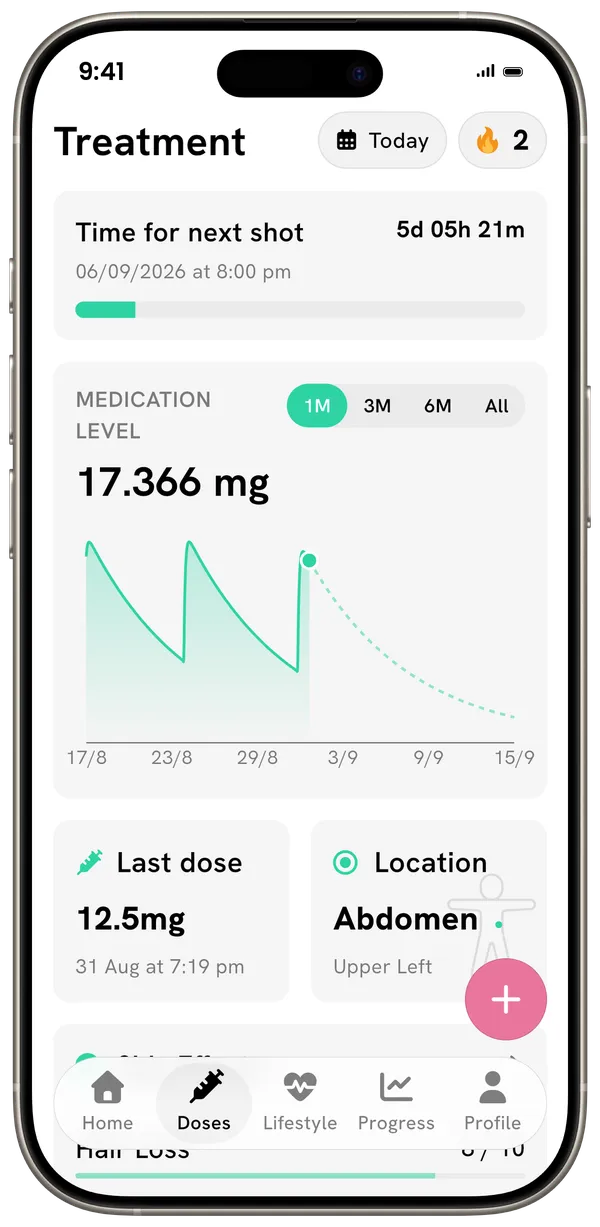
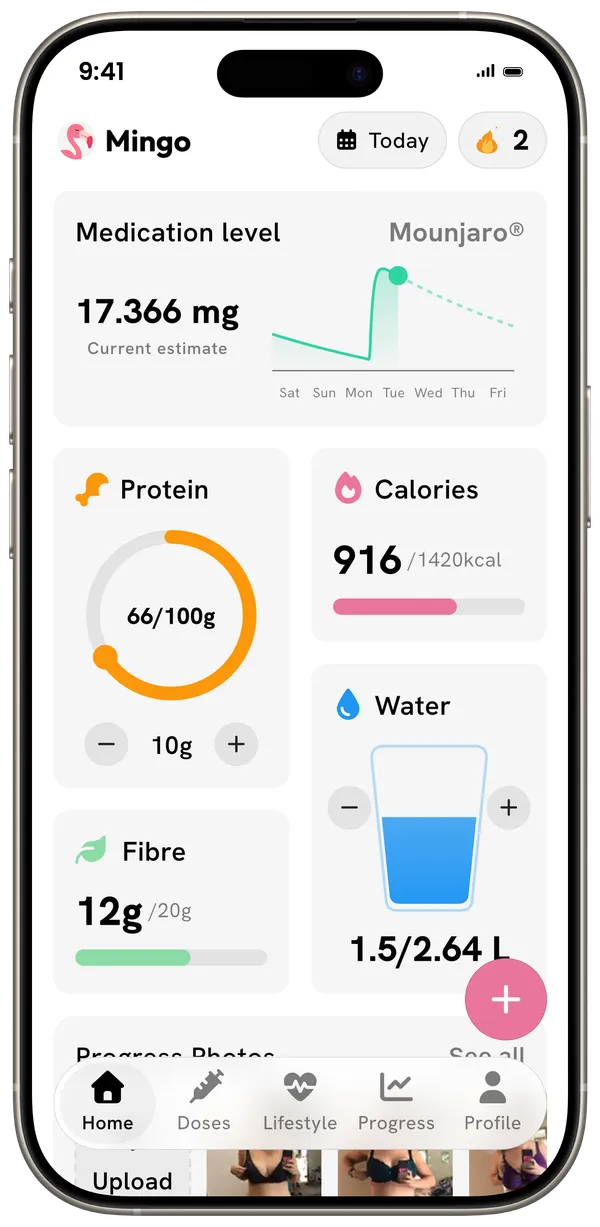
Your starting BMI is the one the criteria use, and NICE and the UK Wegovy licence ask for a review if less than 5% of your starting weight is gone after 6 months. Logging your weight regularly makes both easy to answer: Mingo works out your BMI from your height and every weight you log, with the formula and categories this page uses, and keeps your starting point for the report you can share with your prescriber.


