Skip to content

Weight calculator

Ideal Weight Calculator

Enter your sex and height to see your ideal body weight by the four formulas doctors and pharmacists use, next to the healthy BMI range. Add your current weight to turn it into goal steps you can actually reach.

Updated

Sex
Height

Add it to see how far you are from the healthy BMI range and your 5, 10 and 15% milestones.

Quick answer

For a woman 5 ft 4 in (163 cm) tall, the four classic formulas give an ideal body weight of about 120 to 129 lb (54 to 59 kg), and the healthy BMI range (18.5 to 24.9) is about 108 to 145 lb (49 to 66 kg). For a man 5 ft 10 in (178 cm), the formulas give about 155 to 165 lb (70 to 75 kg) and the BMI range about 129 to 174 lb (58 to 79 kg).

Ideal weight by height

The lowest to highest of the four formulas, and the healthy BMI range (18.5 to 24.9), which is the same for women and men.

HeightWomen (formulas)Men (formulas)Healthy BMI range
4 ft 10 in (147 cm)––89–119 lb
5 ft 0 in (152 cm)100–117 lb106–124 lb95–127 lb
5 ft 2 in (157 cm)110–123 lb118–130 lb101–136 lb
5 ft 4 in (163 cm)120–129 lb130–136 lb108–145 lb
5 ft 6 in (168 cm)129–135 lb140–143 lb115–154 lb
5 ft 8 in (173 cm)138–141 lb148–153 lb122–164 lb
5 ft 10 in (178 cm)146–151 lb155–165 lb129–174 lb
6 ft 0 in (183 cm)153–161 lb161–177 lb136–184 lb
6 ft 2 in (188 cm)159–171 lb167–189 lb144–194 lb
6 ft 4 in (193 cm)165–181 lb174–201 lb152–205 lb
6 ft 6 in (198 cm)171–192 lb180–213 lb160–215 lb

Track your protein next to your doses

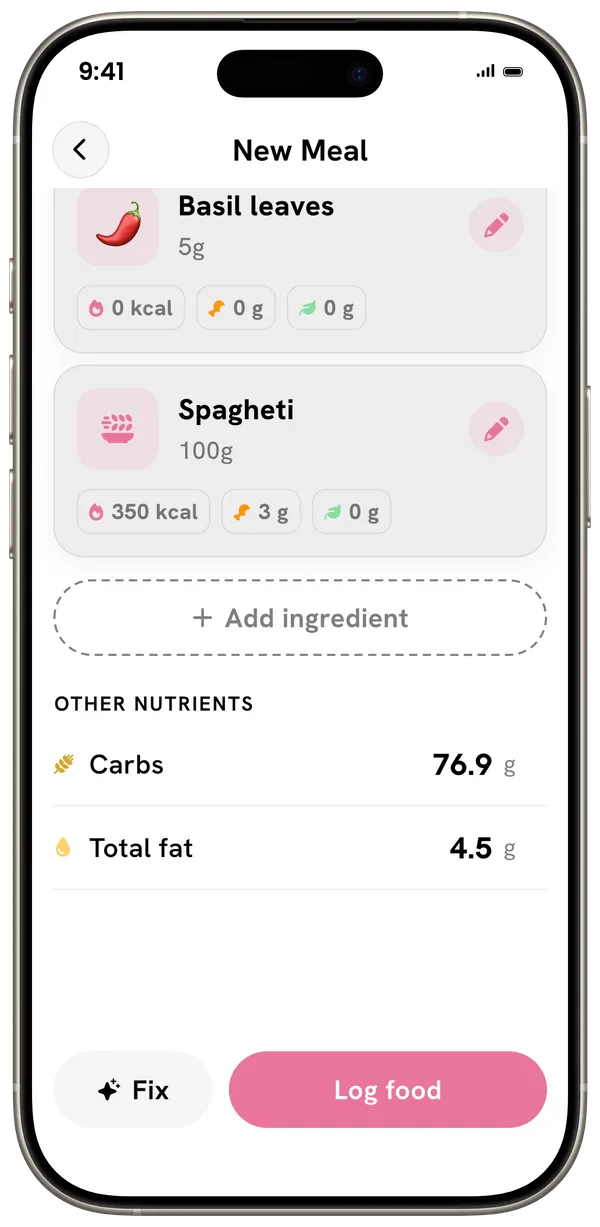
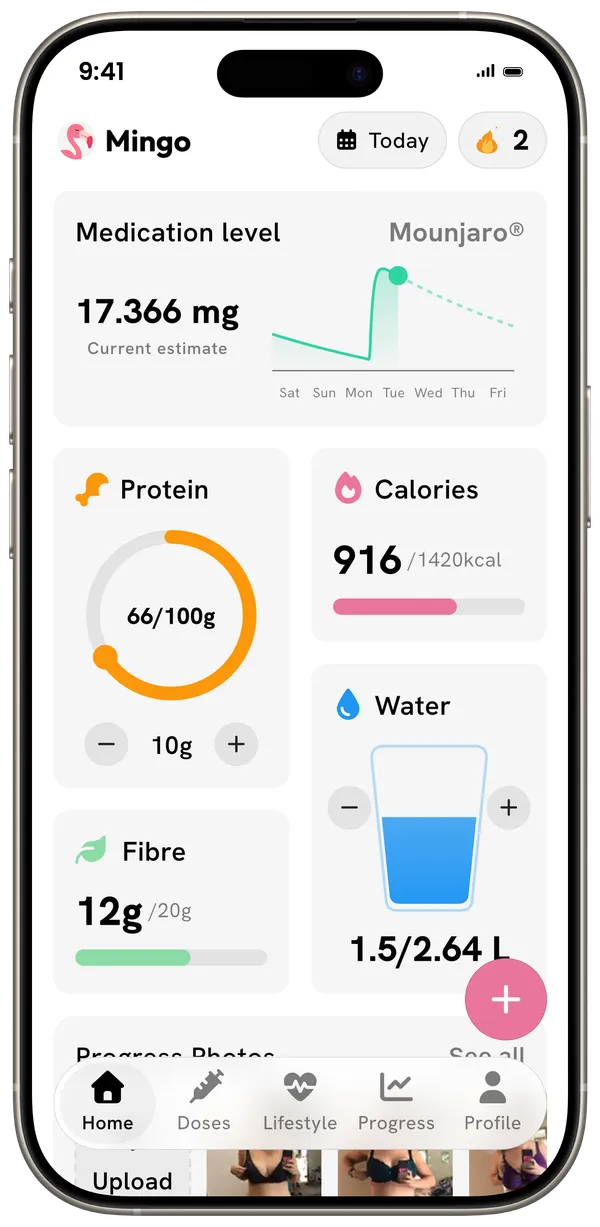
Mingo sets this target for you, logs meals by photo, voice or barcode, and shows each day's protein against it.

Rated 4.7 out of 5 on the App Store · 1,579 ratings

How the four formulas work

Each formula starts from a base weight at 5 ft (152.4 cm) and adds a fixed amount for every inch above it (Pai and Paloucek, 2000):

Formula Women Men
Devine (1974) 45.5 kg + 2.3 kg per inch 50 kg + 2.3 kg per inch
Robinson (1983) 49 kg + 1.7 kg per inch 52 kg + 1.9 kg per inch
Miller (1983) 53.1 kg + 1.36 kg per inch 56.2 kg + 1.41 kg per inch
Hamwi (1964) 45.5 kg + 2.2 kg per inch 48 kg + 2.7 kg per inch

The calculator runs all four and shows the lowest and highest result, because picking one would hide how much they disagree. At 5 ft 4 in, a woman’s results run from about 120 lb (Hamwi, Devine) to 129 lb (Miller); at 6 ft 2 in, a man’s run from about 167 lb (Miller) to 189 lb (Hamwi).

Where they came from

Devine published his equation in 1974 to dose gentamicin, an antibiotic, and it spread from there into hospital pharmacy (Pai and Paloucek, 2000). Robinson and Miller published alternatives in 1983, built from height and weight data, for the same drug-dosing purpose (Robinson et al., 1983). Hamwi’s came from a 1964 chapter on diabetes diets. None of them was tested as a health target, which is why this page puts the healthy BMI range next to them.

The healthy BMI range

The CDC classes a BMI of 18.5 to 24.9 as a healthy weight for adults (CDC). The calculator turns that into pounds or kilos for your height: the weight at a BMI of 18.5 and at 24.9. The range is the same for women and men. BMI doesn’t see muscle or where fat sits, so the waist-to-height calculator is a useful second check, and the BMI calculator shows whether your BMI meets the criteria for GLP-1 medicines.

From ideal weight to a goal you can reach

If you’re well above the range, the top of it can feel far away. Health guidelines start smaller: losing 5 to 10% of your weight improves blood pressure, blood sugar and cholesterol (NHLBI). That’s why the calculator shows your 5, 10 and 15% steps once you add your weight.

Those steps are also how the GLP-1 trials report results. In STEP 1, 83.5 in 100 people on Wegovy 2.4 mg lost at least 5% and 47.9 in 100 lost at least 15%; in SURMOUNT-1, on Zepbound 15 mg, the numbers were 90.9 and 70.6 in 100. The GLP-1 weight loss calculator applies them to your own weight and goal.

Track your way to it

In Mingo you set a goal weight and the weekly pace you’re aiming for, see your estimated goal date, and log every weigh-in on a chart.

Frequently asked questions

What is my ideal weight for my height?

There's no single answer. The four classic formulas give a number each, and they can differ by 20 lb (9 kg) or more at the same height. The healthy BMI range, 18.5 to 24.9, gives a wider band. Enter your height to see both.

Which ideal body weight formula is most accurate?

None was built to tell people what to weigh. Devine's formula (1974) was written to dose a medicine, gentamicin, and is still the most used in hospitals. Robinson's and Miller's (both 1983) were written as alternatives for the same purpose. Hamwi's (1964) came from diabetes diet planning. They give a rough range, not a target.

How do I calculate my goal weight?

A goal you can reach is often a step, not the end point. Guidelines name losing 5% of your weight as a first goal because it already improves health markers. Add your current weight to see your 5, 10 and 15% steps.

Do the formulas work if I'm shorter than 5 feet?

They weren't written for adults under 5 ft (152 cm), so this calculator doesn't extrapolate them. The healthy BMI range still applies at any adult height.

Why is the healthy BMI range so wide?

Because BMI is weight divided by height squared, the range from 18.5 to 24.9 spans about 35 to 50 lb (15 to 23 kg) at most adult heights. It doesn't account for muscle, age or where you carry weight, so a waist measurement adds useful information.

Should my goal weight be in the ideal range if I'm on a GLP-1?

Not necessarily. The trials measured how many people lost 5, 10, 15 and 20% of their weight, not how many reached a healthy BMI: on Wegovy 2.4 mg and Zepbound 15 mg, 30.2 and 56.7 in 100 people lost 20% or more. Your doctor can help you set a goal; the GLP-1 weight loss calculator shows how many people reached a goal like yours.

Is ideal body weight the same for men and women?

The formulas give women a lower base weight and, in two of them, a smaller amount per inch, so men's results are higher at the same height. The BMI range is the same for both.

Sources

Updated .

  1. Pai MP, Paloucek FP. The origin of the "ideal" body weight equations. Ann Pharmacother 2000
  2. Robinson JD et al. Determination of ideal body weight for drug dosage calculations. Am J Hosp Pharm 1983
  3. CDC, Adult BMI categories
  4. NHLBI, Aim for a healthy weight: losing 5 to 10% of your weight

GLP-1 calculators and dose charts