Why a side effect log beats your memory
Ask anyone three months into Ozempic or Zepbound how their first dose increase went and you’ll get a shrug and “rough for a while.” That is exactly the answer your prescriber can’t do much with. Was the nausea worse at 0.5 mg or at 1 mg? Did it last two days or five? Is the constipation new, or has it been there all along?
The US labels give a clear picture of the average person. In the Wegovy trials, 44% of people on the 2.4 mg dose had nausea, against 16% on placebo. On Zepbound, nausea ran from 25% to 29% depending on the dose. Every label says most of the digestive side effects were reported while the dose was being raised. What the labels can’t tell you is your own pattern, and that’s what a tracker is for. Our guide to GLP-1 side effects by drug has the full tables.
What to write down each time
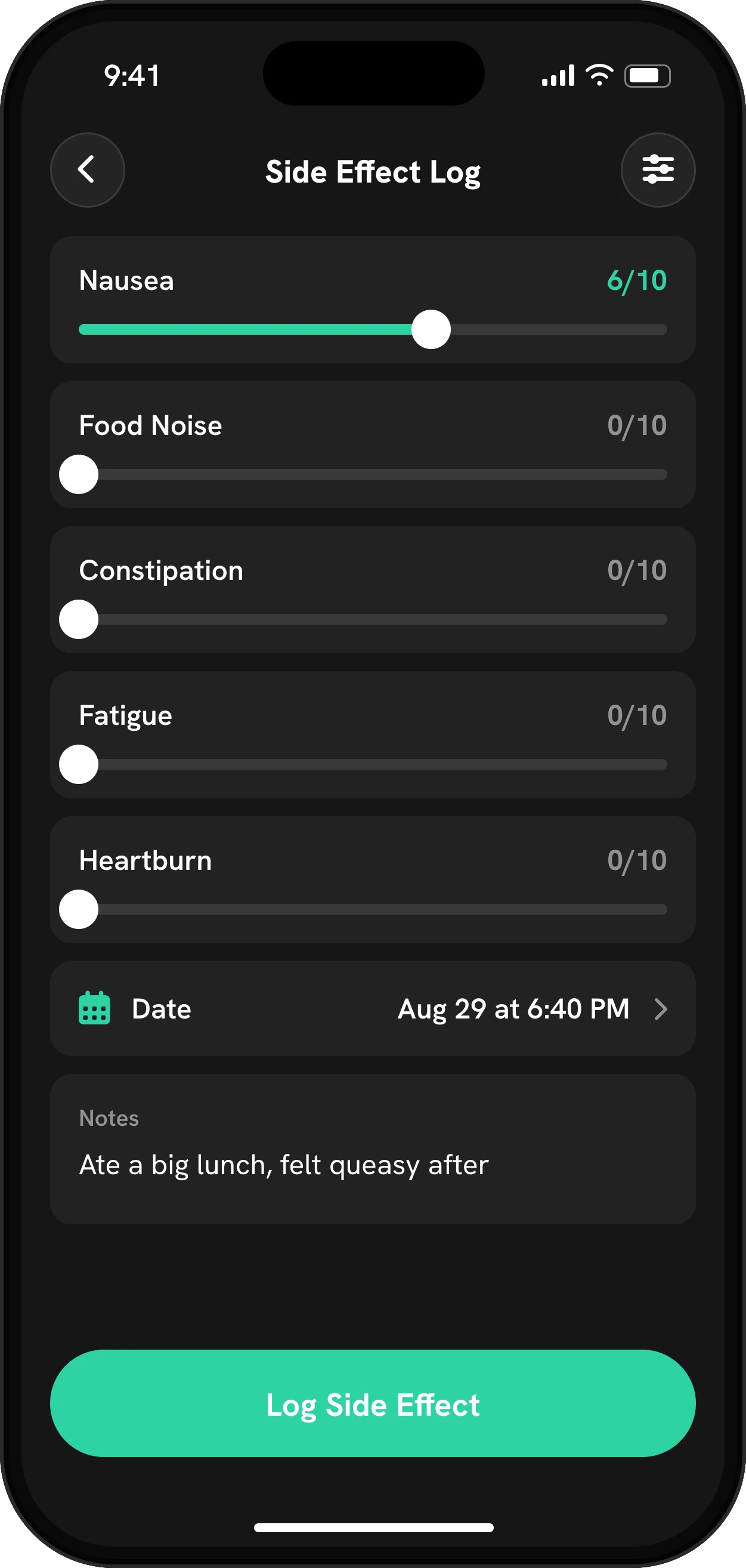
A useful entry answers four questions, and Mingo asks each of them:
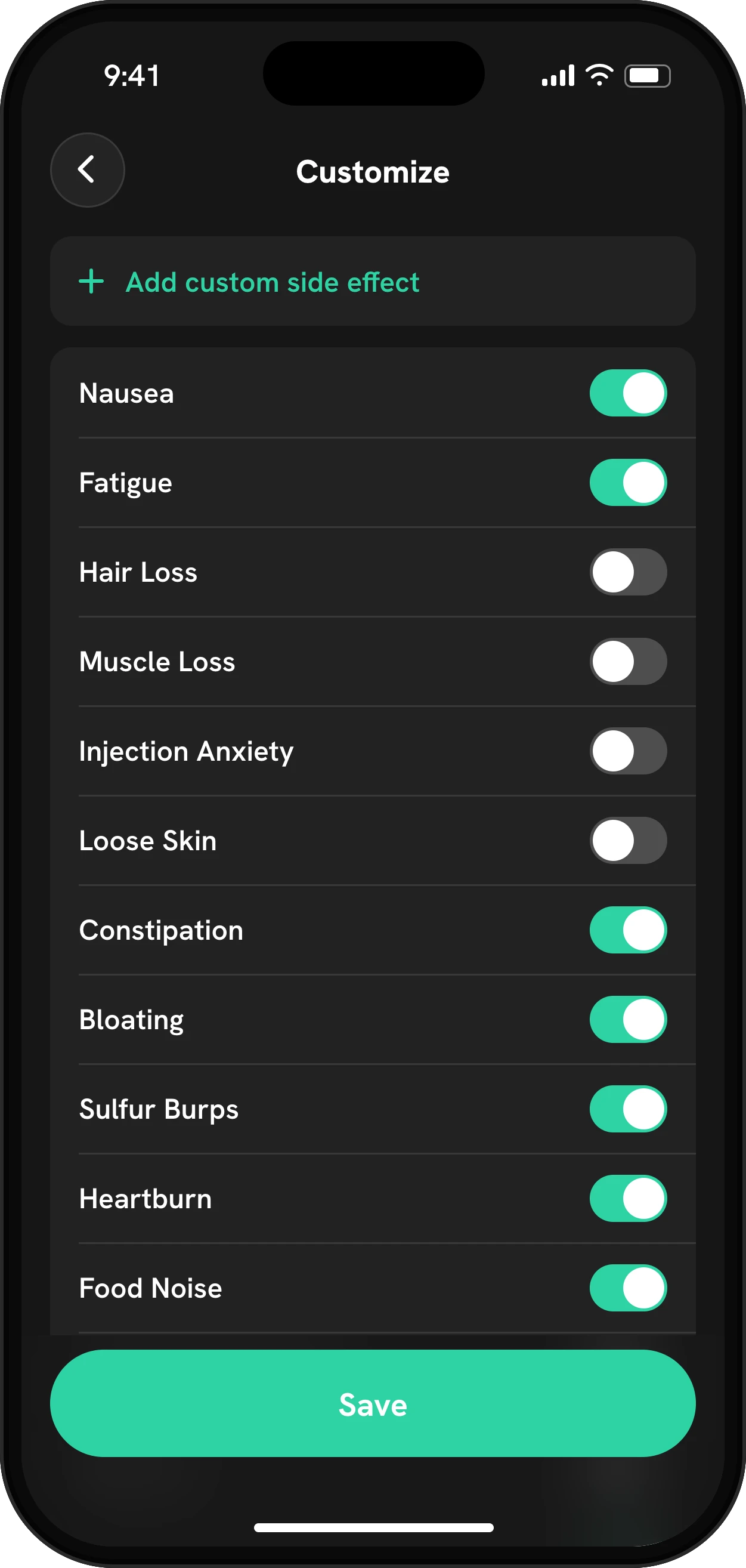
- What did you feel? Pick it from the list of 18 or add your own.
- How strong was it? A 0 to 10 slider. Be consistent rather than precise: a 6 should mean roughly the same thing next month.
- When? The log is dated, and Mingo works out how long it was after your last shot or pill.
- Anything that might explain it? A short note: a big dinner, a bad night, a missed meal, a new dose.
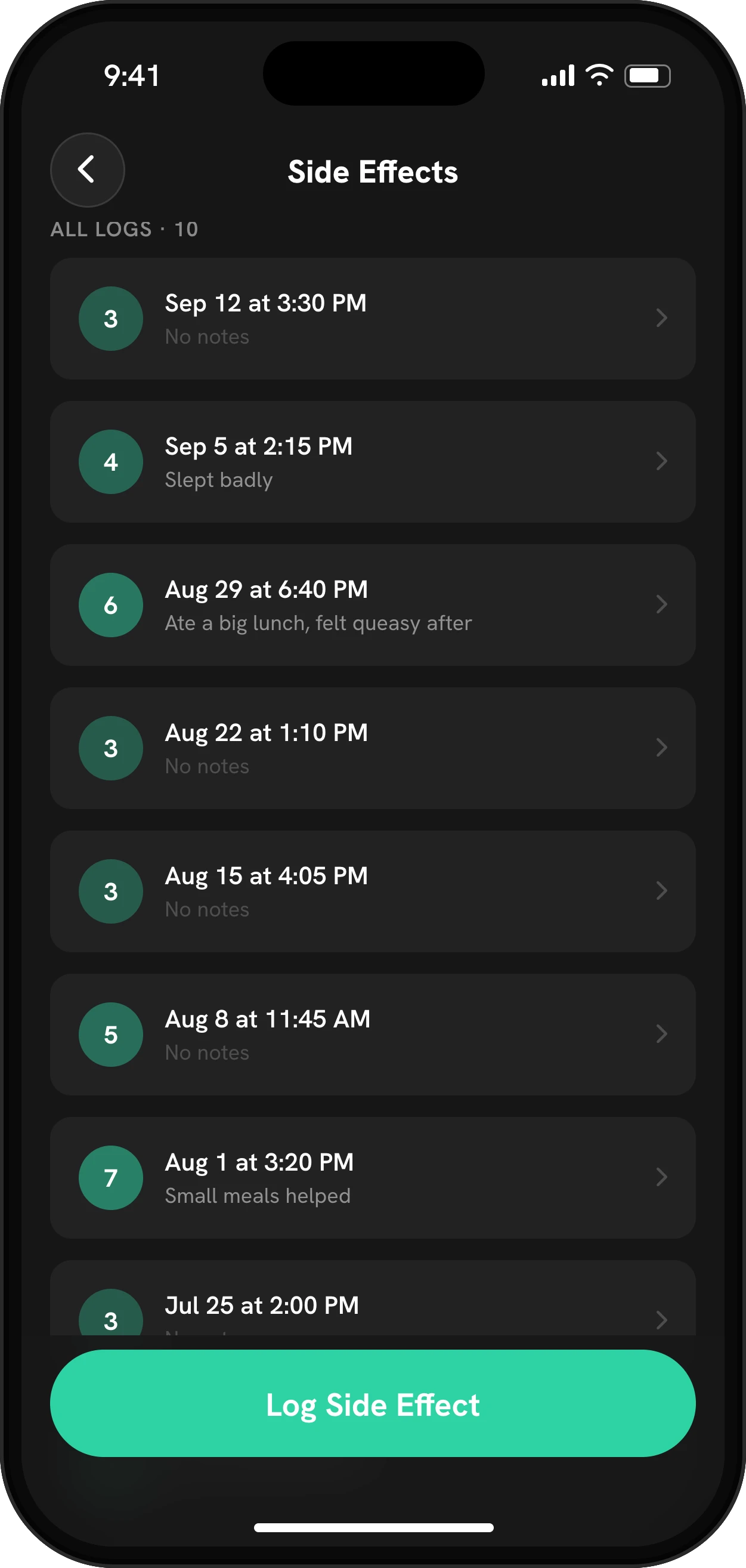
You don’t have to log every day you feel fine. Logging the days something happens, with an honest severity, is enough to show a shape after a few weeks.
Reading the chart against your doses
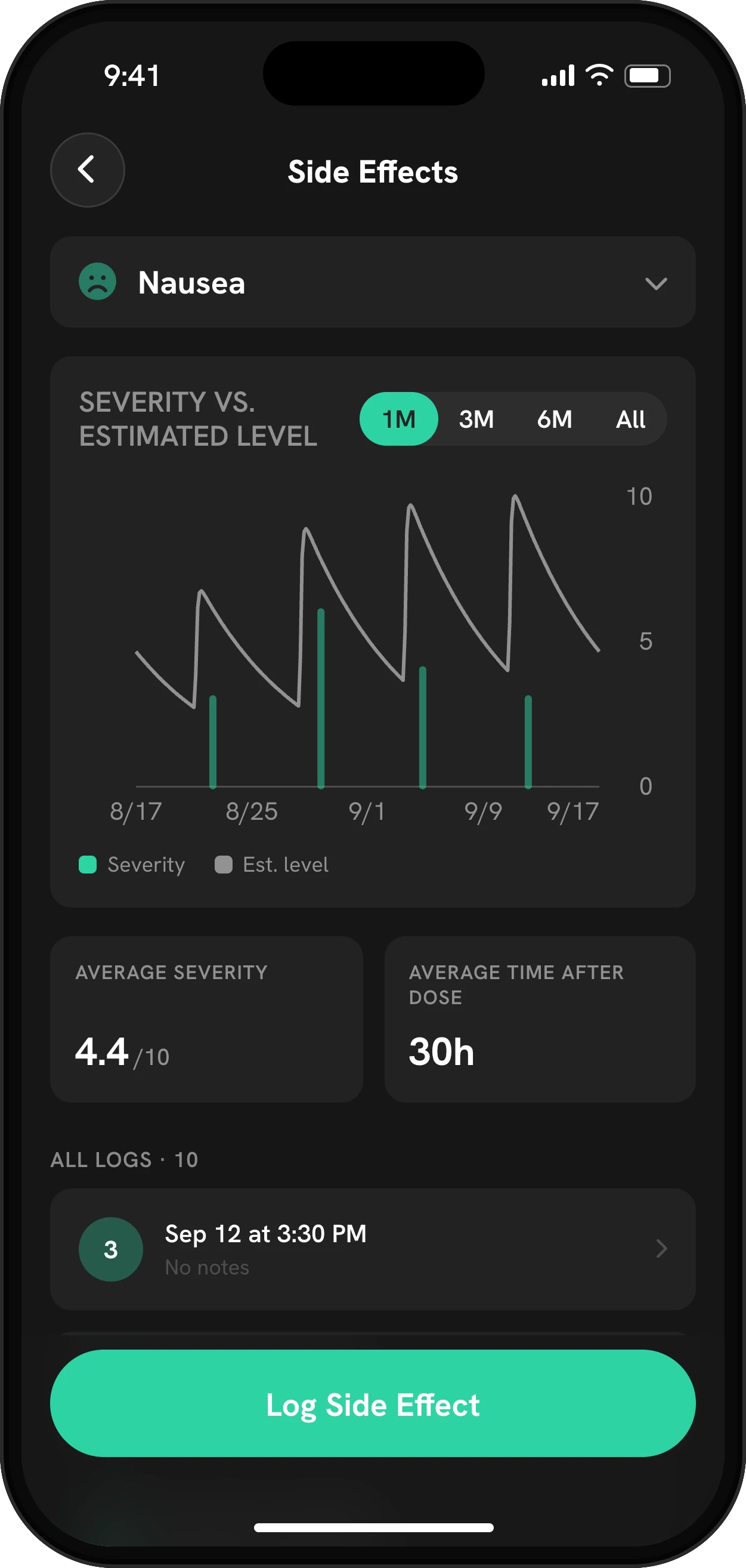
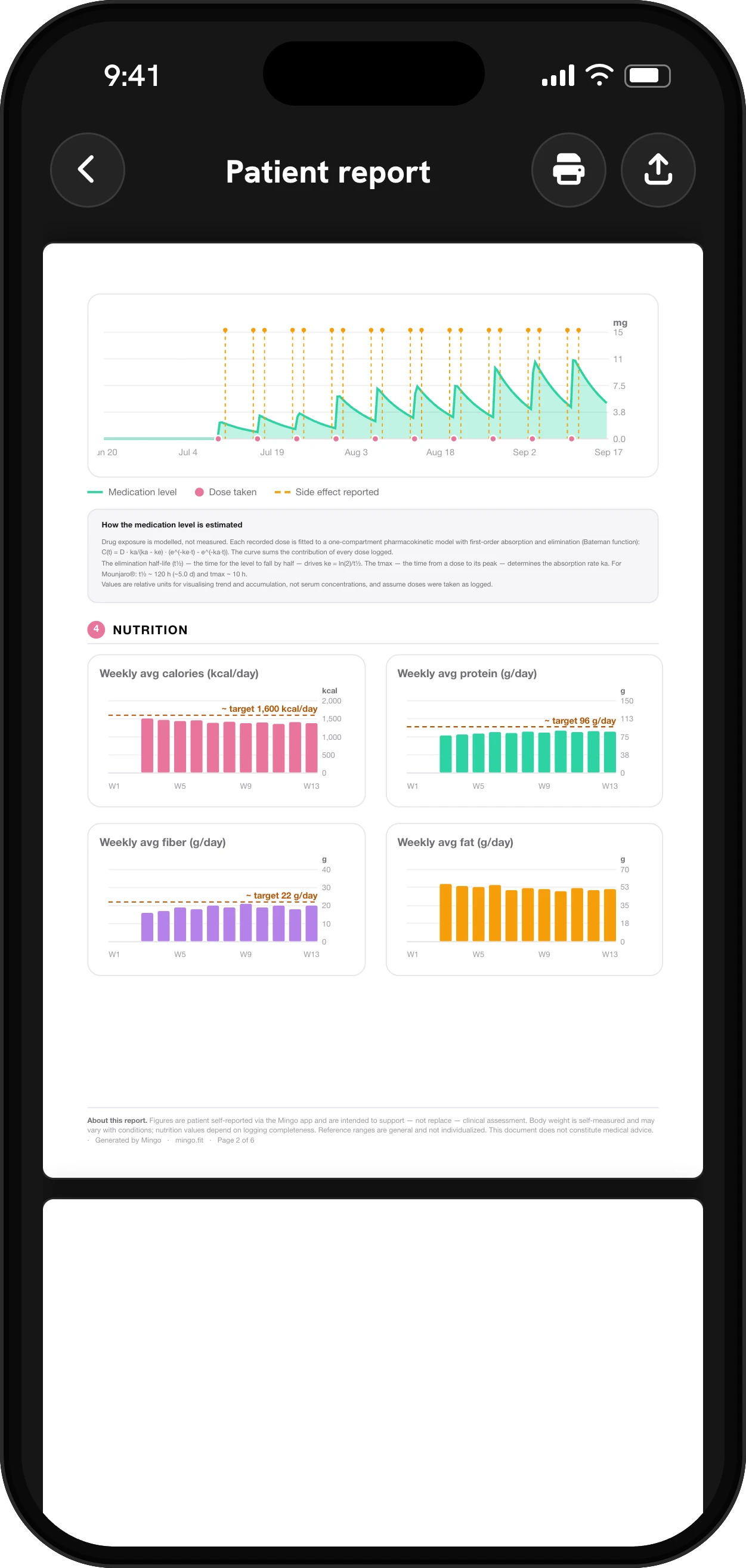
Every symptom gets its own screen. The bars are your severity logs. Behind them runs the curve of your estimated medication level, drawn from the doses you logged and the medicine’s published half-life. It’s an estimate, not a blood test, but it makes the timing visible: if your nausea bars keep landing on the rising edge of the curve, the day after each shot, you’ll see it.
Under the chart Mingo shows two numbers for the period you pick:
- Average severity, so you can compare this month with last month.
- Average time after dose, in hours or days.
Many people find that a symptom fades on one dose step and returns, usually milder, after the next increase. That’s the pattern the labels describe, and seeing it in your own data makes the next step-up less of a surprise. The GLP-1 timeline calculator shows when your dose steps are likely to fall.
Why not just a notes app?
Plenty of people start with a note on their phone: “Tue, queasy after lunch.” It works until you try to answer a real question with it, like whether the nausea is milder on this dose than the last one. General symptom apps fix part of that with charts, but they don’t know what a shot week is.
That’s the gap a GLP-1 symptom tracker app has to fill, and it’s what Mingo is built around. Your symptoms live next to your doses, so the app can tell you that a symptom tends to arrive about a day after your shot, or that its average dropped this month compared with last. You don’t have to set up the medicine side yourself: the dose steps, the shot days and the estimated level are already there from your dose log.
Two symptoms that deserve their own page
Some symptoms people want to follow more closely than others. Food noise, the constant background chatter about food, is in Mingo’s list because many people start a GLP-1 hoping it gets quieter; the food noise page explains what it is and how to rate it. Nausea is the most common side effect on every label, and the nausea tracker covers what to log and when to call your prescriber.
When a tracker isn’t the answer
A log is for patterns, not emergencies. The labels warn about pancreatitis, gallbladder problems and kidney injury from dehydration. Call your prescriber about stomach pain that is severe or won’t go away (with or without vomiting), vomiting or diarrhea that keeps going, or signs of dehydration such as dizziness and passing very little urine. Get emergency help for swelling of the face or throat or trouble breathing. Don’t change or skip a dose on your own because of what a chart shows; bring it to your prescriber.
Taking it to your appointment
Before a visit, export the doctor report for the period since your last appointment. Side effects appear as marks on the medication chart and in the day-by-day log, next to your doses, weight and meals. It turns “I felt sick for a while” into dates, severities and dose steps your prescriber can act on.
Mingo is a tracker, not medical advice. Your prescriber decides your dose and when to change it.


