Why GLP-1 medicines make you queasy
If you’re on Ozempic, Wegovy, Mounjaro or Zepbound and feeling queasy, you’re in large company. Nausea is the most common side effect in every US label. In the Wegovy trials, 44% of people on the 2.4 mg dose reported it, against 16% on placebo. On Zepbound it was 25% to 29% depending on the dose, against 8% on placebo.
Part of the reason is how these medicines work. They slow the rate at which your stomach empties, so food sits there longer and you feel full sooner. That fullness is part of what helps with appetite, and it’s also why a big or rich meal can suddenly feel like too much. Our article on GLP-1 side effects by drug has every label’s numbers.
How long it tends to last
The most useful study here pooled three Wegovy trials. Stomach side effects were mostly mild to moderate, almost never serious, temporary, and most frequent during or shortly after a dose increase. Only a small share of people stopped the medicine because of them. The Zepbound and Mounjaro labels say the same thing in their own words: most nausea, vomiting and diarrhea was reported while the dose was going up, and it became less common over time.
So for many people nausea follows the dose schedule. It arrives with a step-up, eases over the following weeks, and may come back at the next step. The GLP-1 timeline calculator shows when each step usually falls, so you can see the next one coming.
The same analysis found something worth knowing: people lost a similar share of weight whether or not they had stomach side effects. Feeling sick isn’t a sign the medicine is working harder, so there’s no reason to tough it out in silence.
What to write down
A log turns “I’ve felt rough lately” into something your prescriber can act on. Keep each entry short:
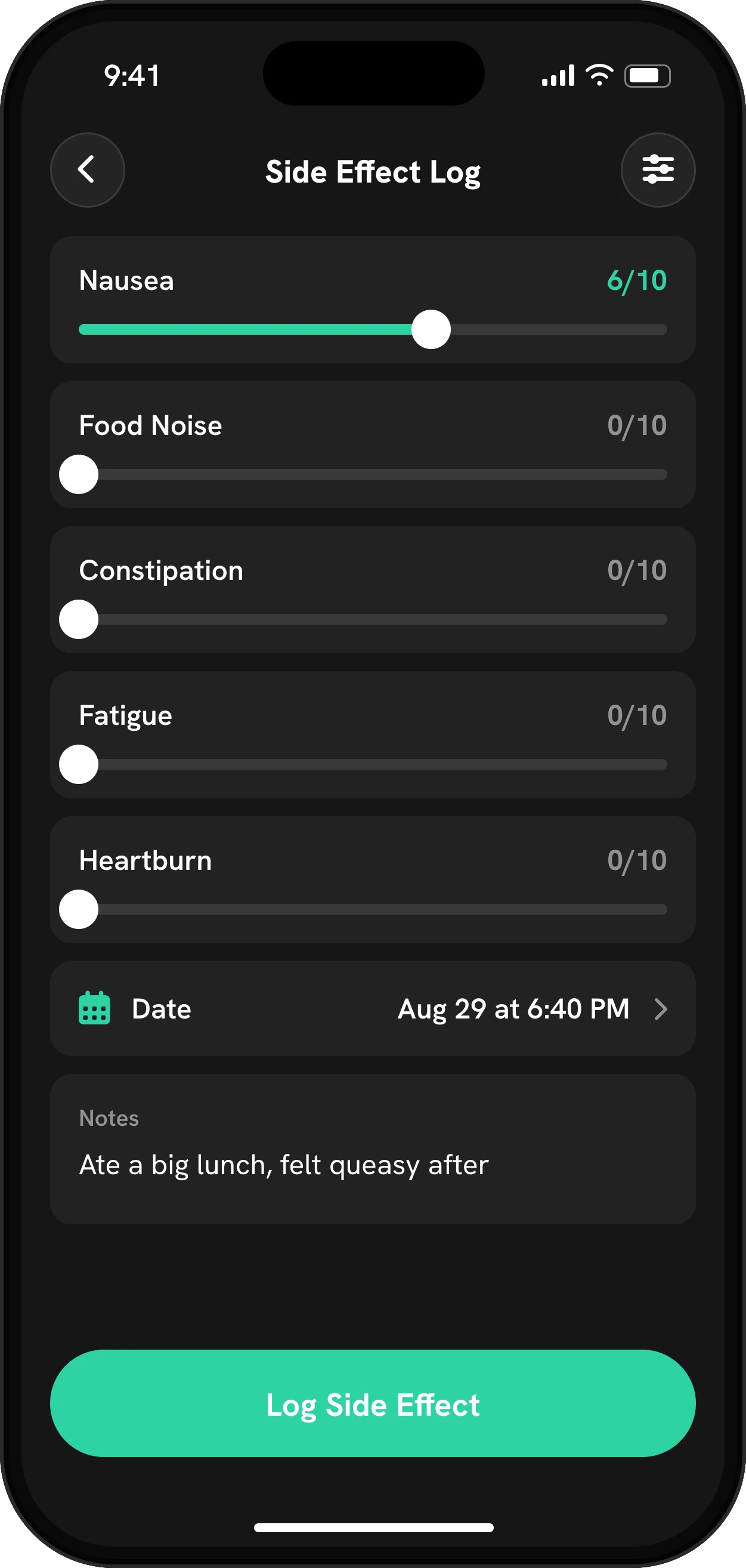
- Severity, 0 to 10. Mild queasiness might be a 2; not being able to eat might be an 8.
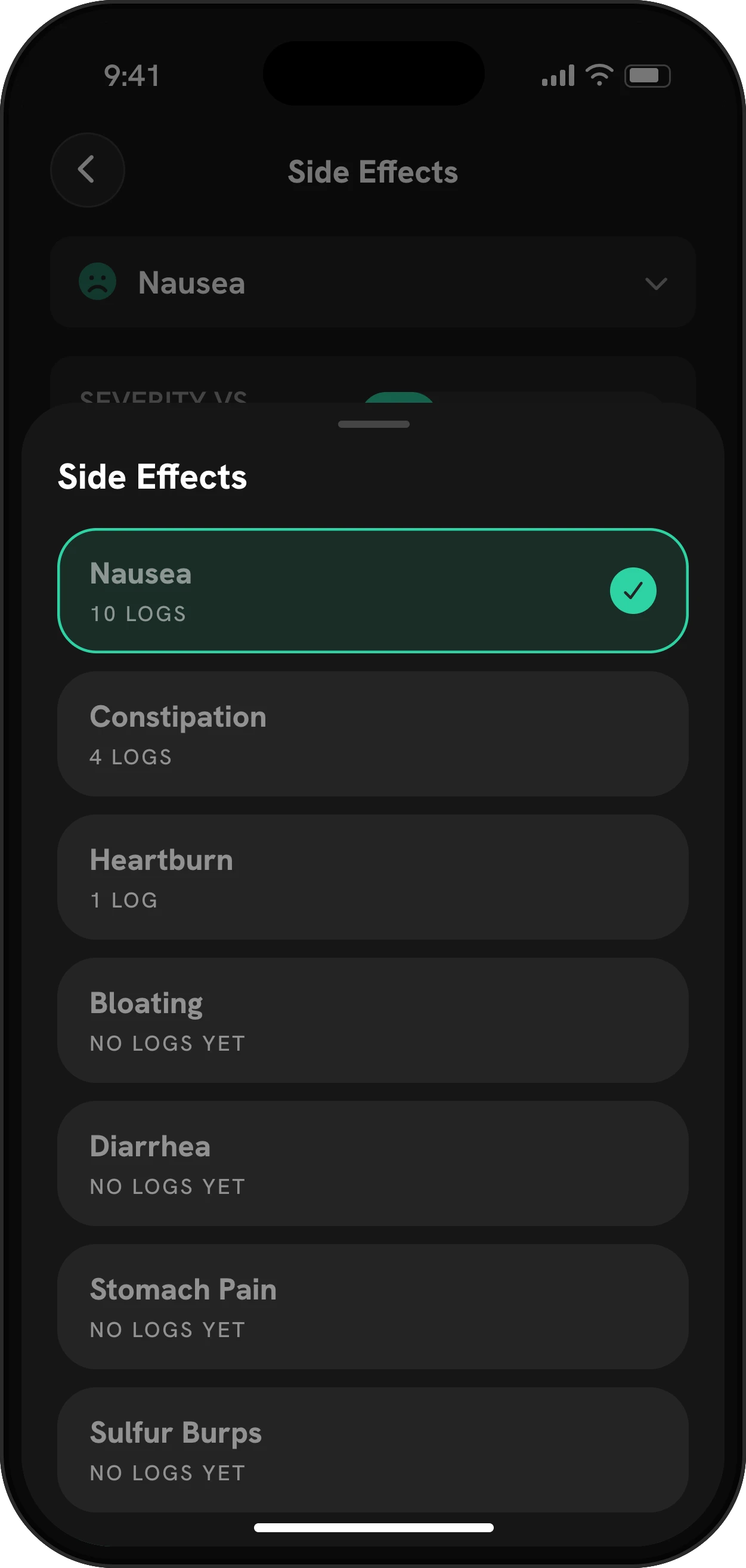
- Other stomach symptoms that came with it. Mingo lists diarrhea, constipation, bloating, stomach pain, heartburn and sulfur burps alongside nausea, and you can add vomiting as a custom symptom.
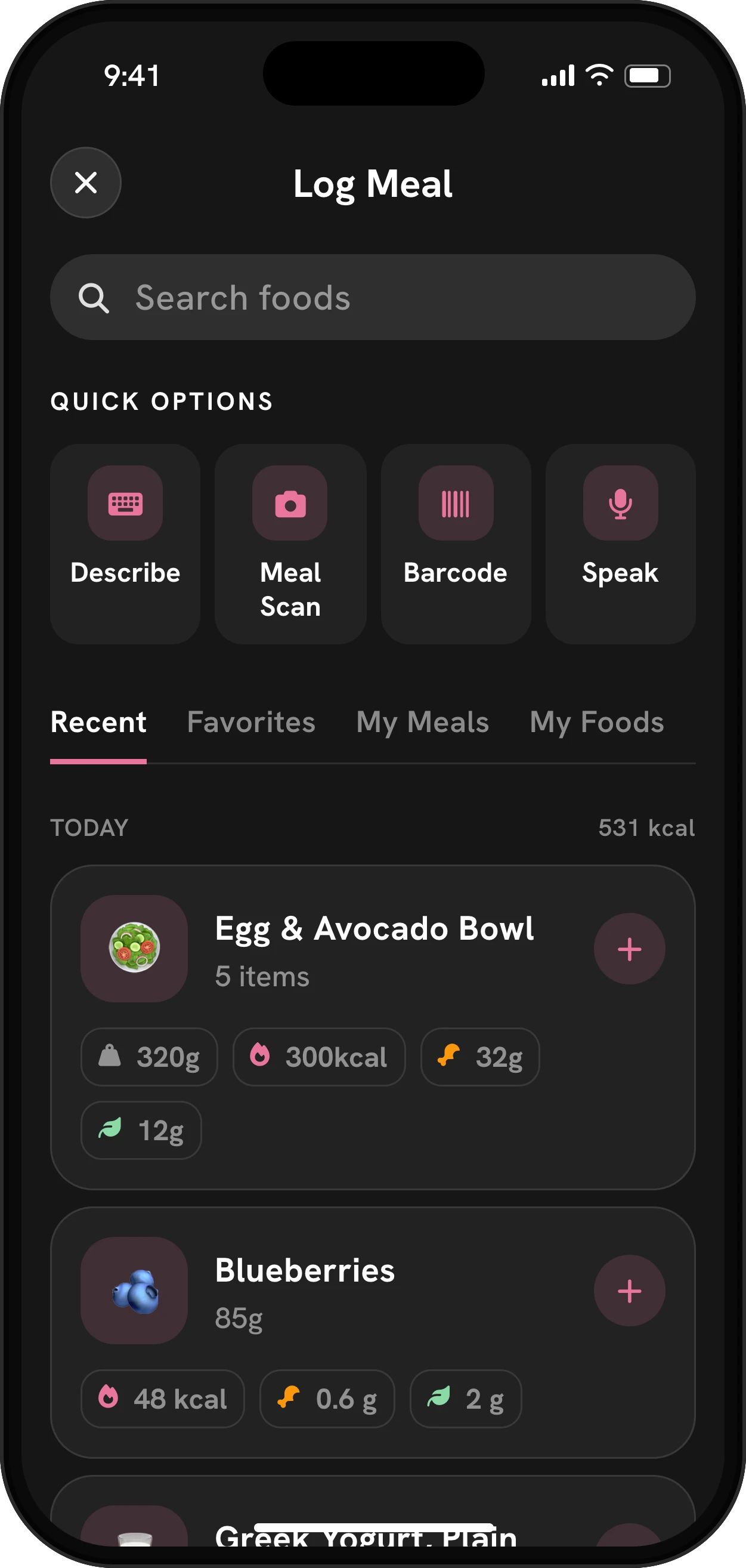
- What you ate, and when. Large, fatty or late meals are triggers people often mention. If you log meals in Mingo, they’re in the same history.
- Fluids. Note if you couldn’t keep water down.
You don’t have to log on good days. An entry each time symptoms show up, with an honest number, is enough.
Reading your own pattern
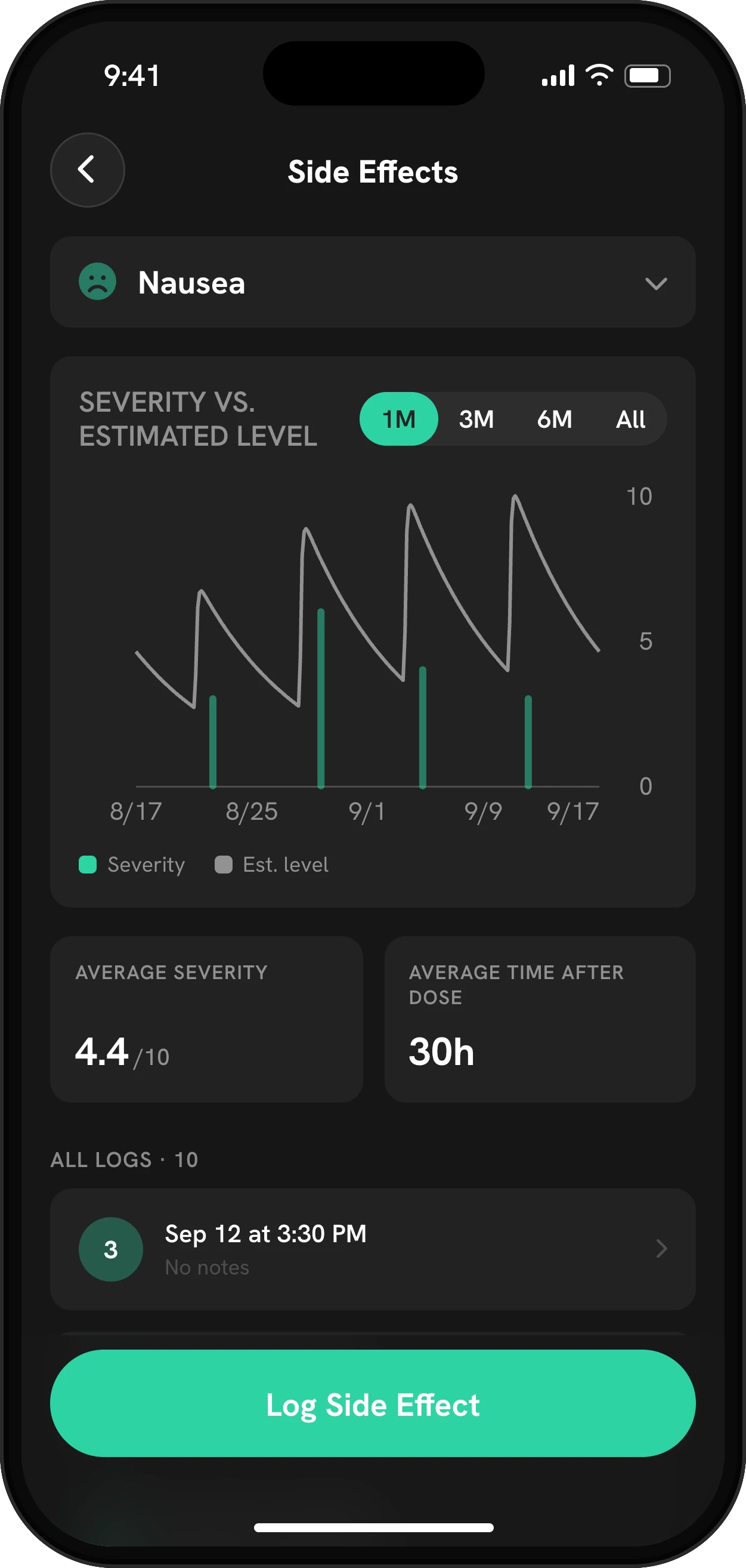
Each symptom in Mingo has its own chart: your severity logs as bars over the curve of your estimated medication level. The curve comes from the doses you log and the medicine’s published half-life, so it’s an estimate, not a lab value, but it makes timing easy to see. Below the chart you’ll find the average severity and the average time after a dose, in hours or days.
After a few weeks your log can answer questions no article can:
- Does nausea peak the day after your shot, or two days later?
- Is it milder this month than last, on the same dose?
- Did it come back after the last step-up, and for how long?
- Does it line up with certain meals?
That’s the conversation to have before a dose change. Your prescriber may decide to keep you on a dose a little longer, and your chart shows them why.
Habits people try
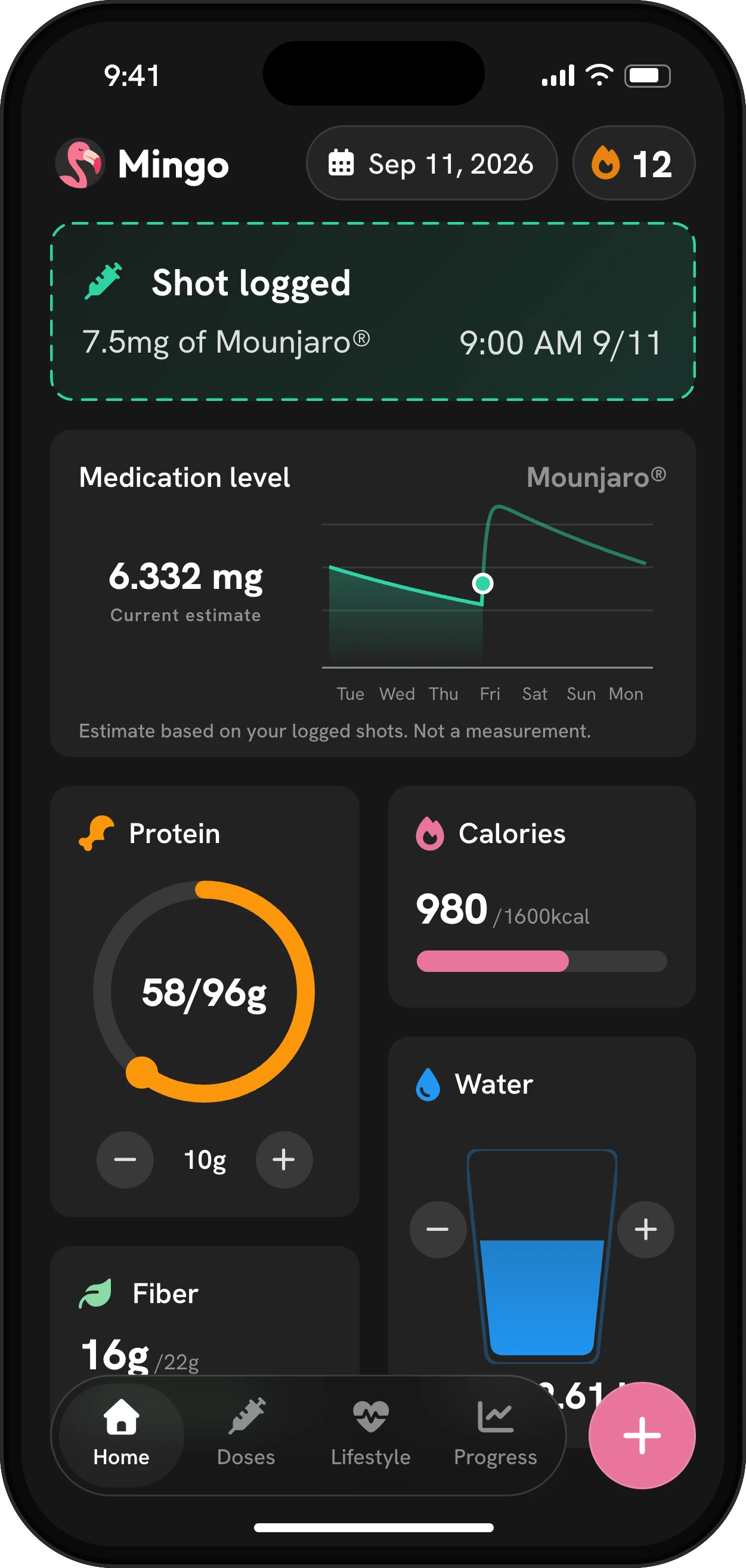
The Medication Guides put fluids first: nausea, vomiting and diarrhea can lead to dehydration, which can cause kidney problems. Mingo’s water tracker sits on the Home screen next to protein and fiber, and the water and fiber calculator gives you a daily starting target to discuss with your care team.
Beyond that, the advice clinicians commonly give is simple: smaller meals, eating slowly, stopping when you first feel full, and going easy on greasy food and alcohol. Some people find a small meal sits better than an empty stomach. Your log is how you find out which of these makes a difference for you. If nothing helps, your prescriber may suggest a medicine for nausea; don’t start one without asking.
When to stop logging and call
A log is for patterns, not for waiting out something serious. Call your prescriber if:
- nausea, vomiting or diarrhea is severe or doesn’t go away,
- you can’t keep fluids down, or you feel dizzy and are passing very little urine,
- you have severe stomach pain that won’t stop, with or without vomiting. The labels list it as a possible sign of pancreatitis,
- you feel full long after eating, keep vomiting, or have strong bloating and upper belly pain. The NIH lists these as symptoms of gastroparesis (slow stomach emptying), and the Wegovy label says it isn’t recommended in severe gastroparesis.
Don’t skip or change a dose on your own because of your log. If you missed a shot because you were unwell, the missed dose calculator has each label’s rule, and your prescriber can tell you what to do next.
Part of the bigger picture
Nausea is one of 18 built-in symptoms in Mingo’s side effect tracker, and food noise is another. Before your appointment, export the doctor report: your side effect logs are marked on the medication chart and listed day by day with your meals.
Mingo is a tracker, not medical advice.


