Why food tracking changes on a GLP-1 medicine
Semaglutide (Ozempic, Wegovy) and tirzepatide (Mounjaro, Zepbound) slow digestion and turn down hunger. That’s how they help, but it also means portions shrink across the board. Protein, fiber and fluids shrink with them, and those are the three things people on treatment most often run short of.
A 2025 joint advisory from four US nutrition and obesity societies puts it plainly: during GLP-1 treatment, eat enough protein to protect lean mass, get fiber and fluids to manage constipation, and make every smaller meal count (Mozaffarian et al., 2025). Calories still matter, but for most people they take care of themselves. The gaps are elsewhere.
That’s why a food tracker for GLP-1 users looks a little different from a classic calorie counter. Mingo shows protein, fiber and water as first-class goals on the Home screen, with calories and macros one tab away.
What to watch when you’re eating less
| What | Why it matters on treatment | Where the goal comes from |
|---|---|---|
| Protein | Part of the weight lost is lean mass; enough protein helps keep it | 1.2 to 1.6 g per kg a day in the 2025 joint advisory (protein calculator) |
| Fiber | Constipation is one of the most common side effects | 14 g per 1,000 calories, from the US dietary reference intakes (water and fiber calculator) |
| Water | Labels warn that fluid lost through vomiting or diarrhea can harm the kidneys | No label sets an amount; Mingo uses 30 to 37 mL per kg of body weight |
| Calories | Too few makes it hard to reach protein and keep energy up | Set from your daily burn (calorie calculator) |
In the Wegovy weight-loss trials, 24% of people on 2.4 mg reported constipation, against 11% on placebo (Wegovy prescribing information, Table 3). Fiber and water won’t solve every case, but tracking them shows you quickly whether you’re anywhere near your goal.
Logging that fits a small appetite
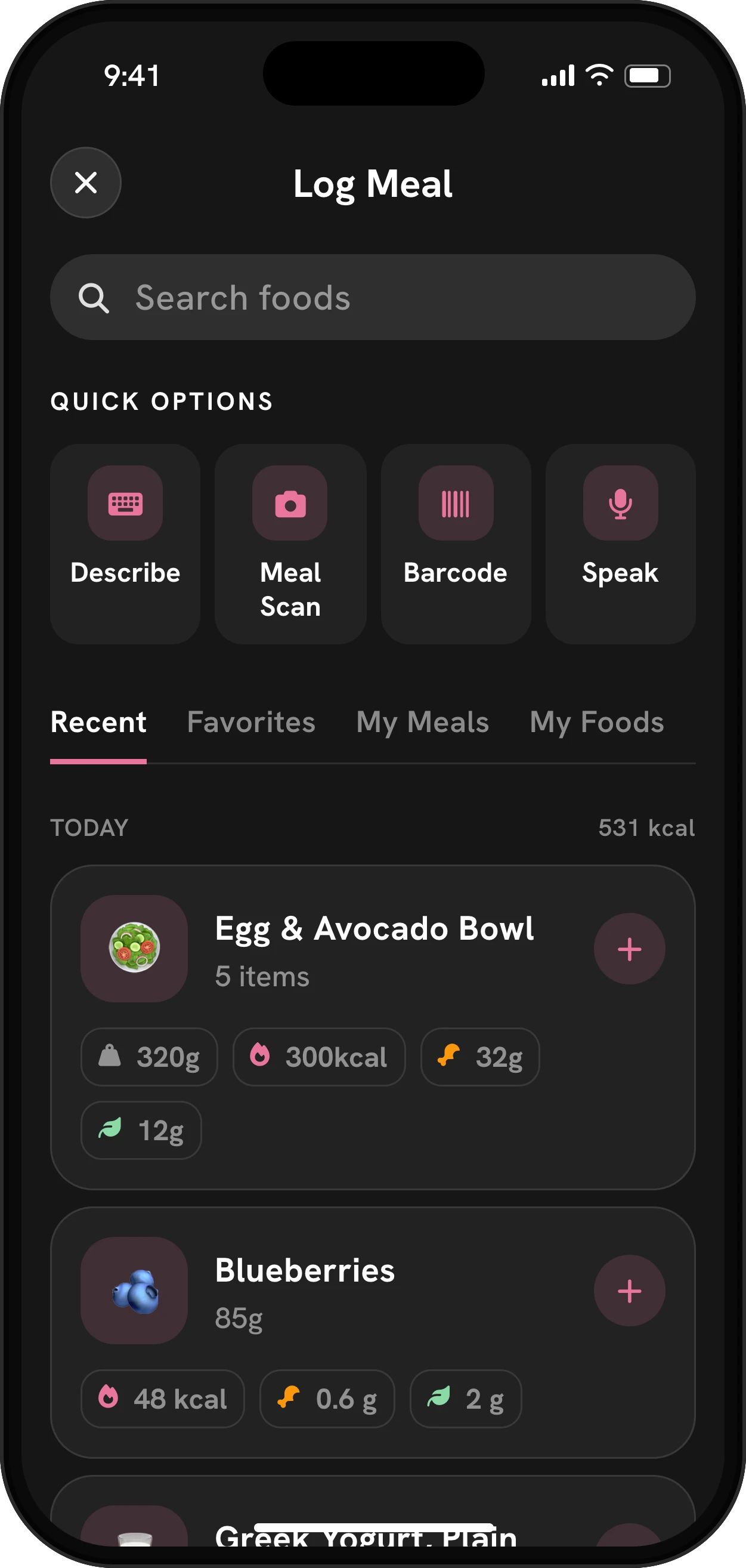
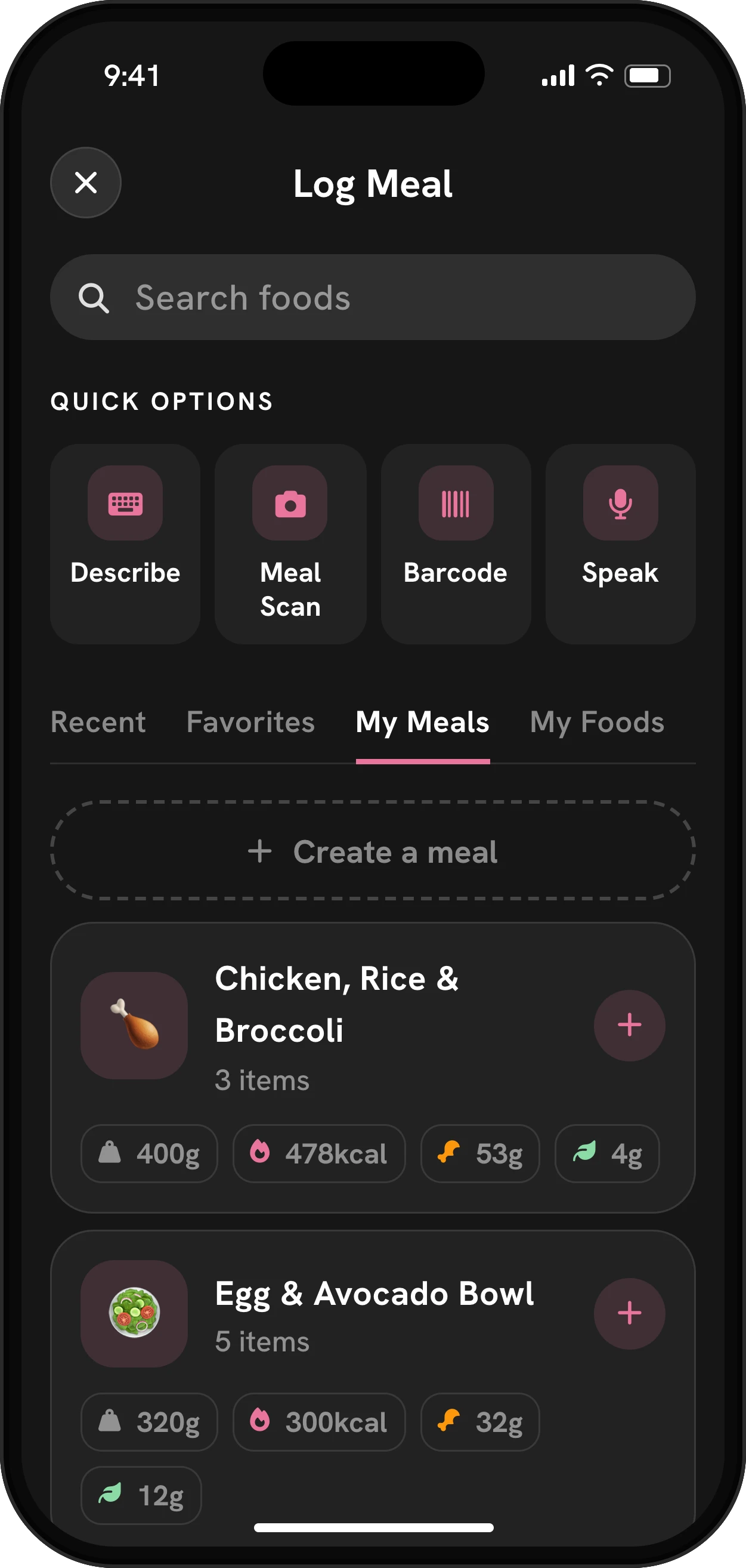
On a GLP-1, meals can be a few bites of this and half a plate of that. Searching a database for each item gets old fast. Mingo gives you five ways in, and you can mix them:
- AI meal logging from a photo, a voice note or a typed sentence like “two eggs and half an avocado”.
- Barcode scanner for packaged foods, plus a food search and your own custom foods.
- Favorites and saved meals for the breakfast you eat every day.
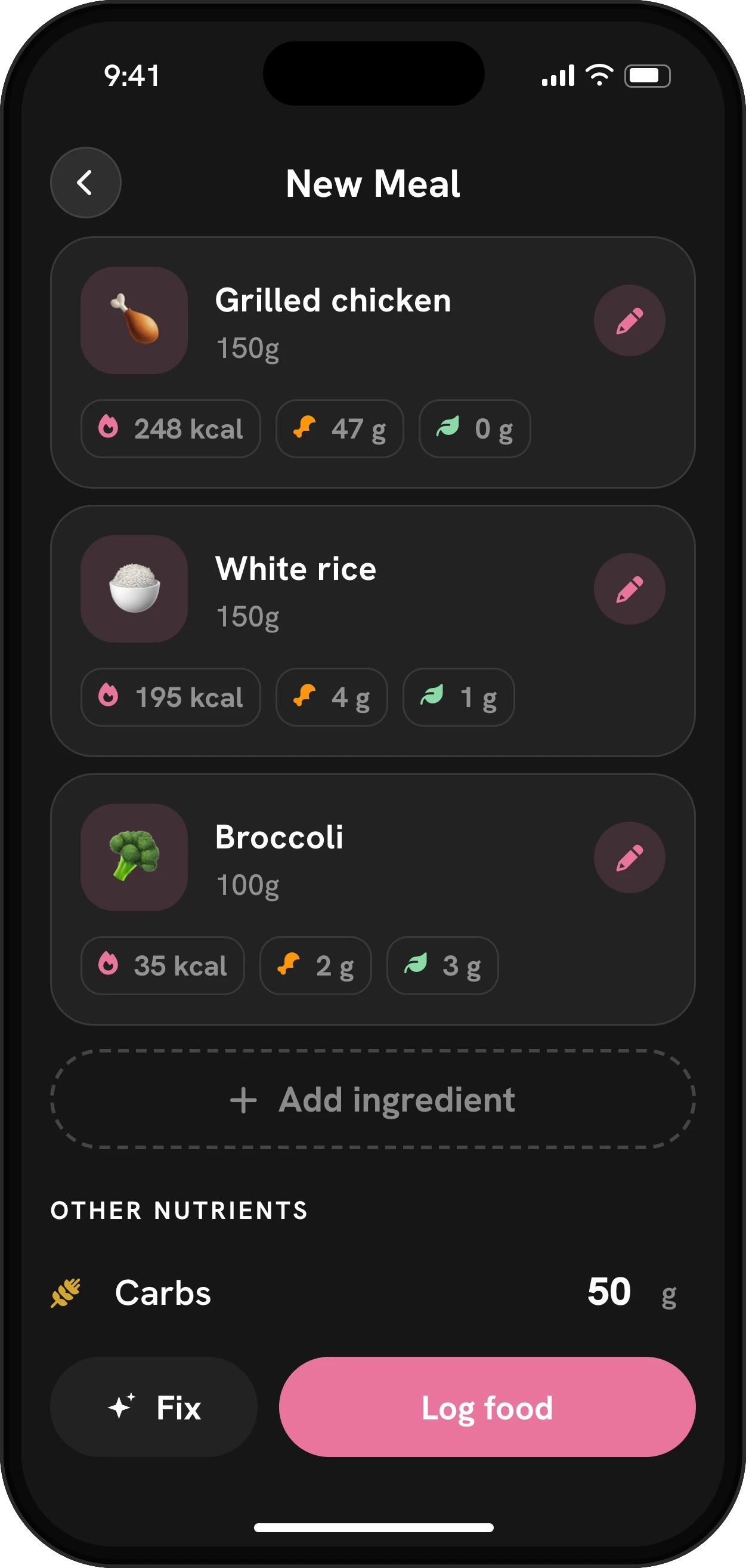
Every estimate can be edited. If the photo missed the olive oil, add it. If the portion was smaller, change the grams. Mingo recalculates the meal.
The daily picture
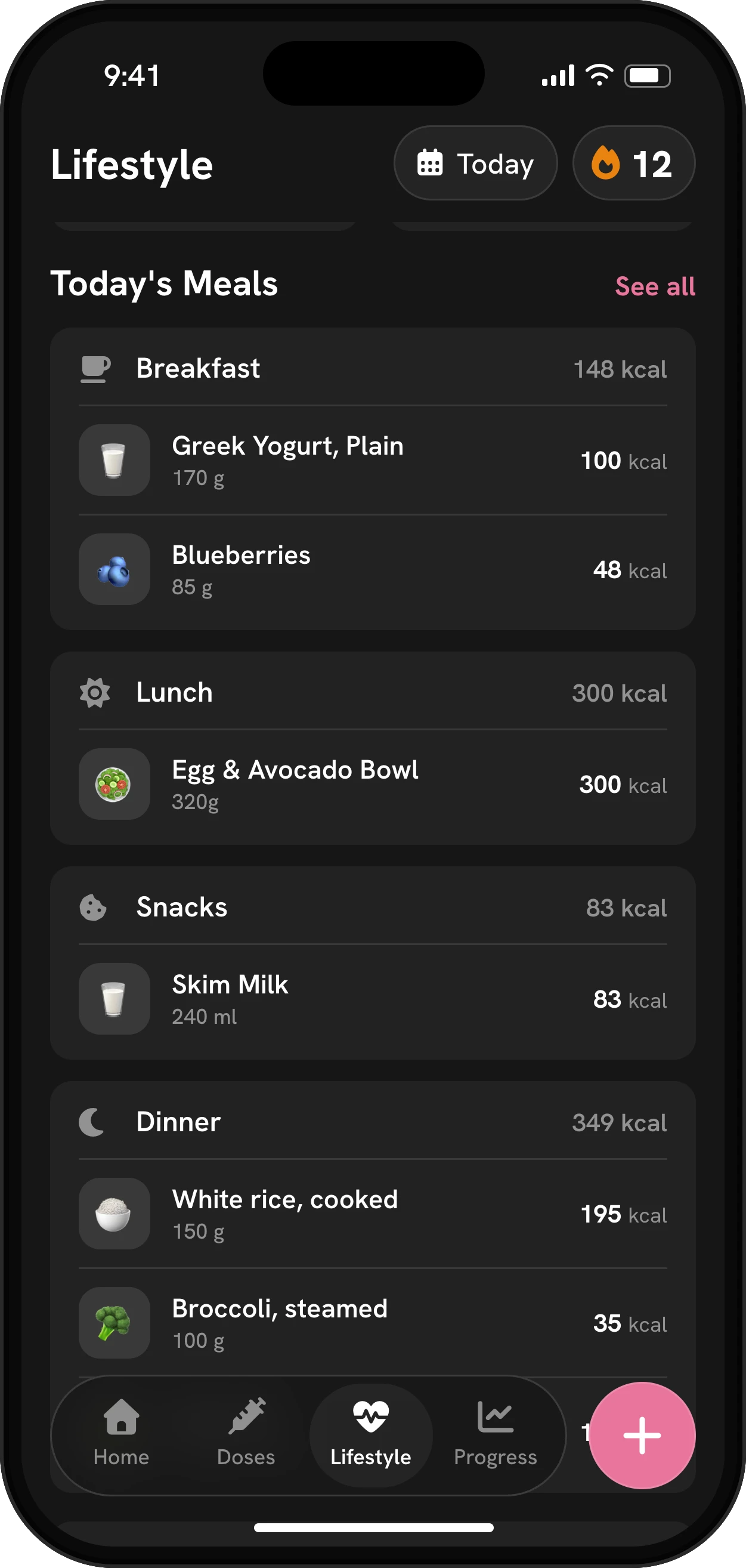
Once meals are in, the Home screen shows how far along you are on protein, fiber and water. The Lifestyle tab adds calories and macros, plus activity. Each nutrient opens into a sheet with your goal, today’s status and your history.
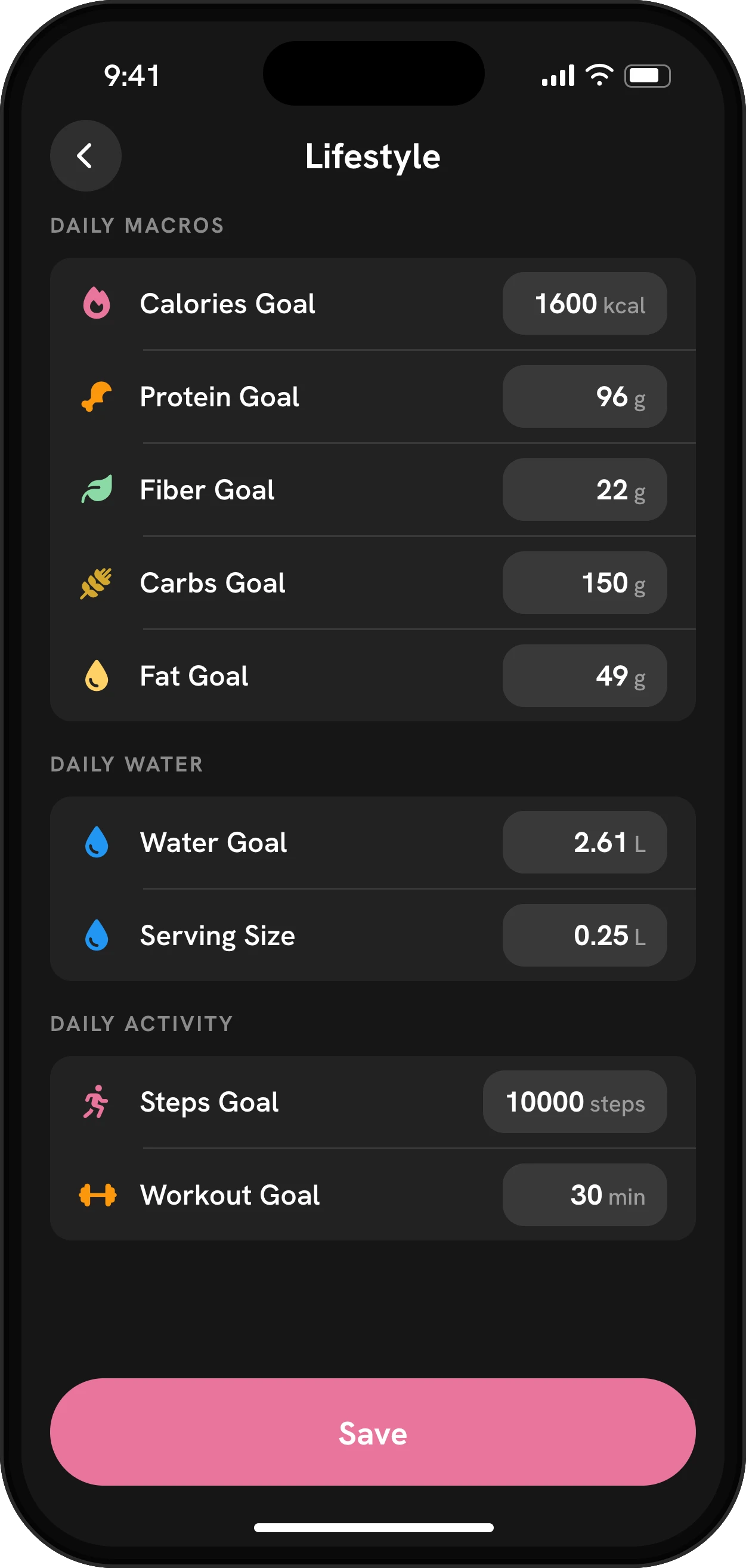
Your goals come from the same formulas as our free calculators, using your weight, height, sex, age and activity level. You can change any of them, for example if your dietitian gave you a protein number.
Food on the same timeline as your doses
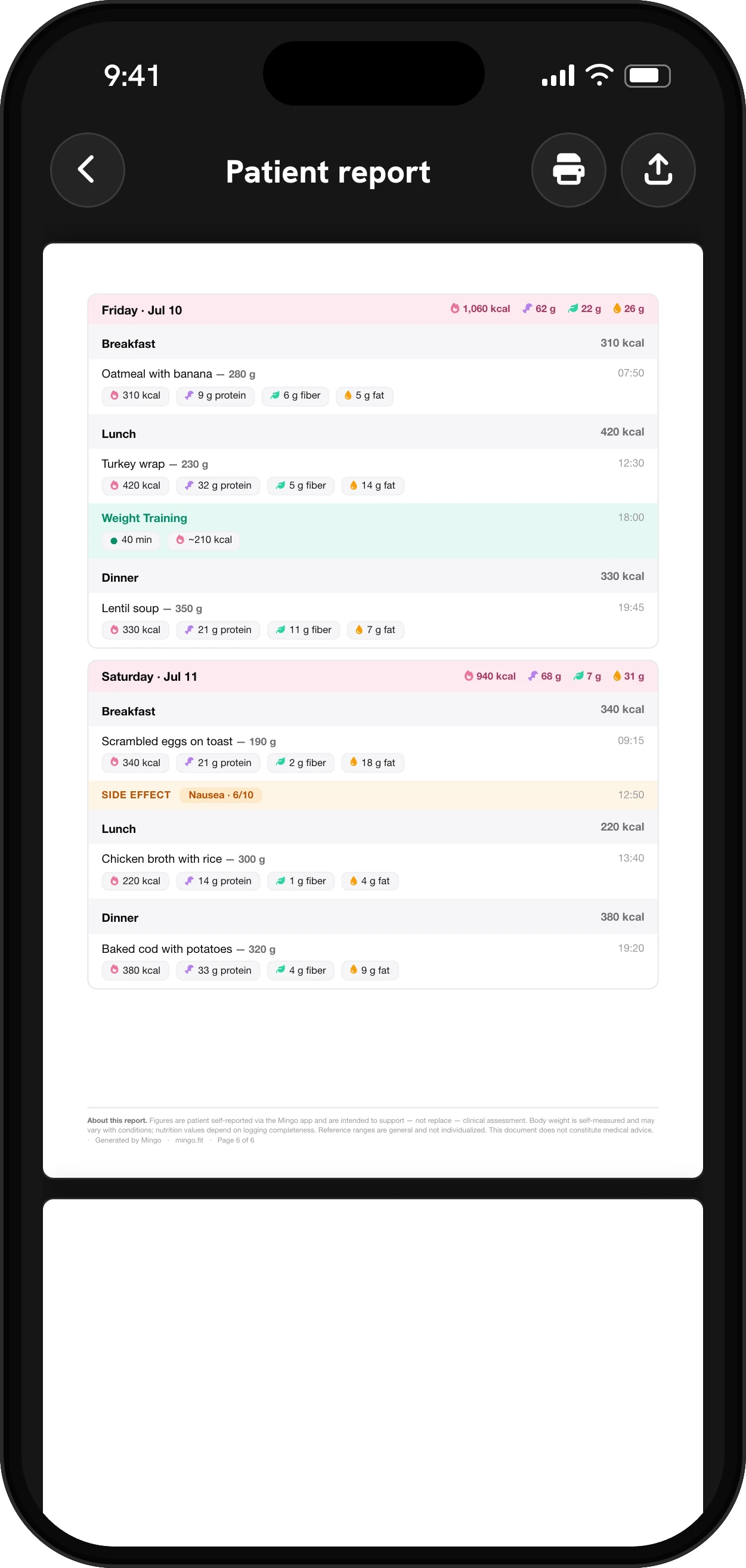
Mingo is a GLP-1 tracker first, so your meals live next to your shot log, side effects and weight. If you felt sick after a heavy dinner the day after your shot, the pattern is there to see. When you go to an appointment, the PDF report includes your daily nutrient averages alongside your doses and weight.
If you also use Apple Health or Health Connect, Mingo can read water, steps and workouts from there. Meals and nutrients are logged in Mingo itself.
One app instead of three
Ask people on GLP-1 forums how they track and you often hear the same setup: one app for food, another for weight, a third for shots. It works, but nothing connects. You can’t see that your worst nausea days follow the heaviest dinners, or that protein dropped the week after a dose increase.
Mingo keeps meals, doses, side effects and weight in one place, so those patterns show up on their own. The best tracker is still the one you’ll be opening three months from now, so start with whichever part matters most to you and add the rest when it feels easy.
What Mingo doesn’t do
Mingo doesn’t prescribe a diet, a calorie number or a dose. It records what you ate and shows it against goals you control. If you’re unsure what your targets should be, especially with diabetes, kidney disease or a history of disordered eating, ask your doctor or a registered dietitian.


