Skip to content

Macro tracker

Macro Tracker for GLP-1 Users: Protein Comes First

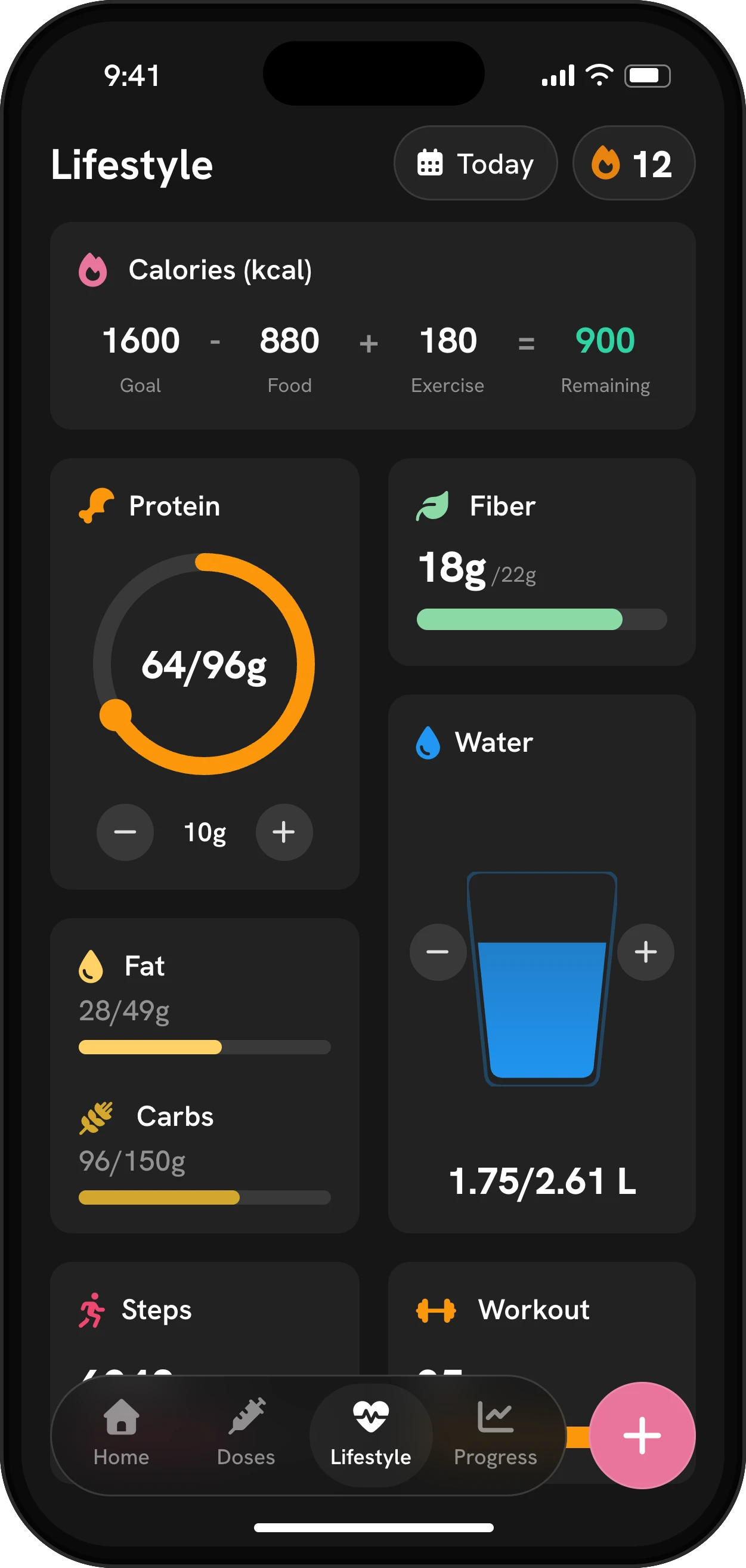
On a GLP-1 medicine, the risk usually isn't eating too much, it's eating too little of the right things. Mingo's Lifestyle tab shows calories, protein, carbs and fat against goals set with protein first and a floor under calories.

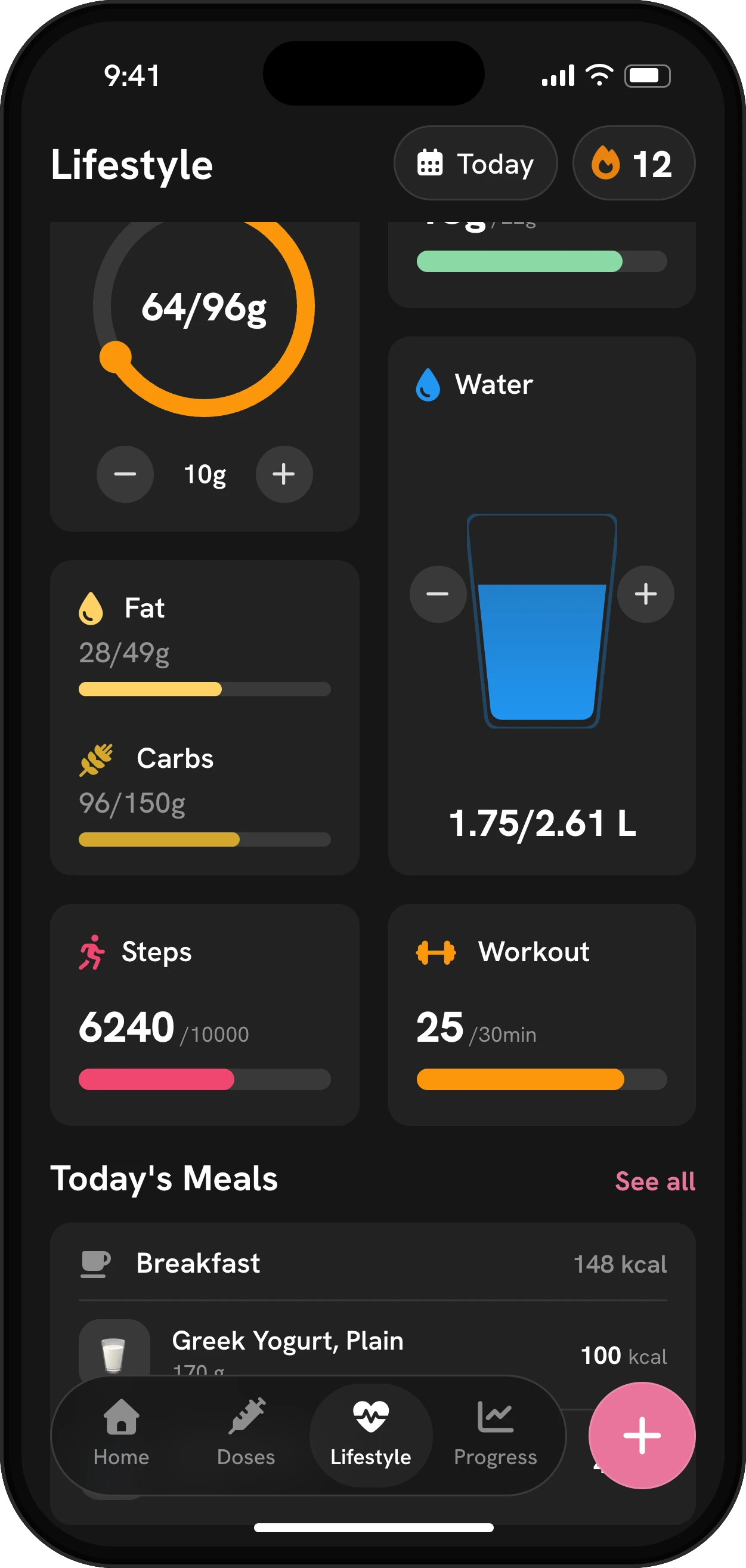
Mingo Lifestyle tab: calories left for the day, a protein ring with + and - buttons, fat and carbs, fiber and a water cup with + and -

Quick answer

A macro tracker adds up calories, protein, carbohydrates and fat from your meals against daily goals. Mingo sets protein first at 1.2 to 1.6 g per kg, fat at 27.5% of calories and carbs from the rest, up to 150 g, with calories never below 1,200 for women or 1,500 for men. Totals fill in from every meal you log.

What it does

Mingo Lifestyle tab: calories left for the day, a protein ring with + and - buttons, fat and carbs, fiber and a water cup with + and -
Screens from the Mingo app, with example data.

How to use it in Mingo

  1. Set up your profile

    During onboarding Mingo asks your weight, height, age, sex and activity level and suggests your goals.

  2. Log your meals

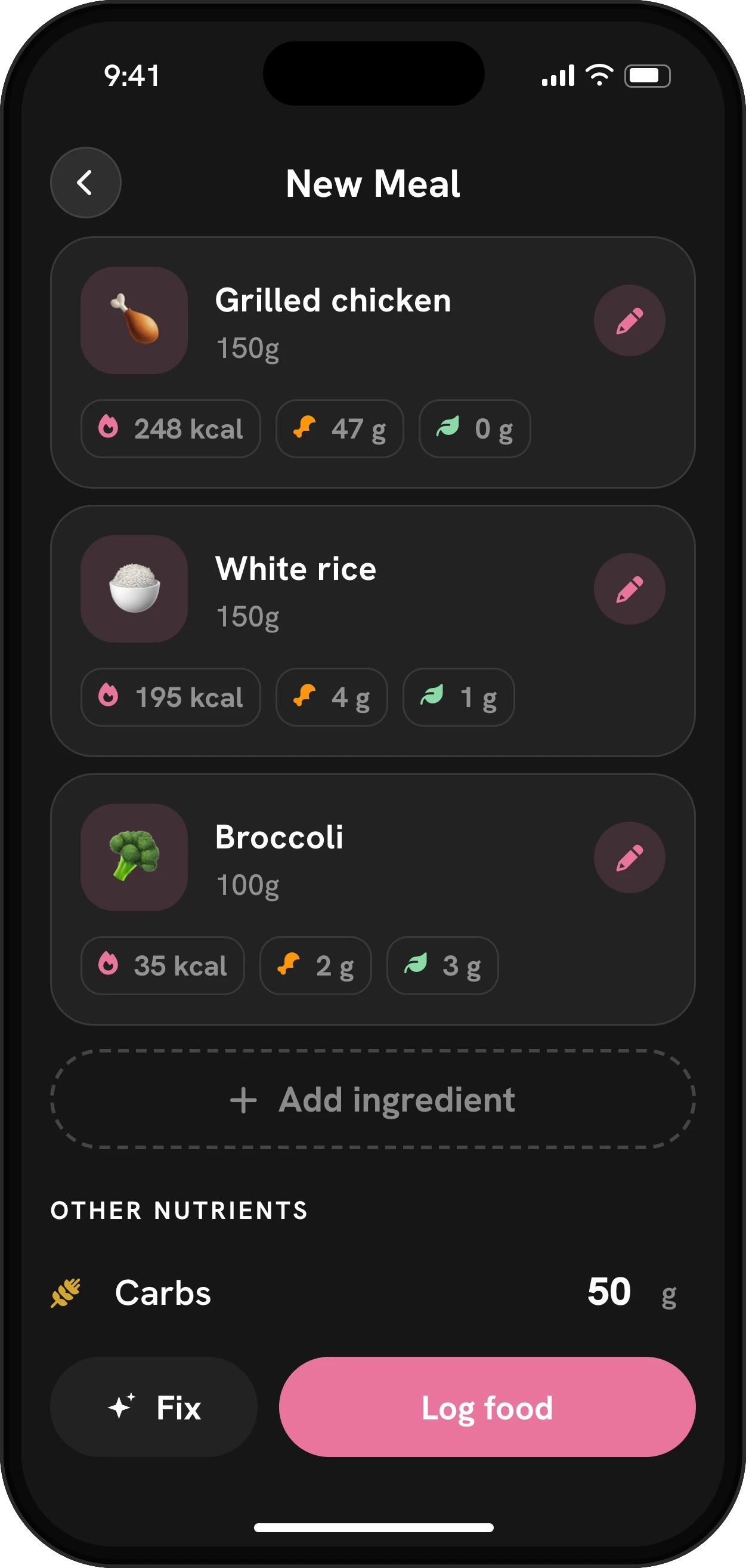
    By photo, voice, text, barcode or search. Each meal adds to the day's totals.

  3. Open the Lifestyle tab

    See calories, macros, protein, fiber, water and activity for the day.

  4. Adjust if needed

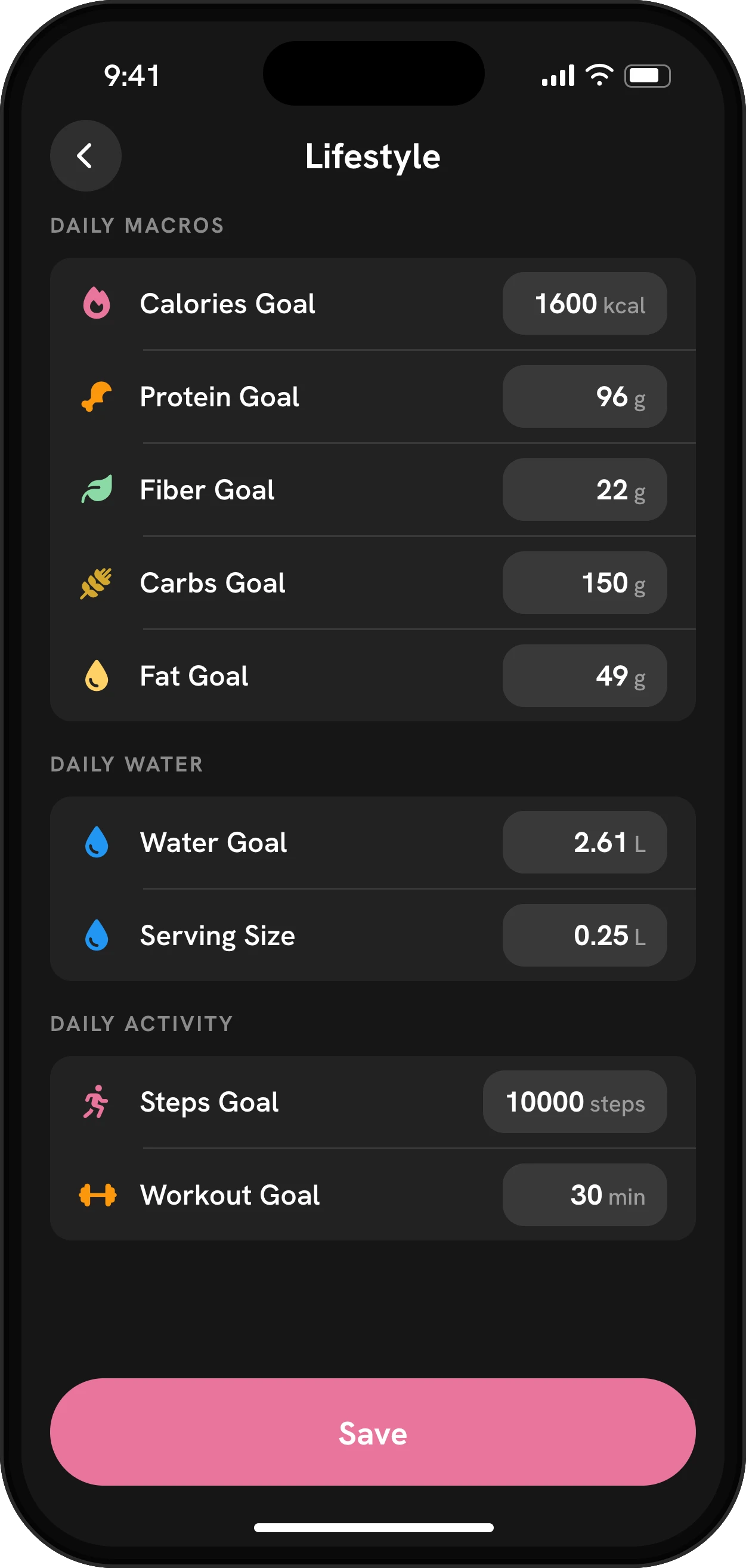
    Change any goal in the Lifestyle goal settings, for example to match your dietitian's plan.

Free tools for this

Calories on a GLP-1: a different problem

Most macro trackers and calorie counters are built to stop you overeating. On semaglutide or tirzepatide, many people have the opposite problem: some days they barely eat. The medicines don’t set a calorie number. In the SURMOUNT-1 tirzepatide trial, people aimed for about 500 kcal a day below what they burned, and stopped cutting once their BMI reached 22 (SURMOUNT-1 protocol).

So in Mingo, calories are a guardrail as much as a limit. They help you see whether you’re eating enough to reach your protein goal and keep your energy up.

How your goals are set

Mingo follows the same order of priorities as the 2025 joint advisory on nutrition during GLP-1 treatment: protein first, then the rest.

Goal How Mingo sets it
Calories Daily burn from the Mifflin-St Jeor equation and your activity, minus a deficit; never below 1,200 kcal (women) or 1,500 kcal (men); no deficit at a BMI of 22 or less
Protein 1.2 to 1.6 g per kg by activity, at least 80 g, capped by activity
Fat 27.5% of calories
Carbs What’s left, up to 150 g a day
Fiber 14 g per 1,000 kcal of your calorie goal, at least 20 g

These are the formulas behind our free macro calculator and calorie calculator, so you can see the numbers before you install anything. They’re starting points: change any goal in the app if your doctor or dietitian has given you different ones.

Where the numbers come from

You don’t enter calories by hand. Every meal you log in the GLP-1 food tracker carries its own calories, protein, carbs, fat and fiber, whether it came from an AI photo, voice note or text, the barcode scanner or the food search. Each meal is a list of ingredients you can edit, and Mingo recalculates when you change an amount.

The Lifestyle tab then shows the day: calories against your goal, carbs and fat on the daily macros card, and protein, fiber and water on their own cards. Steps and exercise rings sit on the same tab. Tap any card to open its sheet with today’s status and history.

Reading your day on treatment

A few patterns are worth looking for:

  • Calories well under goal and protein short. The most common one on GLP-1 medicines. Swap some carbs for protein-dense foods rather than eating more overall.
  • A spike on one day of the week. The doctor report flags it if your calories run notably higher on a particular day. Seeing it is the first step to planning for it.
  • Carbs at the cap every day. Not wrong, but check that protein and fiber aren’t being squeezed out.

Tracking without obsessing

Logging every bite isn’t for everyone. Plenty of people on GLP-1 medicines track closely for a few weeks to learn what their portions look like, then ease off to logging only protein and water. Mingo works either way: the protein and water cards accept quick adds without a full meal, and you can come back to full logging whenever you want a clearer picture.

For your appointment

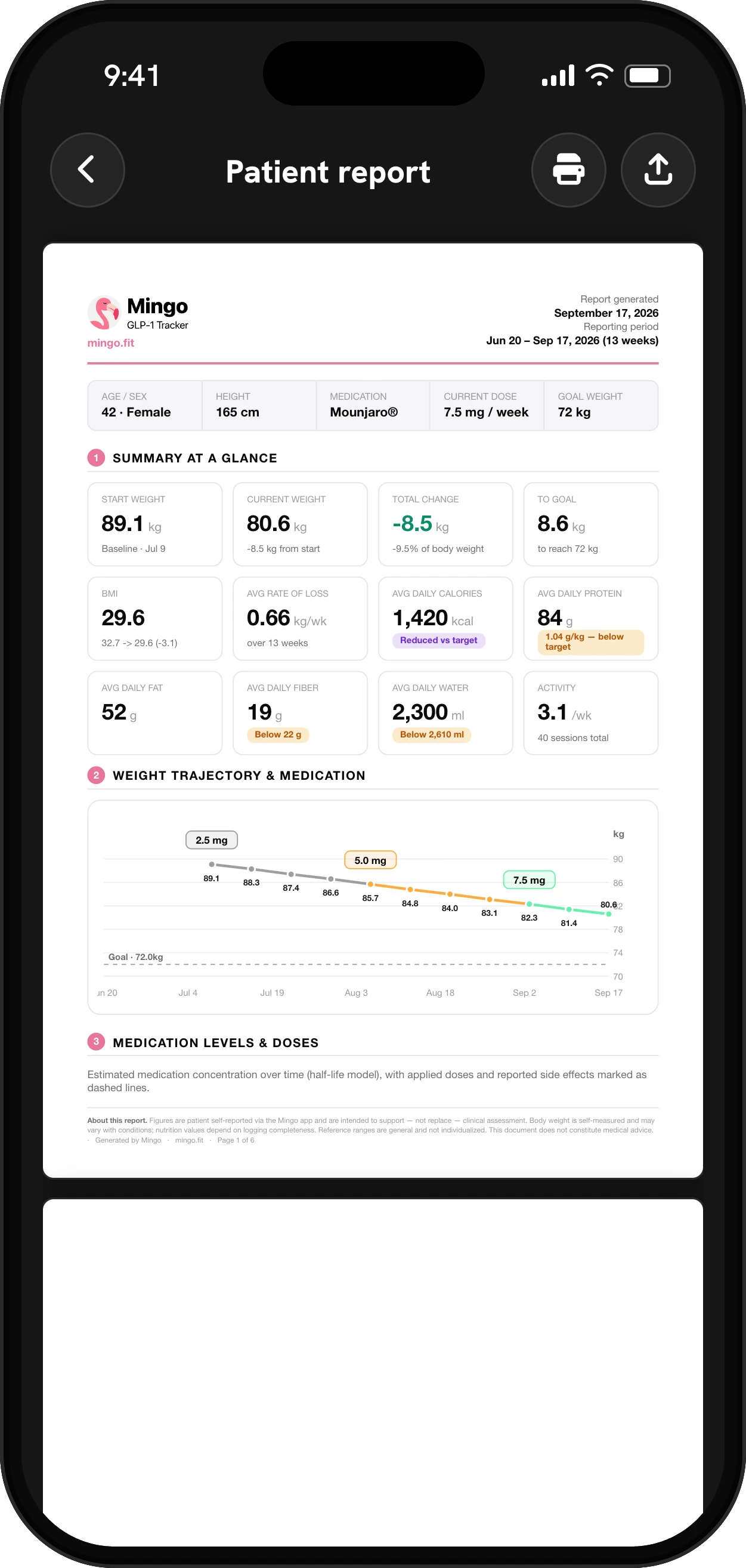
The PDF report summarizes your average daily calories, protein (in grams and per kg), fiber, fat and water for the period you choose, next to your doses, medication level estimate and weight. It’s a quicker conversation than scrolling through meals.

Mingo isn’t a meal plan and won’t tell you what to eat. If you have diabetes, kidney disease or a history of disordered eating, work out your targets with your care team before tracking calories.

Frequently asked questions

Should I track calories or macros on a GLP-1 medicine?

Many experts put protein first, because appetite drops and part of the weight lost can be lean mass. Calories still help as a check, especially to make sure you're not eating too little. Ask your care team which numbers to focus on.

How does Mingo set my calorie goal?

It estimates your daily burn with the Mifflin-St Jeor equation from your weight, height, age, sex and activity, then subtracts a deficit. It never goes below 1,200 kcal for women or 1,500 kcal for men, and at a BMI of 22 or less it drops the deficit.

How are my macro goals set?

Protein is set first at 1.2 to 1.6 g per kg by activity level, fat at 27.5% of calories, and carbohydrates get the rest, up to 150 g a day. The macro calculator uses the same formulas.

What does the 40/40/20 macro rule mean?

It's a popular split: 40% of calories from carbohydrates, 40% from protein and 20% from fat. It isn't an official guideline. Mingo doesn't use fixed percentages; it sets protein in grams from your weight first, fat at 27.5% of calories, and gives carbs the rest.

Do I need to hit my macros exactly every day?

No. Consistency over a week matters more than precision on any one day, especially when appetite changes with your dose. On treatment, protein is the one worth getting close to most days.

Can I set my own calorie and macro goals?

Yes. Every goal can be changed in the app.

Does Mingo track net carbs or micronutrients?

Mingo tracks calories, protein, carbs, fat and fiber per meal. Custom foods can also store sugars, sodium and cholesterol from the label, but the daily goals are calories, protein, carbs, fat, fiber and water.

Sources

Health facts on this page come from the sources listed here. Mingo is a tracker, not medical advice. Updated .

  1. Mozaffarian D et al. Nutritional priorities to support GLP-1 therapy for obesity: a joint advisory from the ACLM, ASN, OMA and The Obesity Society. Am J Lifestyle Med 2025
  2. Mifflin MD et al. A new predictive equation for resting energy expenditure in healthy individuals. Am J Clin Nutr 1990
  3. SURMOUNT-1 study protocol I8F-MC-GPHK(b), section 5.3.1 (diet: ~500 kcal/day deficit; no deficit once BMI ≤ 22). ClinicalTrials.gov NCT04184622

More in Food tracker

More Mingo features