Why AI logging suits GLP-1 appetites
Classic food logging means searching a database for every item, picking a serving size and repeating that for each part of the meal. On a GLP-1 medicine, meals tend to be small and irregular: a few bites of dinner, half a sandwich, a yogurt at 4 pm. The effort of logging stays the same while the meal shrinks, and that’s usually when people stop tracking.
An AI calorie counter flips the effort. You describe the meal once, the way you’d tell a friend, and Mingo does the itemizing. It’s part of the GLP-1 food tracker, so every result counts toward the same protein, fiber and calorie goals.
Three ways to describe a meal
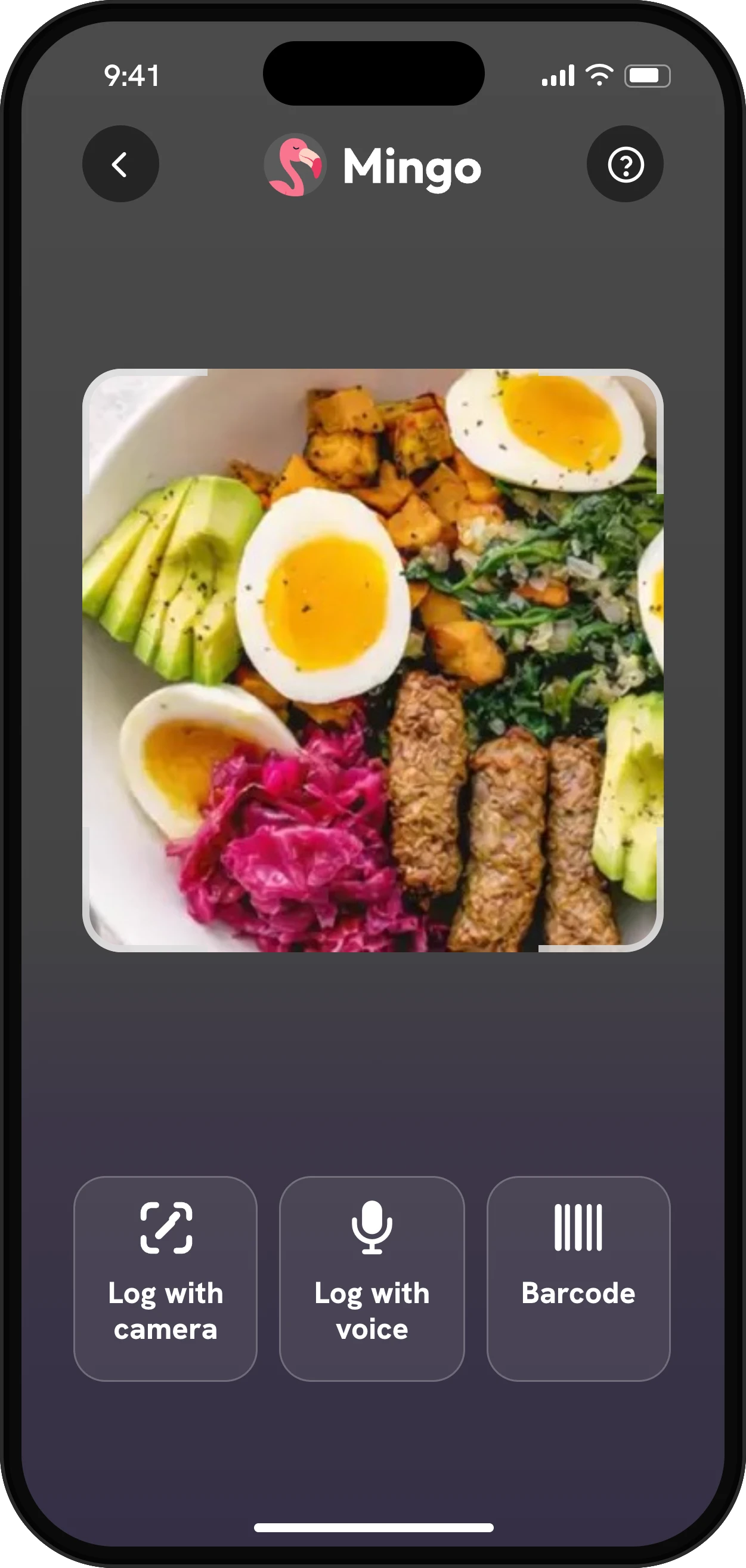
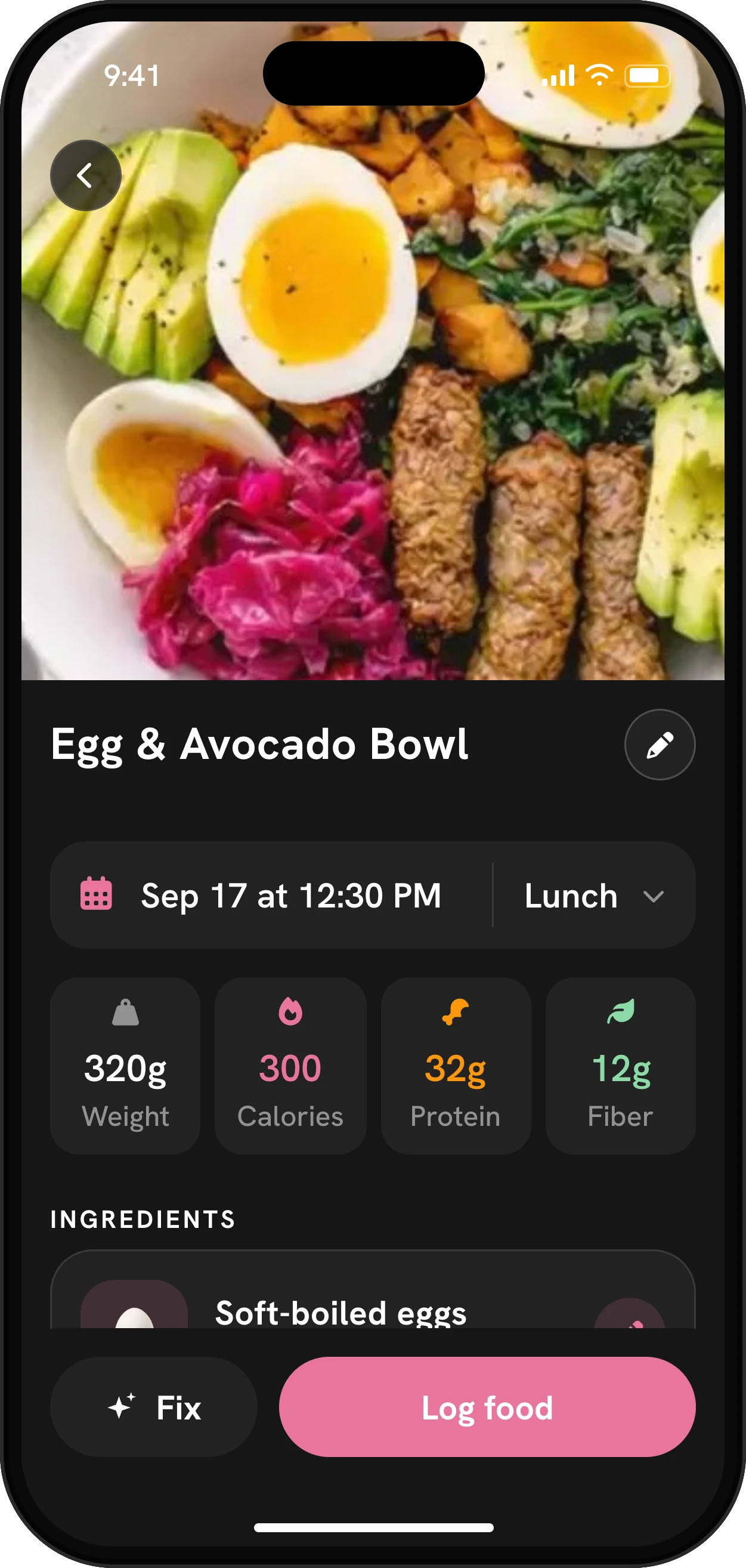
AI Photo works best for a plate you can see from above. Fit everything in the frame and take the picture in decent light. Mingo returns each food it recognized with an estimated amount.
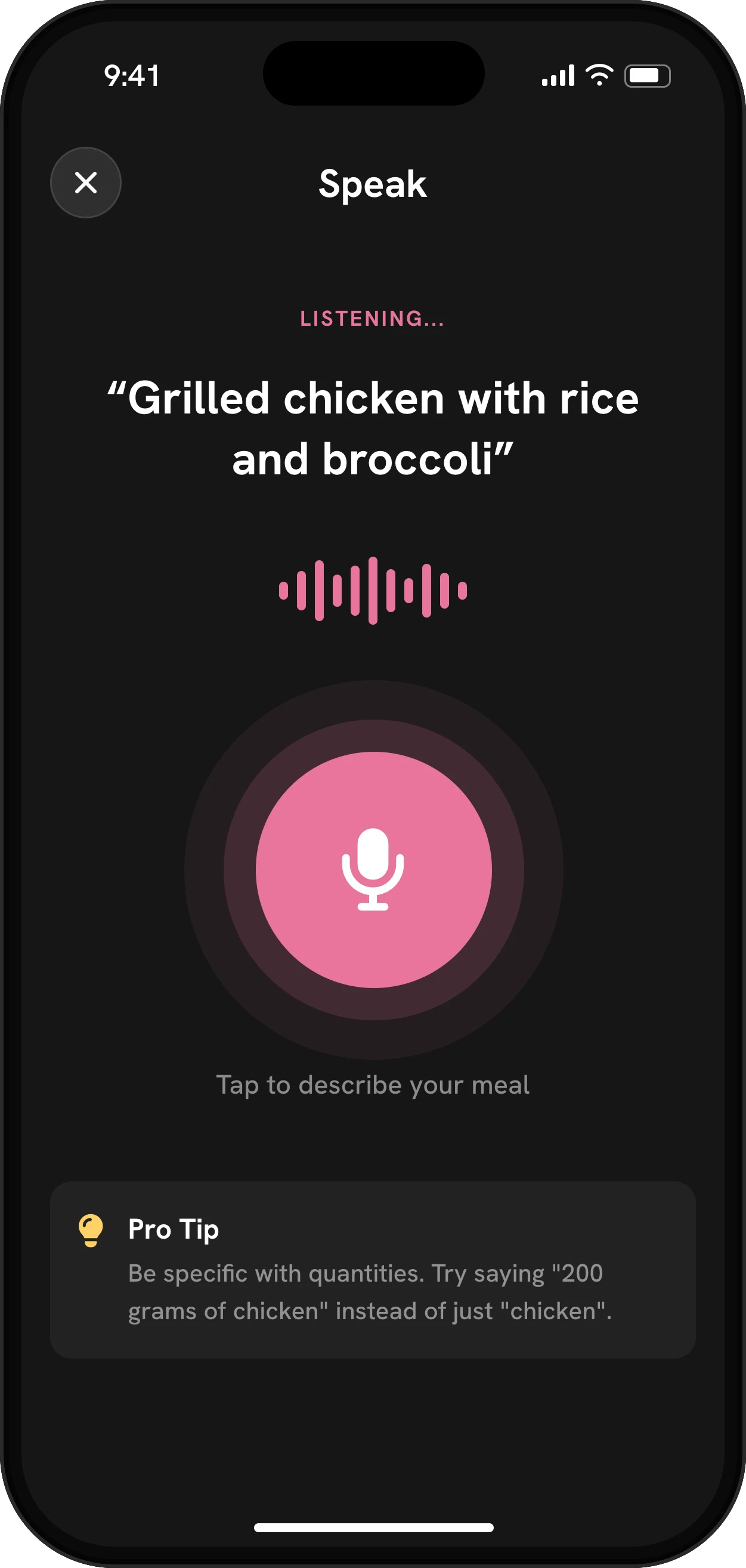
AI Voice is for when your hands are busy or the meal isn’t photogenic. Tap, describe it, and Mingo shows you the transcription before analyzing, so you can try again if it misheard. The in-app tip is a good one: say “200 grams of chicken”, not just “chicken”.
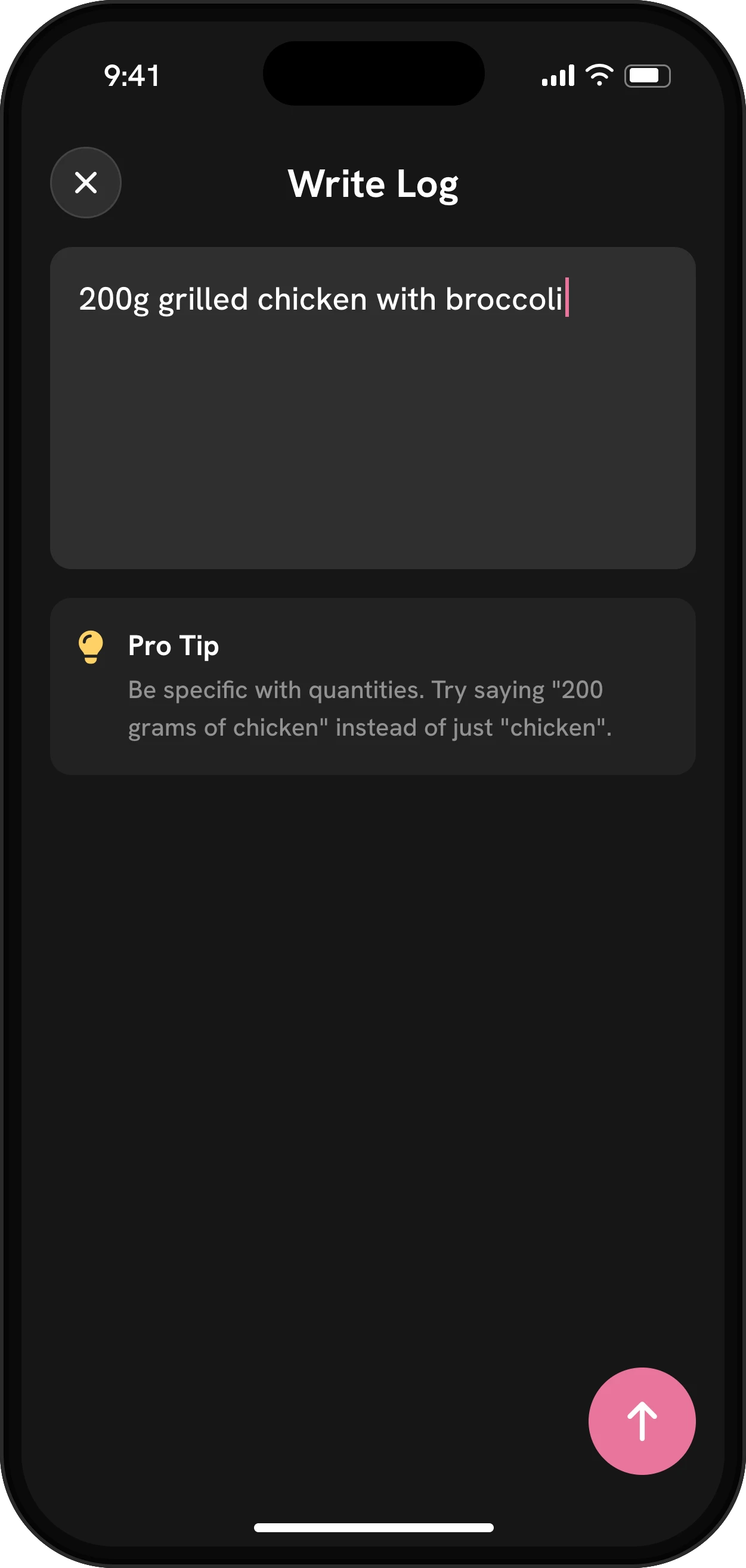
Write is the quiet option. One line of text, like “oatmeal with a scoop of protein powder and blueberries”, is enough.
| Situation | Best way in | Why |
|---|---|---|
| A plated meal you can see | AI Photo | Fastest, nothing to type |
| A smoothie, soup or stew | Voice or Write | The ingredients are hidden; say what went in |
| A restaurant meal | Photo, then edit | Add the butter or dressing you know is there |
| A packaged snack | Barcode scanner | The label is more exact than any estimate |
| Your usual breakfast | Favorites or a saved meal | One tap, same numbers every time |
What the AI can and can’t see
An AI estimate is only as good as what it’s given. From a photo it can’t tell how much oil went into the pan, whether the yogurt is full-fat, or how deep the bowl is. Larger portions and mixed dishes are the hardest. That isn’t unique to Mingo; it’s how photo-based estimation works. When researchers at the NIH’s diabetes and digestive diseases institute photographed 102 carefully weighed meals and ran them through the photo features of MyFitnessPal, Lose It!, Cal AI and Appediet, every app came in low: by roughly 250 to 345 calories a meal, about a third, and by around 30 g of fat. The results were presented at the NUTRITION 2026 meeting and haven’t been published in a journal yet (Healio report). The researchers’ advice was to pair photo AI with traditional logging, which is what editing the ingredient list does.
So treat the result as a first draft:
- Check the portion sizes, especially for calorie-dense foods like nuts, cheese and oils.
- Add anything invisible: cooking fat, dressings, sugar in coffee.
- For mixed dishes, describe the ingredients by voice or text instead of relying on the photo.
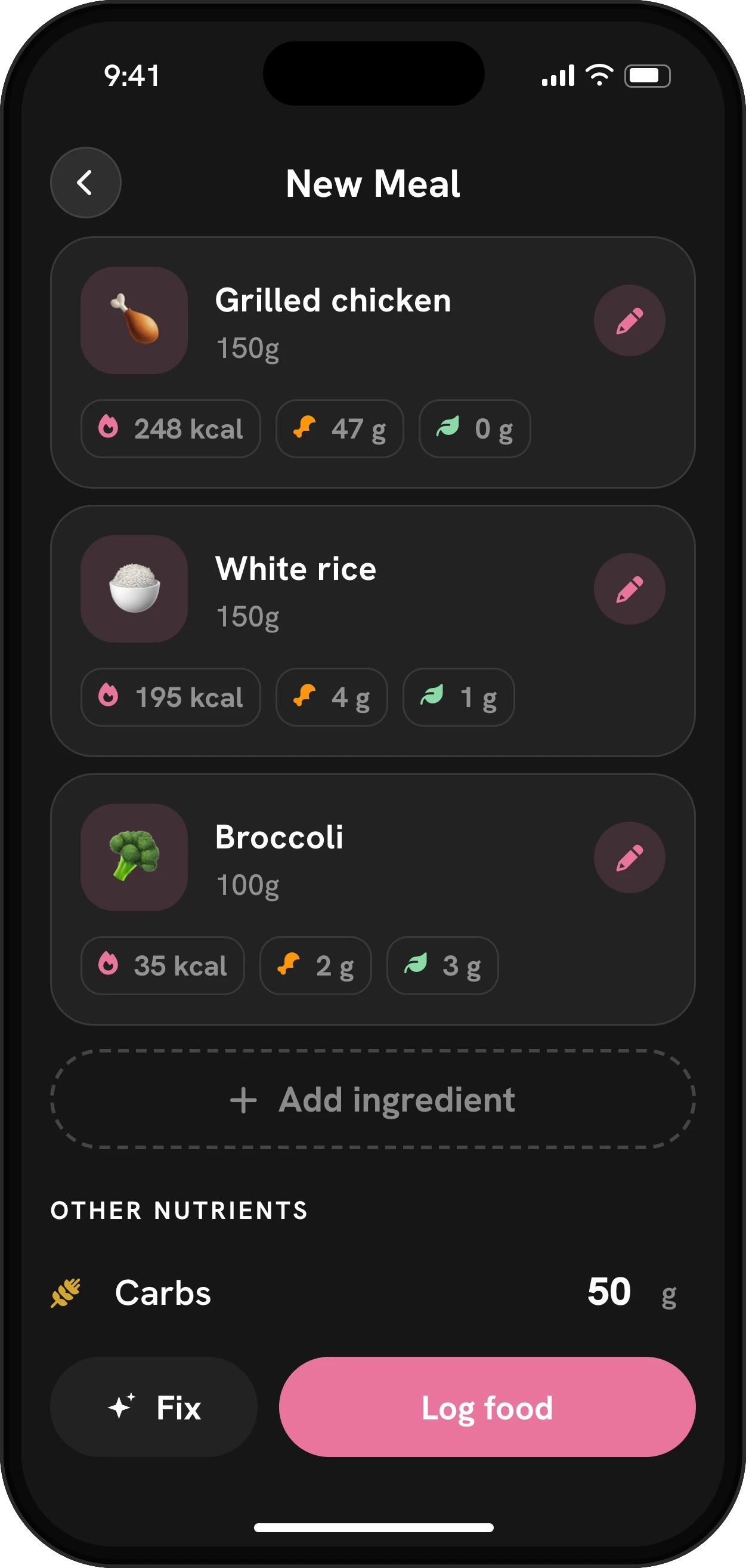
Because every result is a list of ingredients, fixing it takes a few taps. Change the grams, remove an item or add one, and Mingo recalculates the meal before you save it.
Why protein and fiber show up first
Most AI calorie apps lead with calories. Mingo shows fiber and protein right beside them, because those are the two numbers a 2025 joint advisory on nutrition during GLP-1 treatment puts first: protein to help keep lean mass while you lose weight, and fiber, with fluids, to help with constipation.
After you save a meal, your protein tracker and fiber progress update straight away, so you can see whether dinner needs to fill a gap.
Saving time on meals you repeat
AI is fastest for something new. For the breakfast you eat five days a week, it’s quicker still to log it once and reuse it. Star a food or a whole meal to keep it under Favorites, or save a group of foods as a meal under My Meals. The Recent tab also brings back what you logged lately, so the second time takes a tap instead of a photo.
Privacy and connection
To analyze a meal, Mingo sends the photo, voice recording or text to its server, which returns the estimate. That needs an internet connection. Your food log itself stays on your phone, and there’s no account to sign up for.

