Skip to content

Protein tracker

Protein Tracker for GLP-1 Users: Hit Your Daily Goal

When you're barely hungry, protein is the first thing to slip. Mingo gives you a daily protein goal, adds up the protein in every meal you log, and lets you top it up with a tap.

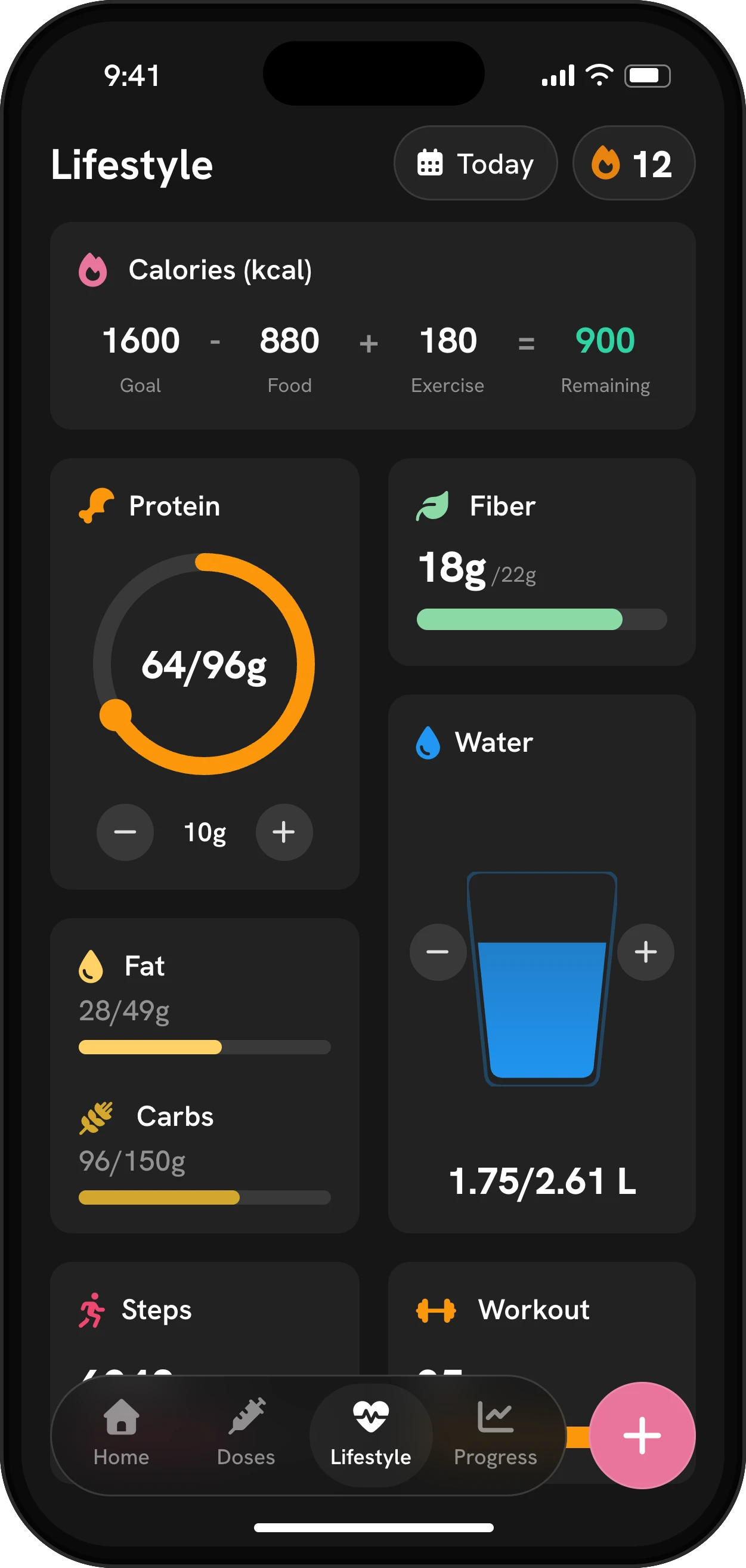
Mingo Lifestyle tab: calories left for the day, a protein ring with + and - buttons, fat and carbs, fiber and a water cup with + and -

Quick answer

A protein tracker adds up the protein you eat each day against a goal. Mingo sets that goal from your weight and activity level, following a 2025 joint advisory that suggests 1.2 to 1.6 g per kg a day on GLP-1 medicines. Protein from logged meals counts automatically, and the + and - buttons add or remove a set amount.

What it does

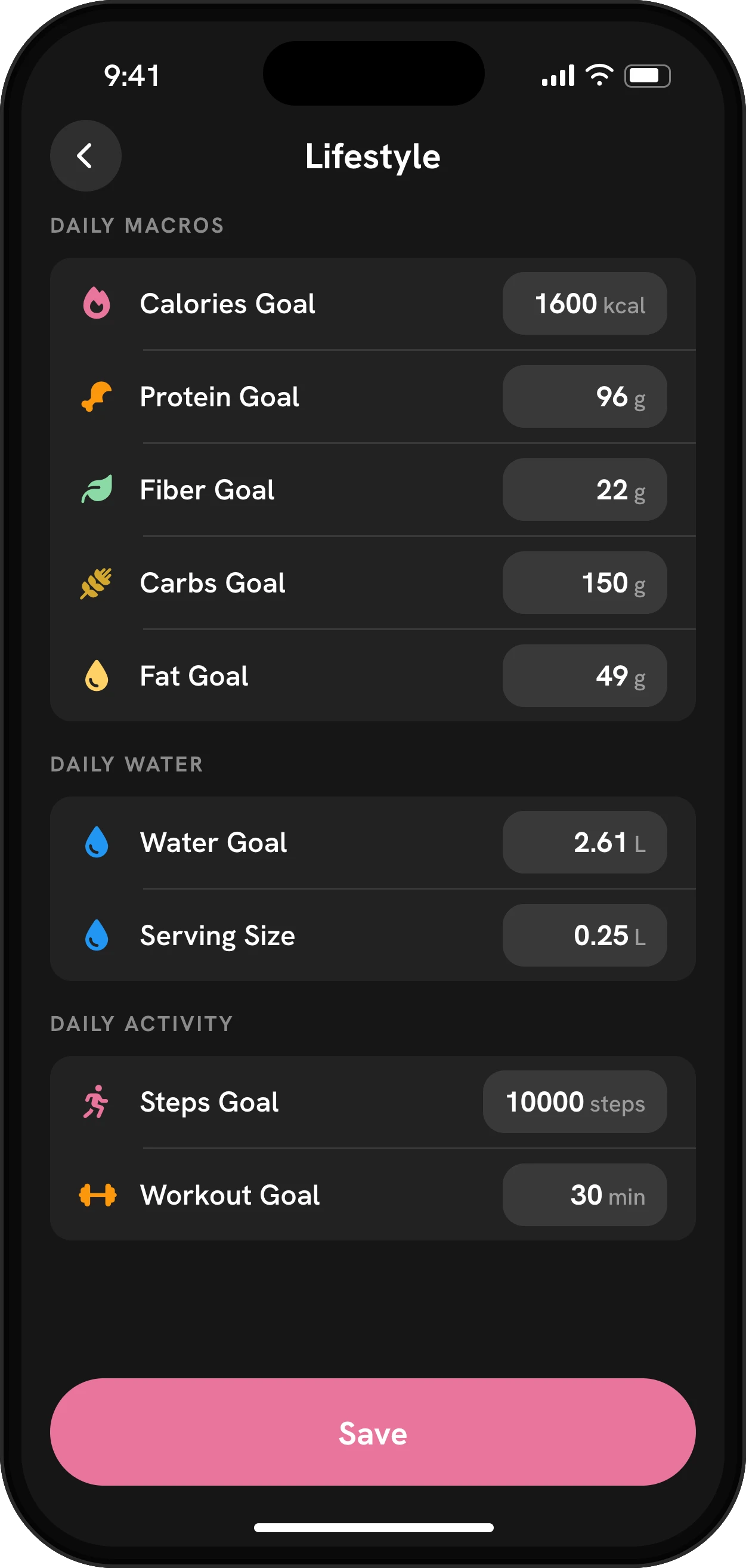
Mingo Lifestyle goal settings for daily macros, water and activity
Screens from the Mingo app, with example data.

How to use it in Mingo

  1. Check your goal

    Mingo sets a daily protein goal during onboarding. Change it in the Lifestyle goal settings if your care team gave you a number.

  2. Log meals as usual

    Protein from each logged meal is added to your day.

  3. Top up with +

    Tap + on the protein card for a quick add, or - to undo.

  4. Look back

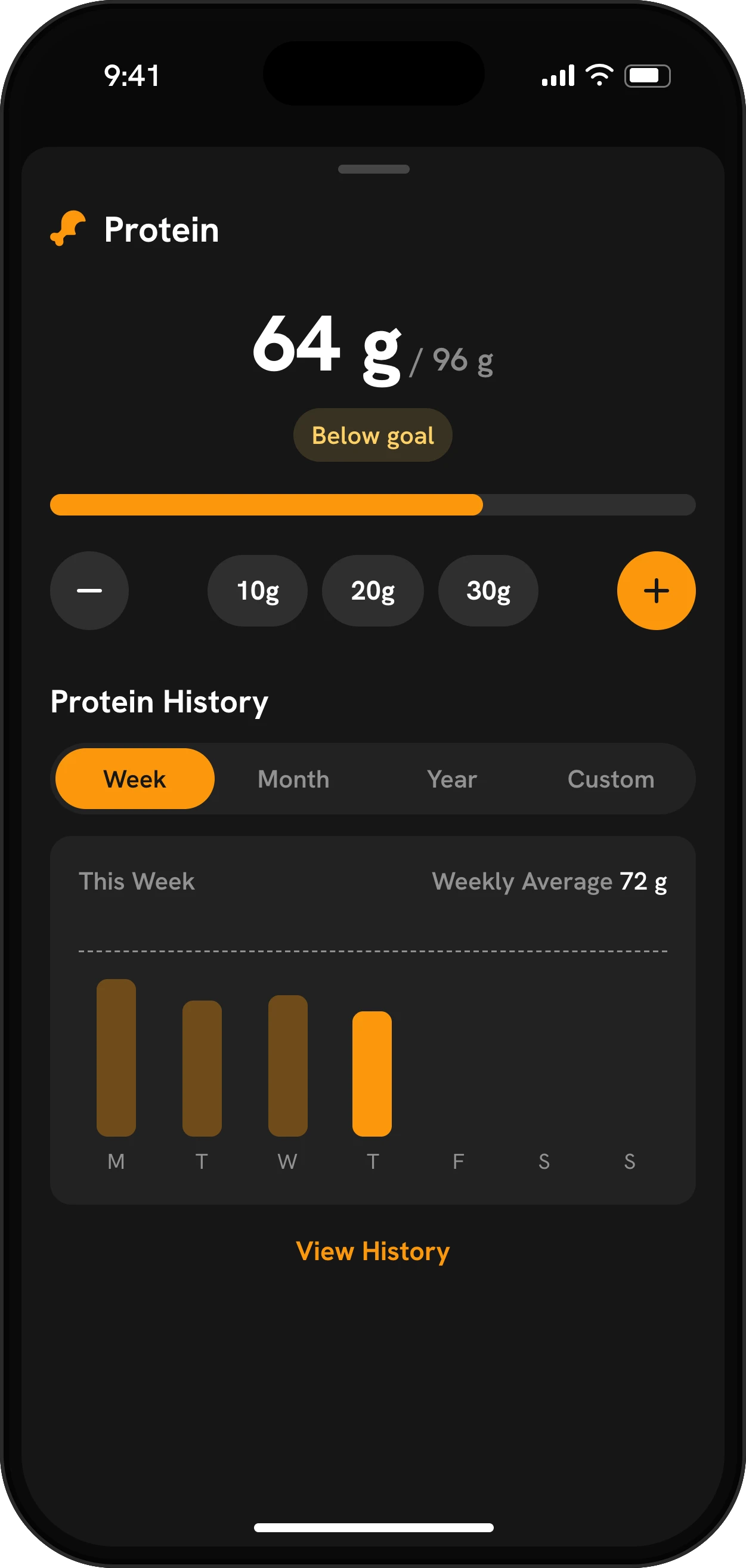
    Open the protein sheet to see today's status and your past days.

Free tools for this

Why protein is the number to watch

GLP-1 medicines such as semaglutide (Ozempic, Wegovy) and tirzepatide (Mounjaro, Zepbound) make you feel full sooner and hungry less often. Portions shrink, and protein shrinks with them. When weight comes off quickly, part of it is lean mass, not just fat.

That’s why nutrition experts put protein first during GLP-1 treatment. A 2025 joint advisory from the American College of Lifestyle Medicine, the American Society for Nutrition, the Obesity Medicine Association and The Obesity Society suggests about 1.2 to 1.6 g per kg of body weight a day while losing weight, or roughly 80 to 120 g (Mozaffarian et al., 2025). A separate 2025 consensus of obesity specialists landed close by, at 1.2 to 1.5 g per kg (Sievenpiper et al., 2025). Both are well above the general adult reference of 0.8 g per kg (Institute of Medicine, 2005).

Most generic protein trackers ask you to pick a number yourself. Mingo starts you with one built for treatment.

How your goal is set

When you set up Mingo, it takes your weight and how active you are and works out a goal:

Activity level Protein per kg Cap
Sedentary 1.2 g 100 g
Lightly active 1.3 g 110 g
Active 1.4 g 130 g
Very active 1.6 g 150 g

There’s an 80 g floor, the cap keeps the goal realistic at higher weights, and it never goes above 2 g per kg. The protein calculator runs the same formula if you want to see the math or try other numbers. If your doctor or dietitian gave you a different target, change it in the app.

Two ways protein gets counted

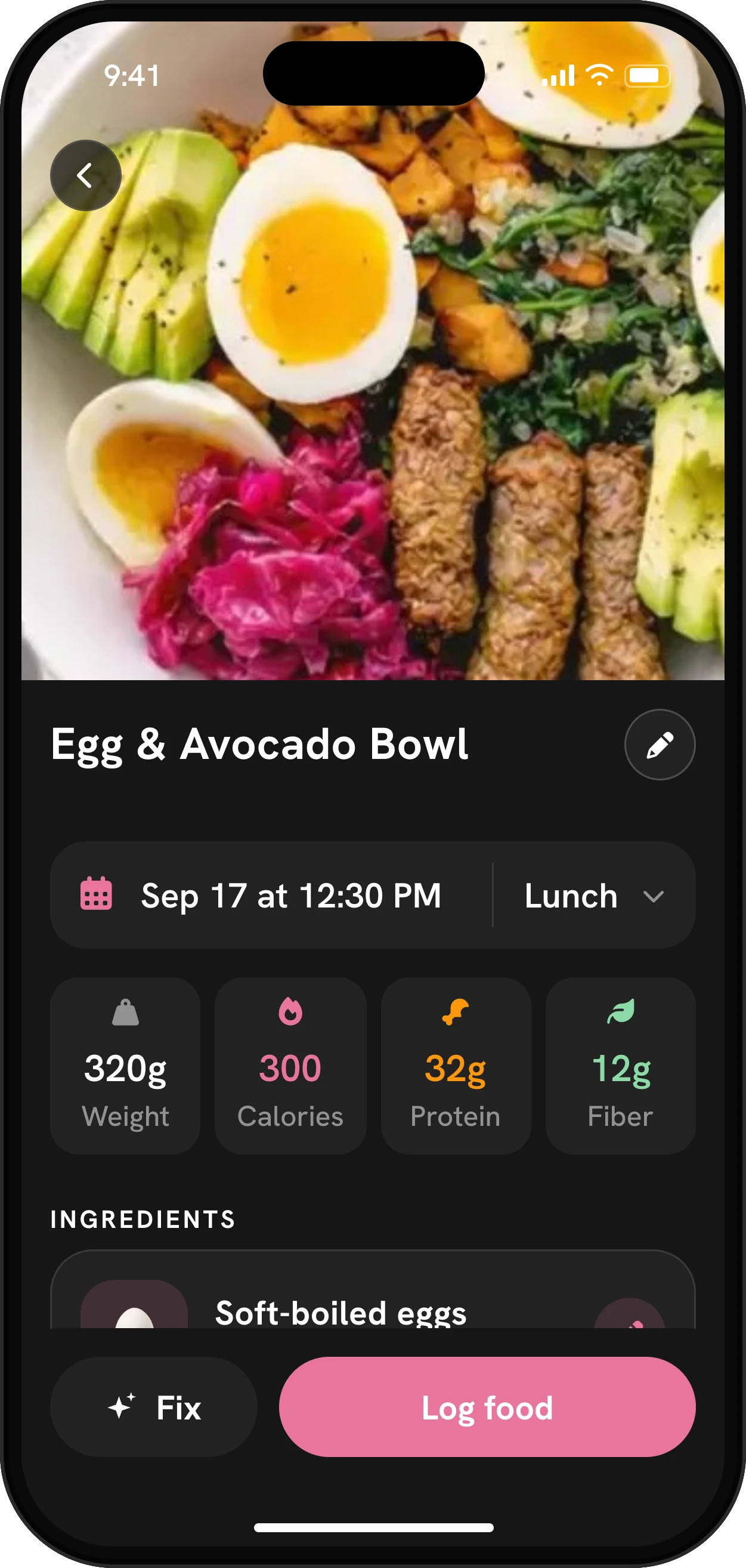
Meals. Every meal you log, whether by AI photo or voice, text, barcode or search, adds its protein to the day.

Quick adds. The protein card on the Home screen and the Lifestyle tab has + and - buttons. Each tap adds or removes a step you choose, such as 10 g. That’s for the protein shake you drank in the car or the cheese stick you don’t want to log as a meal.

Tap the card to open the protein sheet: your goal, today’s total, a status (too low, below goal, on track or goal crushed) and your history.

Practical ways to close the gap

When appetite is low, a few habits help people reach their protein goal without forcing big meals:

  • Protein first. Eat the protein part of the plate before the rest, while you’re still hungry.
  • Spread it out. Several smaller servings across the day are easier than one large one.
  • Lean on dense foods. Greek yogurt, eggs, cottage cheese, fish, tofu and shakes pack a lot into a small volume. Scan the label to compare products.
  • Pair it with strength training. The joint advisory recommends resistance exercise along with protein to help keep lean mass.

None of this replaces advice from your care team, especially if you have kidney disease, where protein needs differ.

Get your staples right, estimate the rest

You don’t need every gram to be perfect. Most people eat the same handful of protein foods week after week: a yogurt, eggs, a chicken breast, a shake. Log those few precisely, by scanning the label or weighing them once, and save them as favorites. After that, a rough AI estimate for the occasional restaurant meal won’t move your total much, and logging stays quick enough to keep doing.

Shakes, bars and supplements

Protein shakes and bars are common on treatment because they’re easy to get down when nothing else appeals. You can log them two ways: scan the barcode for exact values, or use the + button if you just want the protein counted. If you drink the same shake every morning, save it as a favorite and it takes one tap.

Protein in context

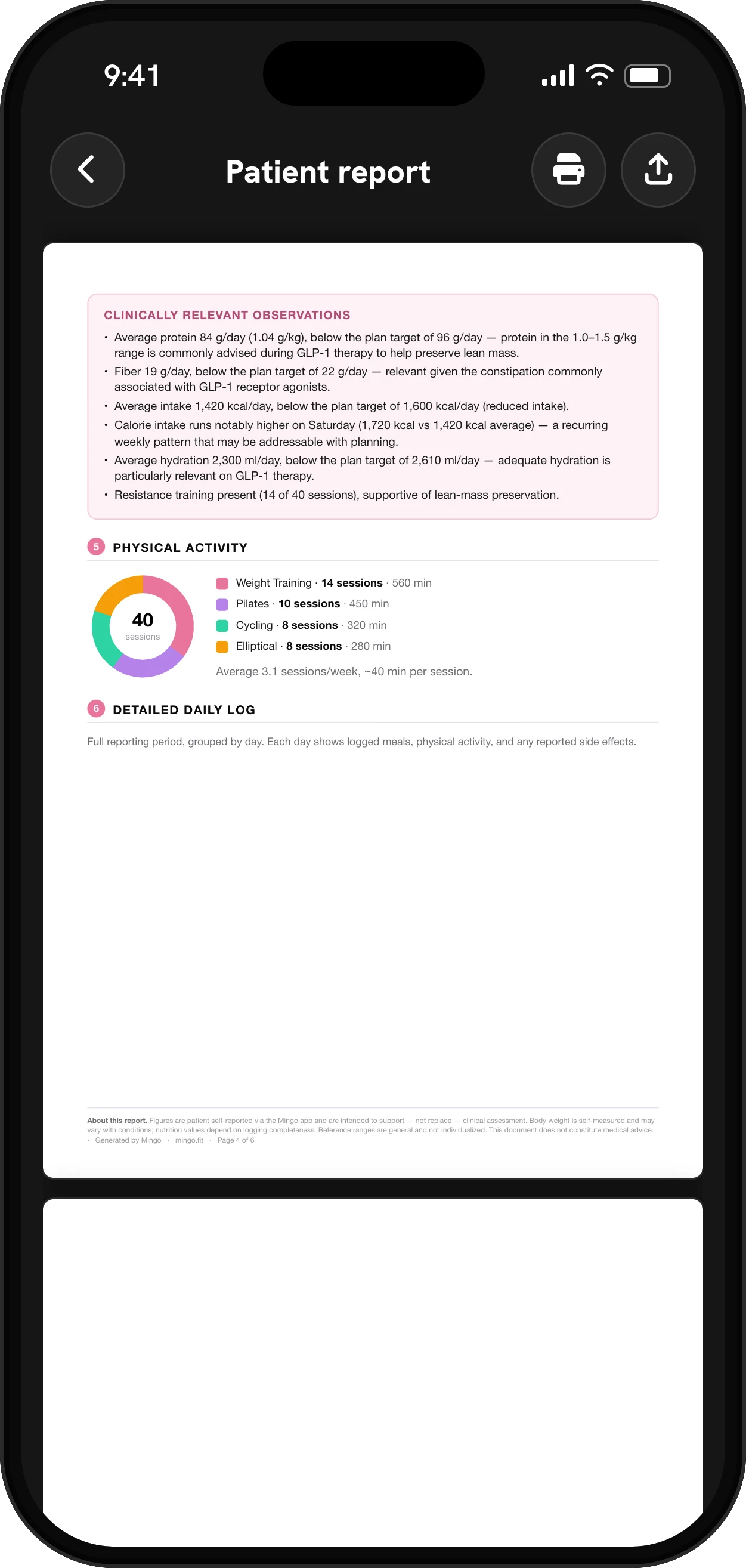
Protein sits alongside fiber and water on your Home screen, and next to calories and macros in the macro tracker. It’s all part of the GLP-1 food tracker, so your intake lines up with your doses and weight. The doctor PDF shows your average protein per day in grams and per kg, ready for your next appointment.

Frequently asked questions

How much protein should I eat on a GLP-1 medicine?

A 2025 joint advisory from four US nutrition and obesity societies suggests about 1.2 to 1.6 g per kg of body weight a day during weight loss, or roughly 80 to 120 g. Your own number depends on your weight, activity and health, so check it with your care team.

How does Mingo set my protein goal?

From your weight and activity level, at 1.2 to 1.6 g per kg, with an 80 g minimum, a cap by activity level and never more than 2 g per kg. Our protein calculator uses the same formula.

Can I log protein without logging a whole meal?

Yes. The + and - buttons on the protein card add or remove a fixed amount, which is handy for a shake or a snack.

Why does protein matter more on Ozempic, Wegovy or Zepbound?

These medicines reduce appetite, so you eat less of everything, protein included. Part of the weight lost in the trials was lean mass, and eating enough protein, along with strength training, is the main way experts suggest protecting it.

What's the best free app to track protein intake?

General food trackers such as MyFitnessPal, Cronometer and Lose It! all count protein as one of the macros, and several have free tiers. Protein-only apps are simpler but often lock food search behind a subscription. Pick one you'll still open in three months. Mingo's edge is that the goal is set for GLP-1 treatment and sits next to your doses; logging new entries needs Mingo Pro.

Should I weigh meat raw or cooked?

Either works if the entry matches. Meat loses water when it cooks, so the same piece weighs less cooked and its protein per gram goes up. Food databases list raw and cooked versions separately, so pick the one that matches how you weighed it.

Can I track protein in MyFitnessPal instead?

You can, but Mingo doesn't import protein from other apps, so protein logged elsewhere won't count toward your Mingo goal or doctor report.

Does Mingo read protein from Apple Health?

No. Mingo reads water, steps, workouts, weight and height from Apple Health or Health Connect, but protein is logged in Mingo itself, from meals or the quick +/- buttons.

Sources

Health facts on this page come from the sources listed here. Mingo is a tracker, not medical advice. Updated .

  1. Mozaffarian D et al. Nutritional priorities to support GLP-1 therapy for obesity: a joint advisory from the ACLM, ASN, OMA and The Obesity Society. Am J Lifestyle Med 2025
  2. Sievenpiper JL et al. Nutrition and lifestyle recommendations for people treated with GLP-1-based medicines: a Delphi consensus. Obesity Pillars 2025
  3. Institute of Medicine. Dietary Reference Intakes for Energy, Carbohydrate, Fiber, Fat, Fatty Acids, Cholesterol, Protein, and Amino Acids. National Academies Press, 2005

More in Food tracker

More Mingo features