Why fiber matters on a GLP-1 medicine
GLP-1 medicines slow down how quickly food moves through your gut. That helps you feel full, but it also makes constipation one of the side effects people notice most. In the Wegovy weight-loss trials, 24% of people on 2.4 mg reported constipation, against 11% on placebo (Wegovy prescribing information, Table 3). On Zepbound it was 11 to 17% depending on dose, against 5% on placebo (Zepbound prescribing information, Table 1).
A 2025 joint advisory from four US nutrition and obesity societies says constipation should be managed proactively, starting with adequate fluids and fiber from foods (Mozaffarian et al., 2025). Most people don’t know how much fiber they eat until they track it. It’s usually less than they think, and on a reduced appetite even less.
A fiber goal that matches what you eat
The familiar fiber numbers, 25 g a day for women and 38 g for men up to 50, come from one rule: 14 g of fiber for every 1,000 calories (Institute of Medicine, 2005). Those totals assume a full-size diet.
On a GLP-1, you’re probably eating a lot less. So Mingo works the other way round:
- It starts from the guideline for your age and sex.
- It applies 14 g per 1,000 calories to your calorie goal.
- It takes the lower of the two, and never goes below 20 g.
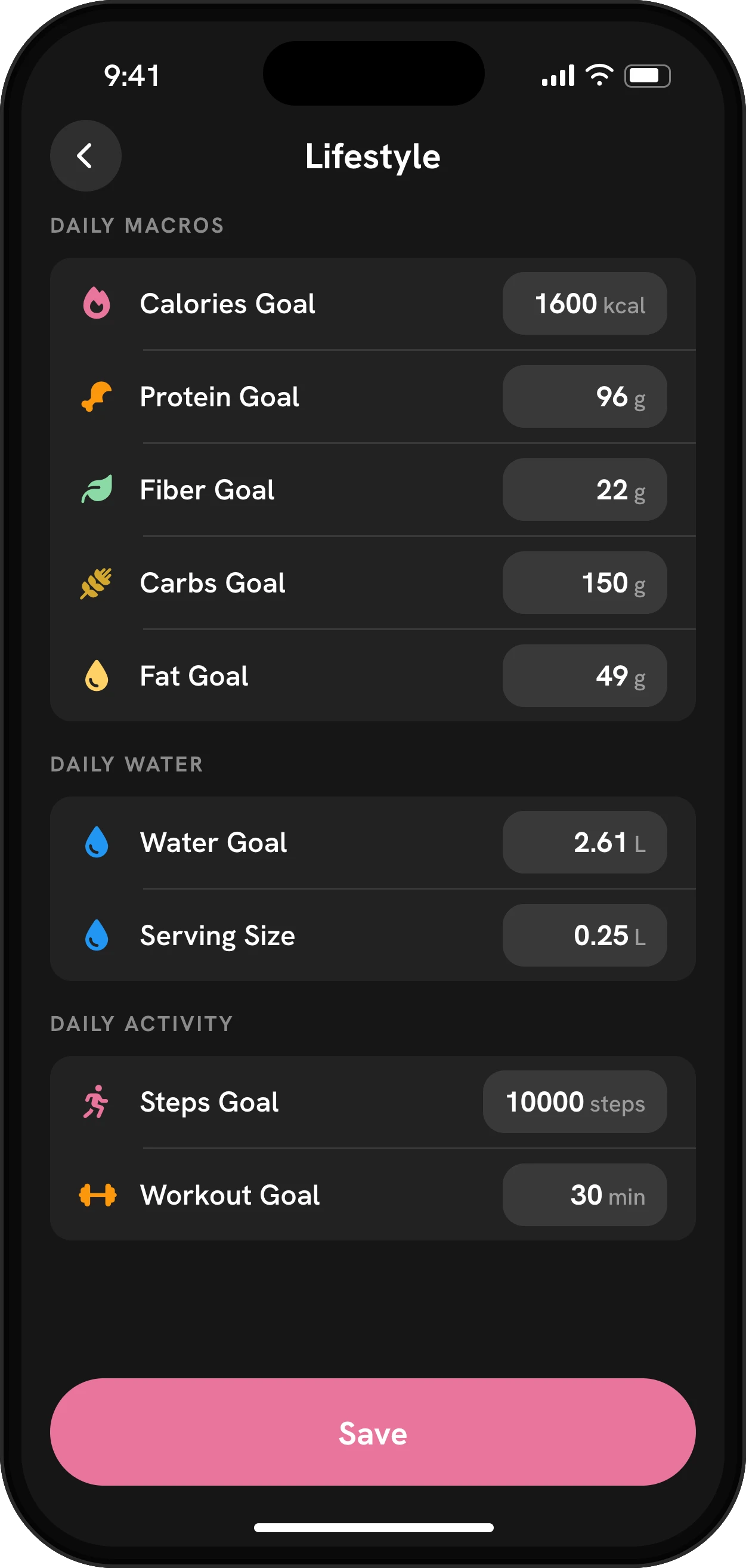
On a 1,200 to 1,600 kcal goal, that comes to 20 to 22 g. The water and fiber calculator uses the same formula, so you can check the math. You can change the goal in the app if your care team suggests something else.
How fiber gets counted
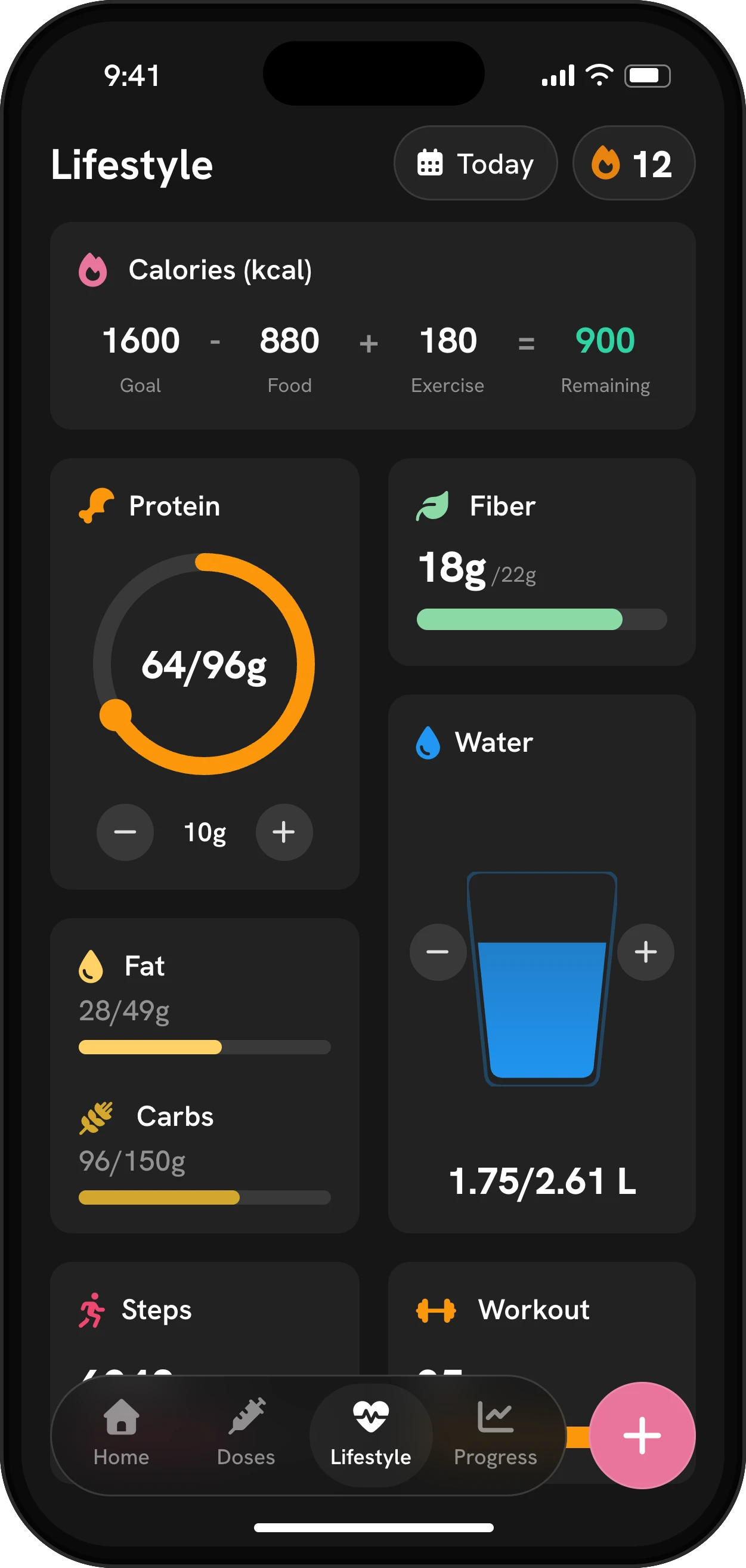
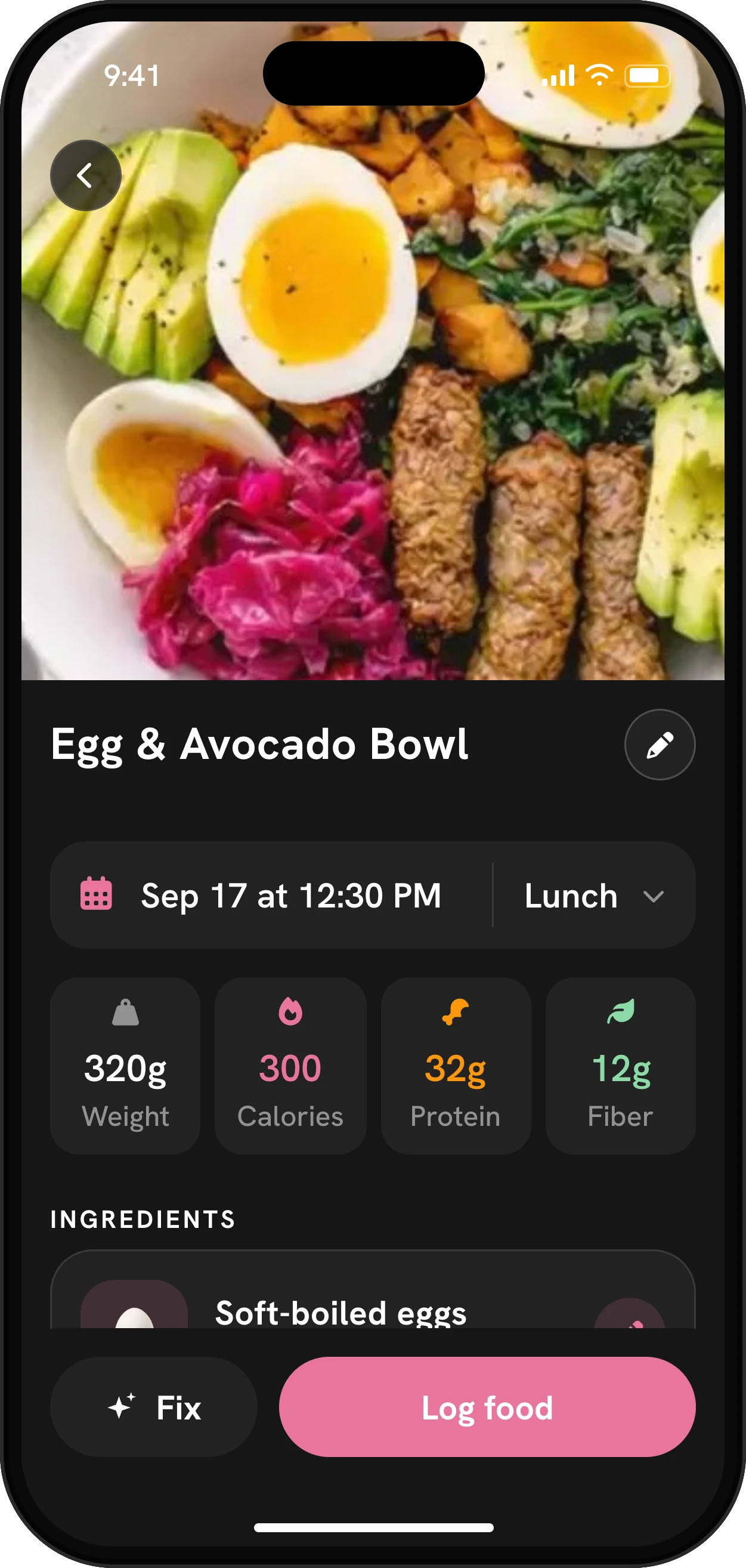
Every meal in the GLP-1 food tracker shows its fiber, whether you logged it with an AI photo or voice note, typed it, searched or scanned a barcode. It all adds up on the fiber card.
For a fiber supplement like psyllium, create it once as a custom food from its label and log it like any other food.
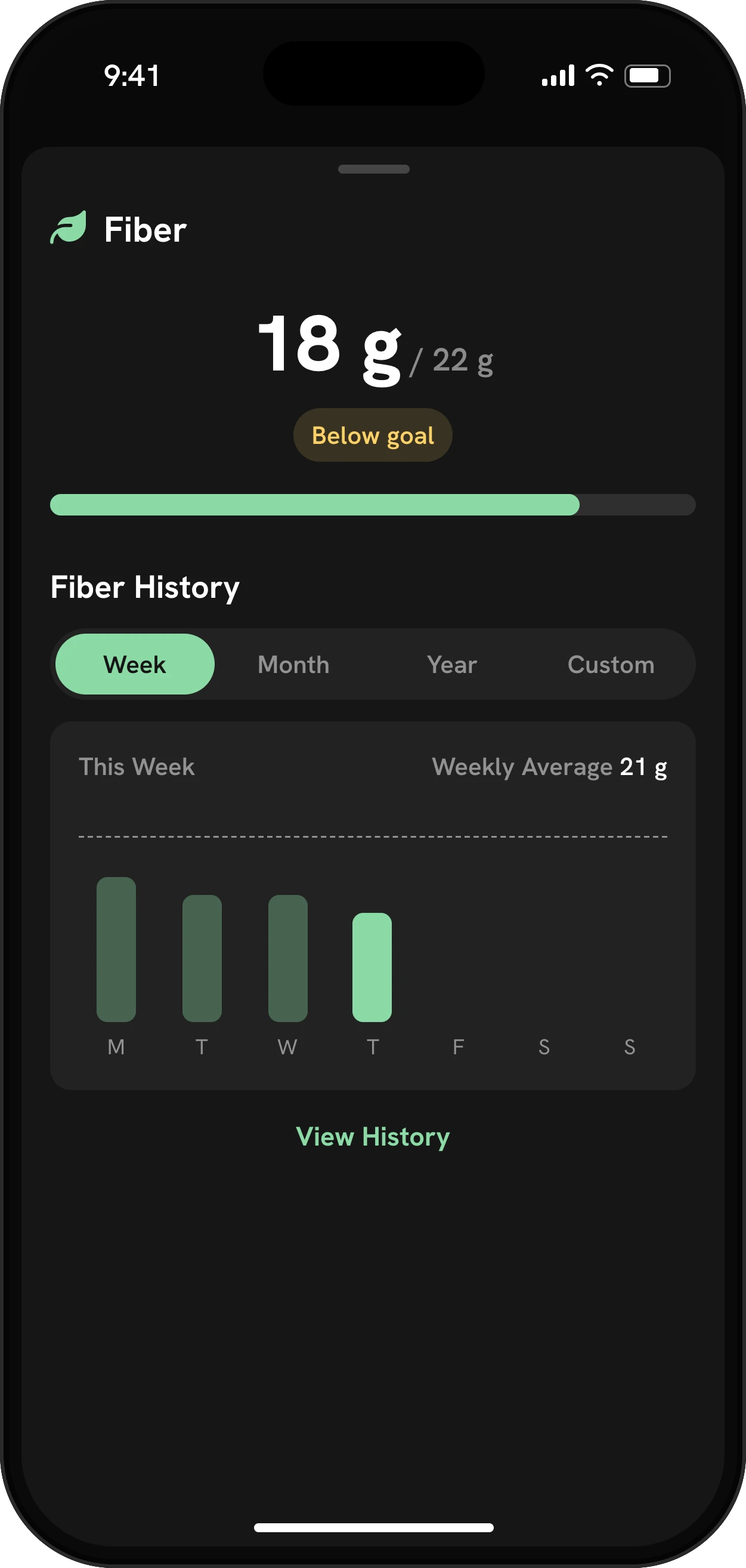
Open the card for the full fiber sheet: your goal, today’s status and your past days.
Where the fiber in your meals comes from
Fiber numbers depend on how a meal was logged. Scanned products use the label’s dietary fiber. Foods from the search use the database values, from Open Food Facts and USDA FoodData Central. AI estimates from a photo, voice note or text give fiber per ingredient, and you can correct any of them. If you rely on a particular high-fiber bread or cereal, scanning it once gives you the exact number every time after.
Fiber logged in another app doesn’t carry over: Mingo counts the fiber in the meals and foods you log in Mingo.
Soluble, insoluble and the label
Fiber comes in two broad kinds. Soluble fiber, found in oat bran, barley, beans, lentils and psyllium, absorbs water and forms a gel. Insoluble fiber, found in wheat bran, whole grains and many vegetables, adds bulk (MedlinePlus). Most foods have some of both, and US labels list only the total as “Dietary Fiber”, so Mingo counts the total. Variety across the week covers both kinds without you having to split them.
Raise fiber slowly, and drink with it
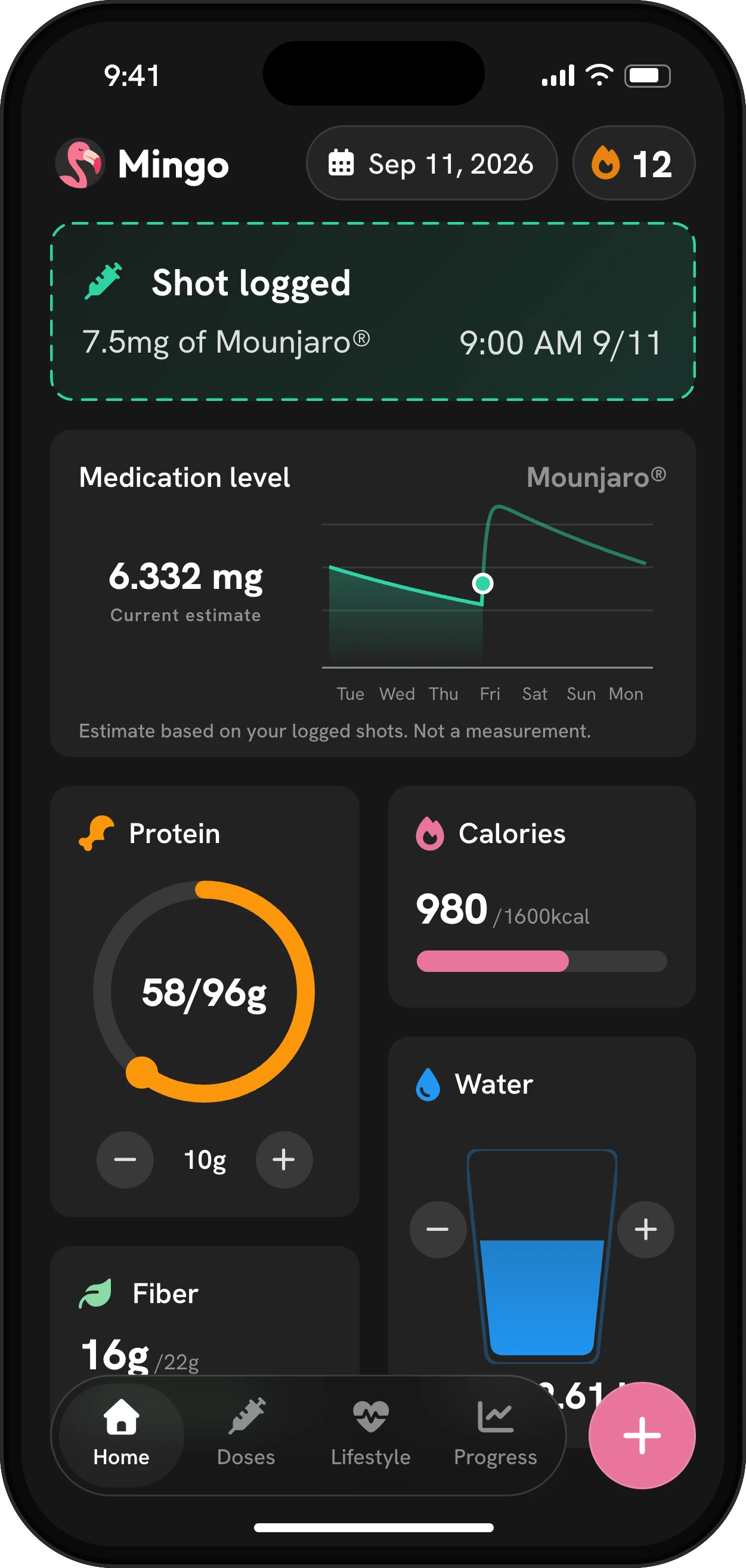
Fiber pulls water into the gut. Without enough fluid it can make constipation worse, not better. That’s why Mingo puts your water tracker right next to fiber on the Home screen.
The joint advisory suggests building up fiber from foods gradually and names prunes and other dried fruit as options, adding that fiber supplements may also help. In practice, a few small steps work for many people:
- Add one higher-fiber food at a time: oats, beans, lentils, berries, pears, chia.
- Watch your fiber and water cards together for a few days before adding more.
- Note bloating or constipation in Mingo’s side-effect log so you can see whether changes help.
If constipation lasts, is severe or comes with pain or vomiting, contact your prescriber rather than adding more fiber.

