Food noise, in plain words
People started saying “food noise” online to describe something many of them had never had a name for: thoughts about food that keep coming back whether you’re hungry or not. Planning dinner during a meeting. Thinking about the snack drawer while you’re trying to fall asleep. Negotiating with yourself about a cookie for twenty minutes.
Everyone thinks about food. It turns into noise when the thoughts feel constant, hard to switch off and get in the way of other things. That’s roughly what the Food Noise Questionnaire asks about. Researchers at Pennington Biomedical published it in 2025: five statements, rated by how true they feel, with good reliability when people took it twice a week apart. You can score yourself in a minute with our food noise quiz.
It’s common. In a 2026 survey of 1,000 US adults, weighted to match the population, about half said they had food noise at least occasionally, and nearly 1 in 5 said often or always. Frequent food noise was reported more by women, younger adults, people who were restricting their diet and people who said they lose control over eating.
Noise, hunger and cravings are different things
It helps to separate three things that feel alike:
- Hunger is your body asking for food. It builds over hours, and eating settles it.
- A craving is a pull toward one food, often set off by something: a smell, an ad, a bad day. It usually passes once you’ve eaten or the trigger is gone.
- Food noise is the background chatter. It can run with no trigger, between meals and even while you’re eating, and it isn’t about one food in particular.
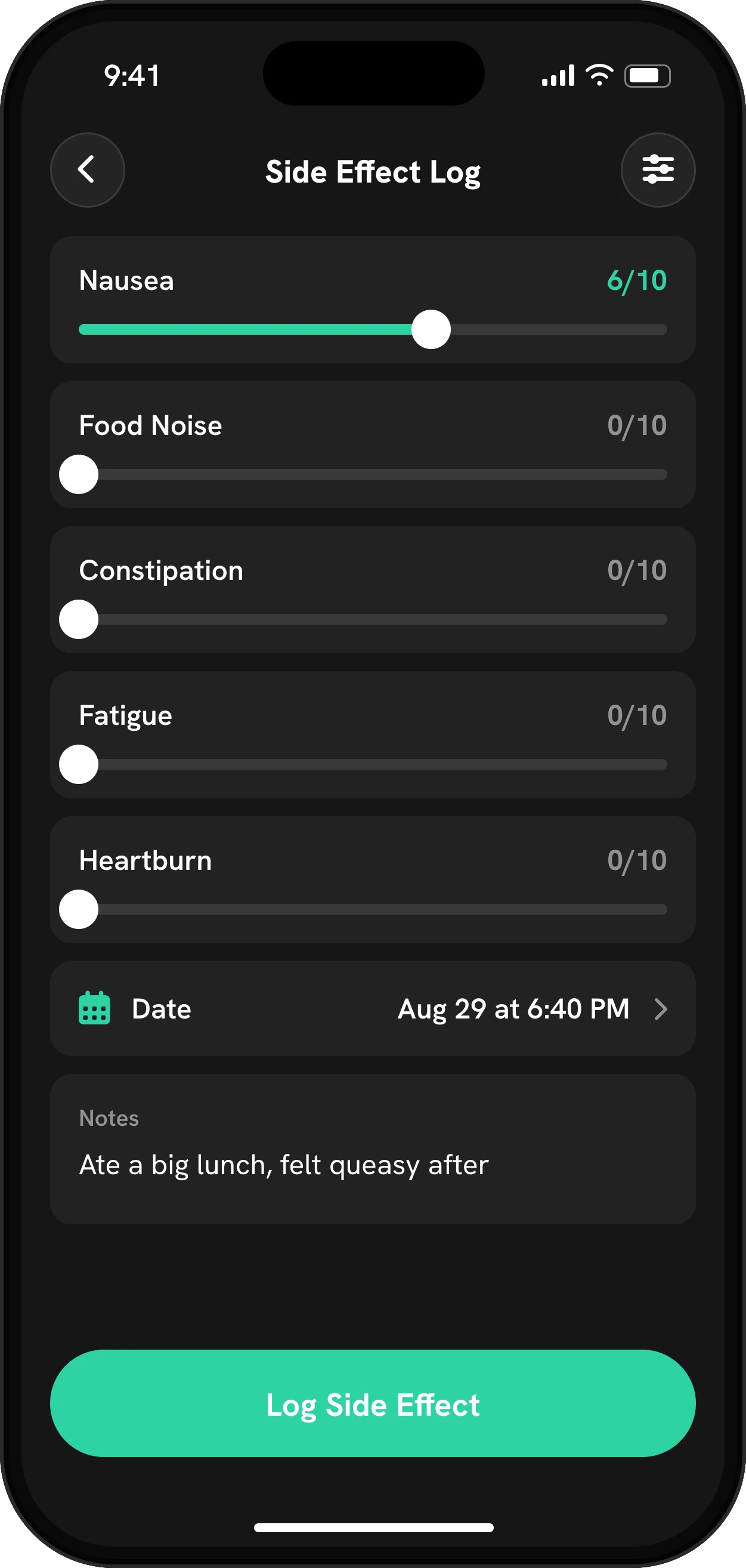
The difference matters when you track it. If you rate “how hungry was I,” you’ll get a different line than if you rate “how much did food take over my head today.” In Mingo, rate the second one. If appetite is what you want to follow, suppressed appetite has its own entry right next to it.
What GLP-1 medicines seem to do
Many people starting Ozempic, Wegovy, Mounjaro or Zepbound say the first thing they noticed wasn’t the scale. It was the quiet. Trials haven’t measured “food noise” by that name yet, but they’ve measured things close to it. In a trial of semaglutide 2.4 mg, people reported less hunger, fewer food cravings and better control of eating than on placebo, and they ate less at a lunch they could serve themselves.
Two honest caveats. First, people respond differently, and some feel little change. Second, many people say the noise drifts back late in the week, before the next shot, or for a while after a missed dose. A trial average can’t show you your own week. A daily rating can.
How to rate it so the data means something
You don’t need a long diary. Three habits are enough:
- Rate it once a day, at the same time. The evening works well, because you can look back over the whole day.
- Keep the scale steady. In Mingo it’s 0 to 10. A 3 should feel like a 3 next month too. If it helps, anchor it: 0 means you barely thought about food outside meals, 10 means it ran all day.
- Log your shots. Without your doses, ratings are just numbers. With them, Mingo can place each rating on your shot week.
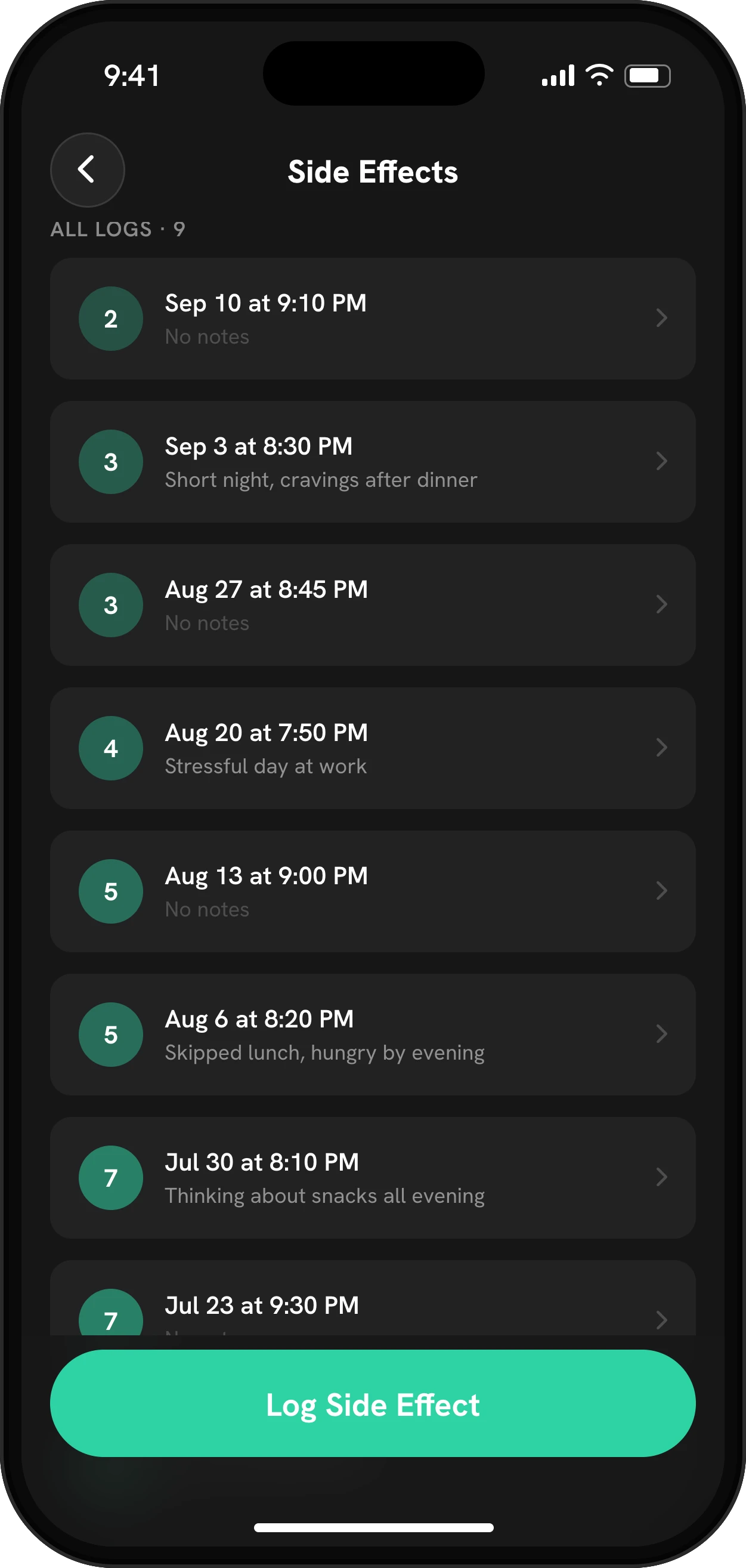
Add a note on days that stand out. A short night, a stressful day, alcohol or a skipped lunch can all make food thoughts louder, and a note helps you tell those days apart from a pattern tied to your medicine.
Take the quiz once before you start and again after a month or two. The quiz is a snapshot; your daily ratings show the movement in between.
Reading your shot week
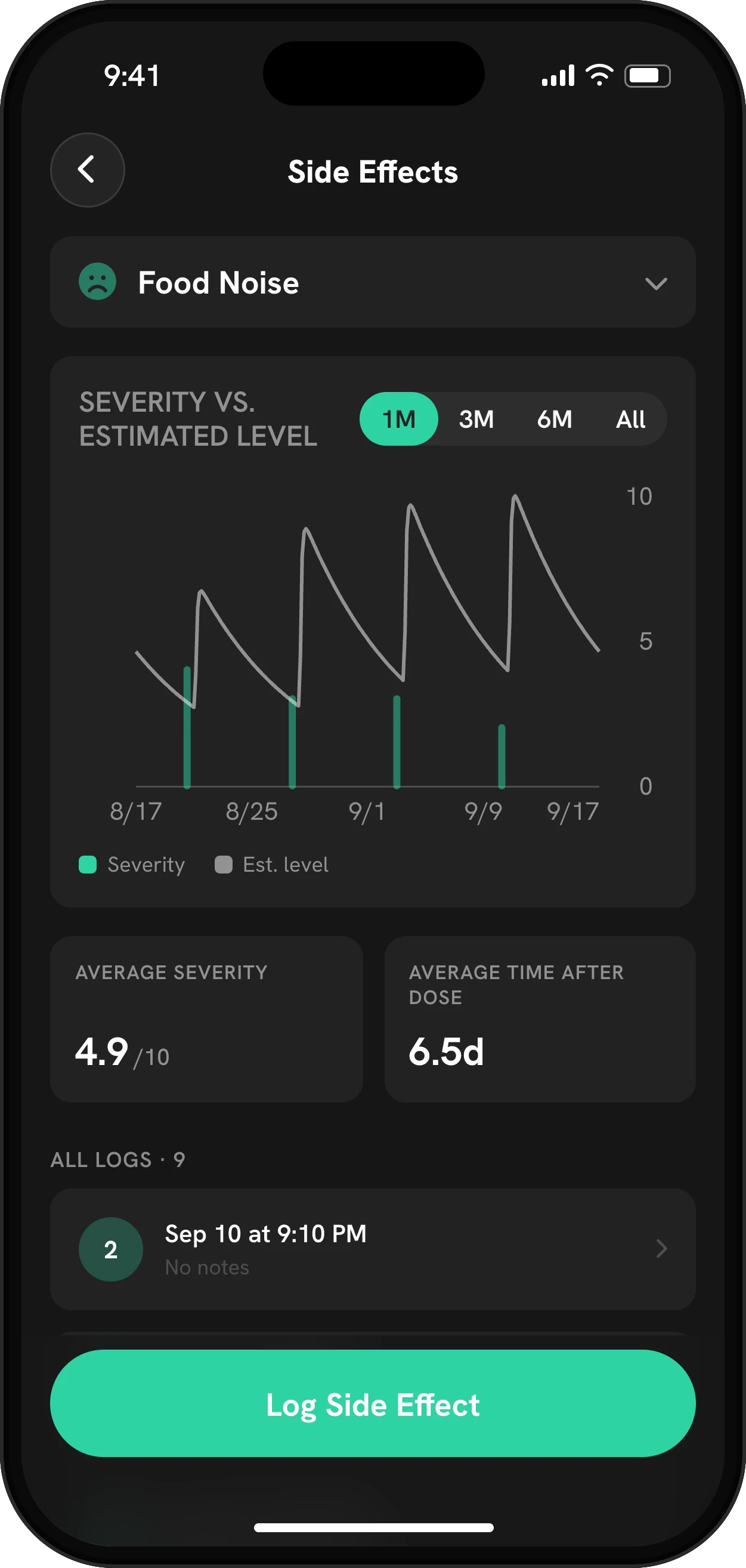
After a few weeks, open Food Noise in the side effect charts. The bars are your ratings; behind them runs the curve of your estimated medication level. Look for one of these shapes:
- Louder at the end of the shot week. Ratings climb on the last days before your shot, when the estimated level is lowest. Mingo’s “time after dose” number will drift toward the end of the week.
- Loud on the same weekday, whatever the shot day. That usually points to routine, like a hard Monday or a social weekend, more than the medicine.
- A change after a dose step. The first weeks on a new dose can look different from the weeks after, so keep rating after each step.
The curve is an estimate from the doses you log and the published half-life of your medicine, not a measurement. It’s good for timing and patterns, not for exact amounts. The medication level page explains how it’s drawn.
What to do with the pattern
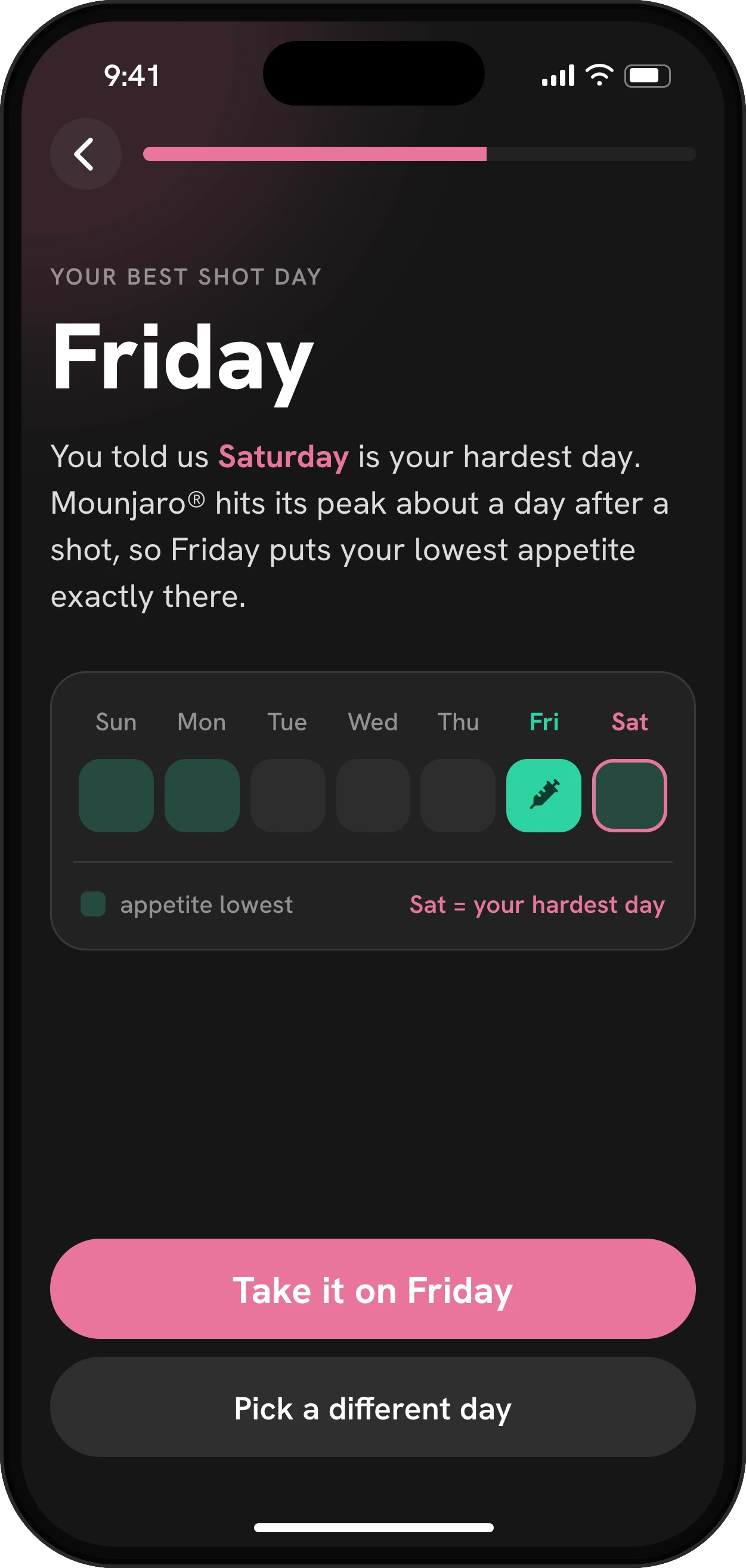
If the noise peaks on a predictable day, you have options to talk through. When you set up Mingo, you can tell it the day your cravings are usually worst, and it suggests a shot day that puts your estimated level higher on that day; the best day for your shot page explains how. Your food noise log then shows whether it helped.
Don’t move your shot day or change your dose based on a chart alone. The labels have rules for changing the day of a weekly shot, and they differ by medicine. Bring your chart to your prescriber, or export the doctor report, which shows your side effect logs next to your doses.
Food noise isn’t only about medicine. There’s no proven fix yet, but regular meals, enough sleep and fewer food cues within sight are the usual starting points, and very strict dieting may make it worse rather than better. Eating enough protein can be the harder problem once the noise goes quiet; the protein calculator gives you a daily target to discuss with your care team.
When to ask for help
If thoughts about food feel out of control, come with episodes of eating a lot while feeling unable to stop, or are tangled up with guilt and distress, tell your doctor. That’s worth more than any chart, and a dietitian or therapist who works with eating can help.
Food noise is one of 18 built-in symptoms in Mingo’s side effect tracker, alongside nausea. Mingo is a tracker, not medical advice.

