Where to inject Ozempic and the other weekly pens
Ozempic goes under the skin, into the fatty layer, of one of three areas: the stomach (abdomen), the thigh or the upper arm. The Ozempic Medication Guide adds that it should never go into a muscle or a vein. The other weekly GLP-1 pens use the same three areas, with a few differences in the fine print:
| Medicine | Areas on the US label | Extra detail in the label or instructions for use |
|---|---|---|
| Ozempic (semaglutide) | Abdomen, thigh, upper arm | Rotate with each injection. Prefilled syringe: at least 2 inches from the belly button, back of the arm only with help. With insulin: same area is fine, but not next to each other |
| Wegovy (semaglutide) | Abdomen, thigh, upper arm | Rotate the site with each dose |
| Mounjaro (tirzepatide) | Abdomen, thigh, upper arm | Back of the upper arm only when someone else injects you |
| Zepbound (tirzepatide) | Abdomen, thigh, upper arm | Back of the upper arm only when someone else injects you |
Sources: Ozempic, Wegovy, Mounjaro and Zepbound prescribing information, Medication Guides and instructions for use.
The labels don’t rank the three areas, and they don’t say one works better than another. Many people start with the stomach because it’s easy to see and reach, but the thigh is just as valid. Pick what you can do comfortably and correctly, and let your prescriber, nurse or pharmacist show you the first time.
What rotating actually means
The Ozempic label asks for a different injection site each week when you stay in the same body region, and the Medication Guide puts it plainly: don’t use the same site for each injection. So rotating doesn’t mean changing body part every week. Moving from the left side of your stomach to the right side counts, as long as it isn’t the exact spot you used last time.
The labels stop there. Some guides online add rules of their own, like a set number of inches between spots or a fixed clock pattern around the navel. Those can be handy habits, but they aren’t in the prescribing information, so agree on the details with your care team rather than treating them as requirements.
Why rotate at all
The labels give the instruction but not the reason, so here is what’s known. Most of the research on injecting into the same spot comes from insulin, which people inject several times a day. There, repeated shots into one area can cause lipohypertrophy: a rubbery, raised patch of fatty tissue under the skin. A 2026 international expert panel found it in 29 to 76% of people who use insulin, named poor site rotation as the strongest risk factor you can change, and noted that insulin injected into those patches is absorbed unpredictably (Guo et al., Diabetes Research and Clinical Practice 2026).
A weekly GLP-1 means far fewer injections than insulin, and there is little research on lipohypertrophy with these medicines, so the risk isn’t known to be the same. What is known is that the skin itself can react: in the Ozempic trials, injection-site reactions such as discomfort or redness were reported in 0.2% of people (Ozempic prescribing information). Rotating follows the label, gives each spot a rest, and if one ever turns red, sore or lumpy, a log of where every shot went tells you and your doctor exactly which doses landed there.
Why rotating is harder than it sounds
With a weekly shot, seven days pass between injections. That’s long enough to forget which side you used, especially if you inject in different rooms or at different times. Some people settle into one favorite spot without noticing. Others alternate in their head and lose count after a busy week.
The fix is simple: write it down each time. A paper chart on the fridge works if you never forget to fill it in. An app works because the question is asked at the moment you log the shot, and the answer from last week is already on the screen.
How Mingo tracks your injection sites
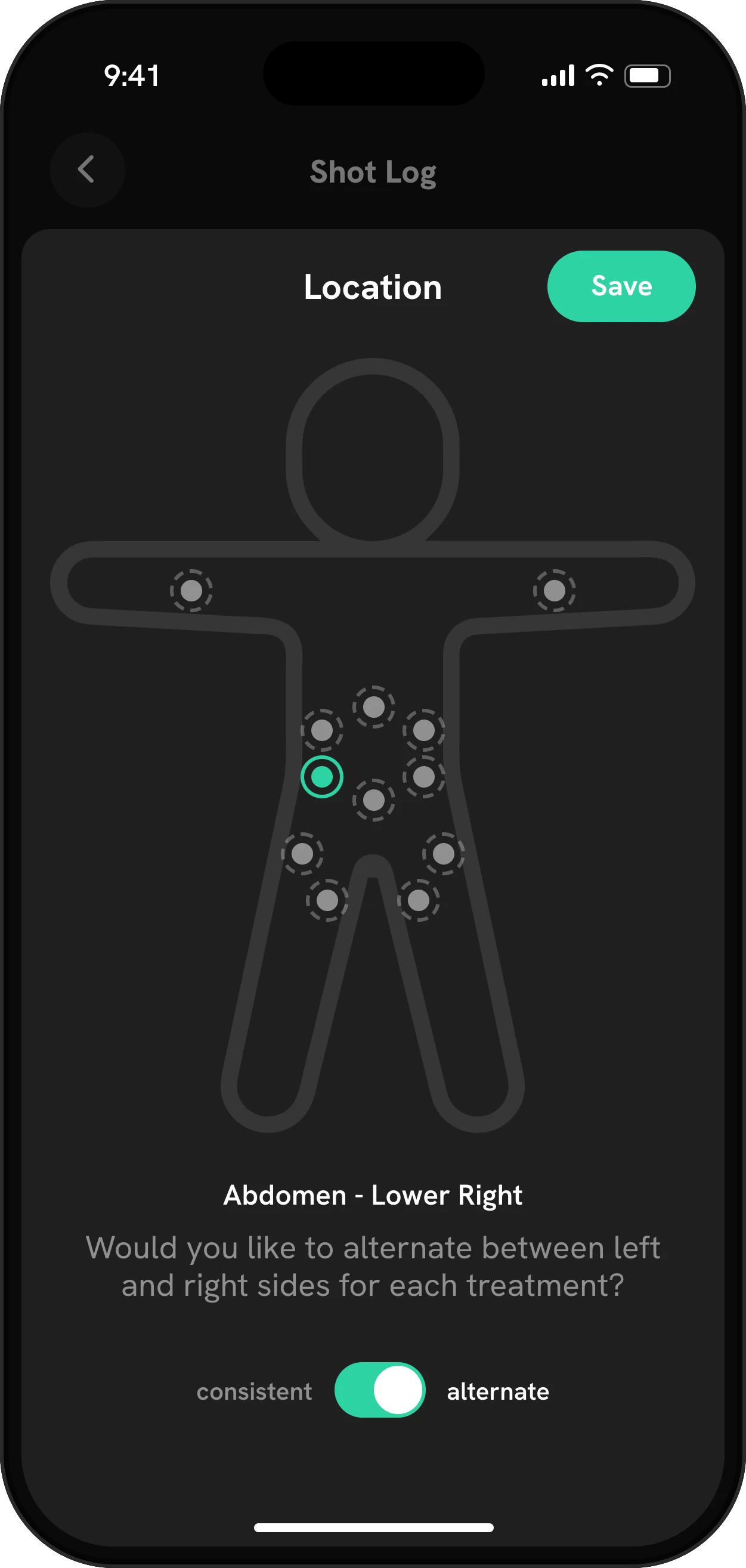
When you log a shot, Mingo opens a body map with 12 spots:
- Abdomen: upper left, upper center, upper right, lower left, lower center and lower right.
- Thighs: inner and outer, on each leg.
- Arms: left and right.
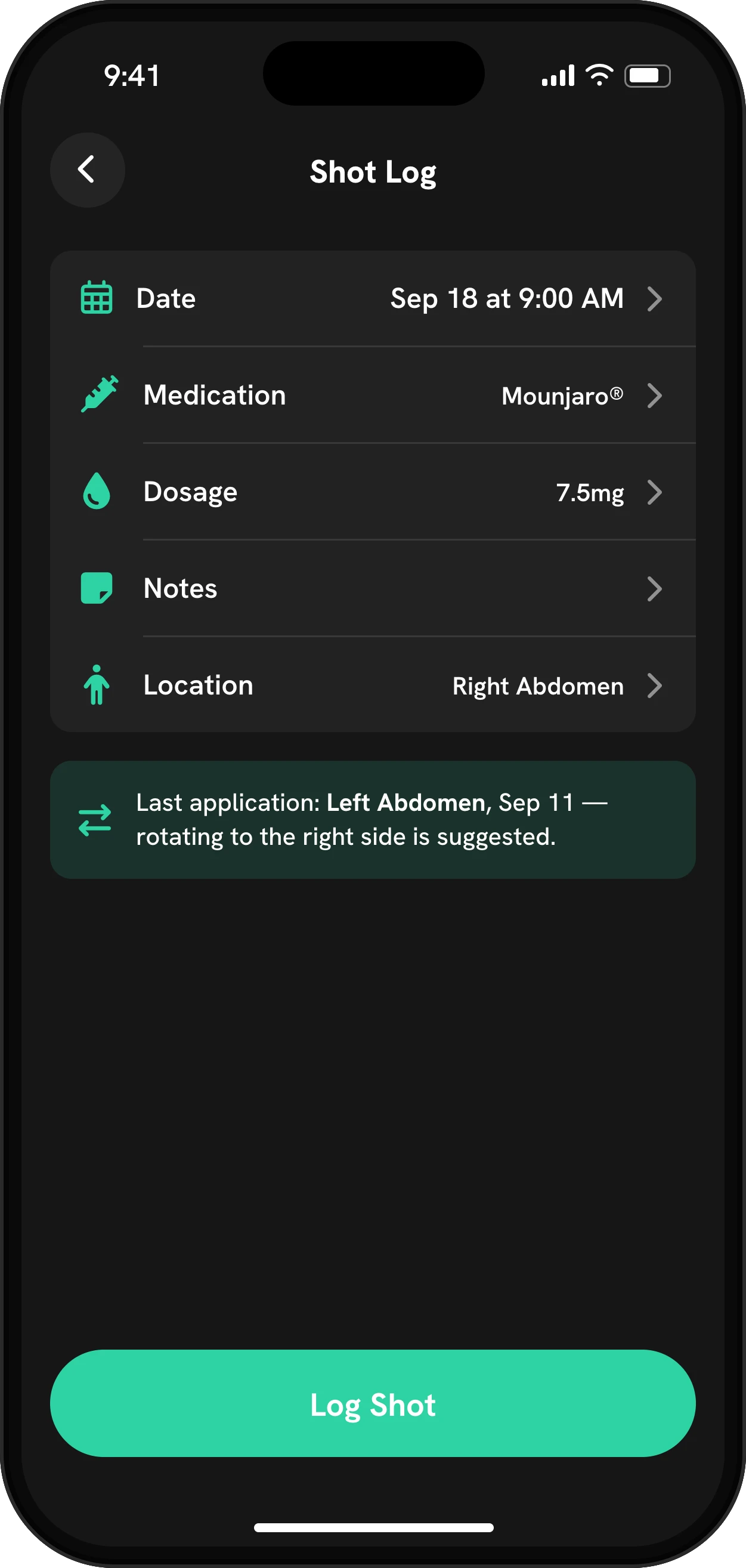
Above the map, a line tells you where and when you injected last, and which side Mingo suggests this time. With the alternate switch on, the suggestion is always the opposite side of your previous shot. You can still pick any spot you like. The suggestion is a reminder, not a rule.
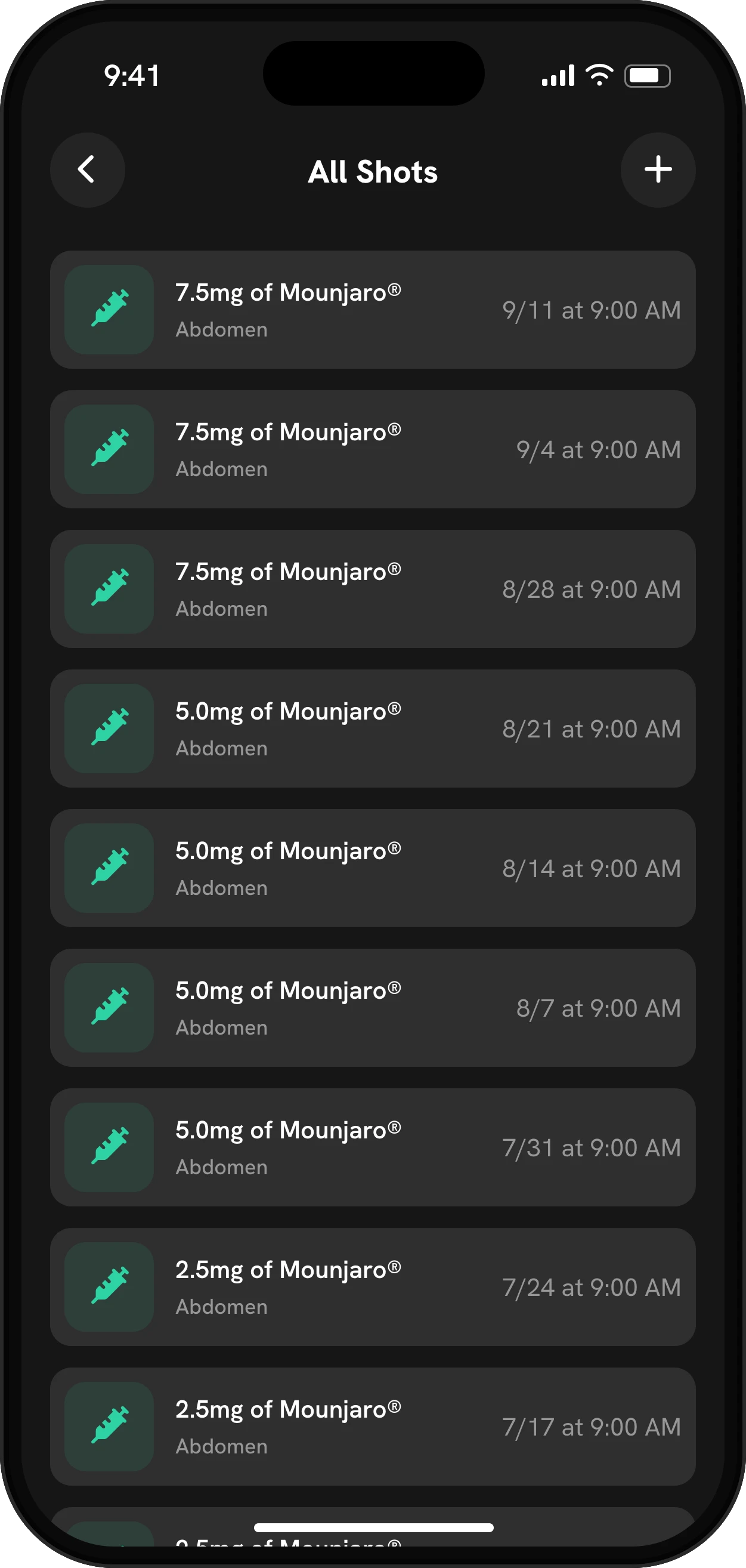
The spot is saved with the dose, date and any note, and the treatment screen shows the location of your last shot next to your last dose. Over weeks, your shot history becomes a record of where every dose went. If you ever wonder whether you’ve been favoring one side, scroll back through your shots and the pattern is right there, next to the dose and date of each one. It’s also handy to show your nurse or pharmacist if a spot keeps bothering you.
Two common ways to rotate
Many people find it easiest to pick one area for a while, such as the abdomen, and move between its spots, switching sides each week. Others rotate across areas: abdomen one week, thigh the next. Both fit within the labels as long as the site changes with each dose. Which areas suit you depends on your body, your comfort and what your care team has shown you. If you want a printable plan, our injection site calculator lays out a rotation across the weeks ahead.
When a site reacts
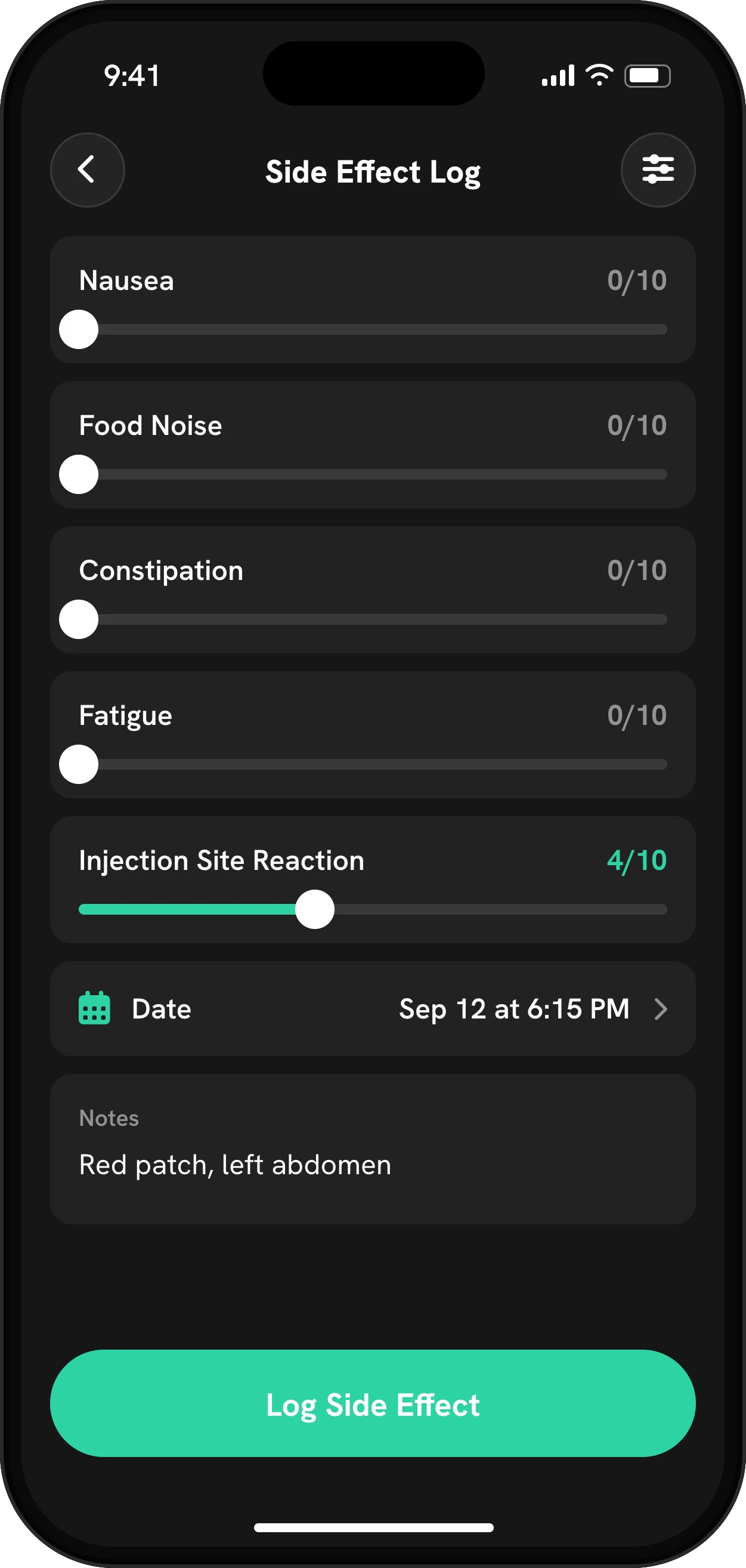
Redness, itching or a small bump where you injected can happen. Mingo’s side effect list includes injection site reaction, rated from 0 to 10, so you can note it on the day and see whether it keeps happening at the same spot. If a reaction doesn’t settle, spreads or worries you, tell your prescriber or pharmacist. Our guide to GLP-1 side effects covers what’s common and when to call.
Part of your shot log
Site rotation is one part of the GLP-1 shot tracker. The same log keeps your dose, follows your schedule and powers the medication level estimate. For first-time injectors, our practical guide to weight-loss injections walks through the routine around the shot itself.

