Why the tape measure matters on a GLP-1
The scale weighs everything at once: fat, muscle, water, last night’s dinner. On a GLP-1, when weekly weight loss slows after the first months, a tape measure often shows progress the scale doesn’t. Your waist can keep shrinking through a two-week stall, and that’s worth knowing before you decide nothing is happening.
There’s a health reason too. Fat around the middle carries more risk than fat elsewhere, and the waist is where many people see the clearest change. The NIH’s National Heart, Lung, and Blood Institute counts a waist over 35 inches for women or over 40 inches for men as higher risk for heart disease and type 2 diabetes. NICE, the UK’s health guidance body, puts it relative to height: keep your waist under half your height. You can check yours with the waist to height ratio calculator.
Where to measure, spot by spot
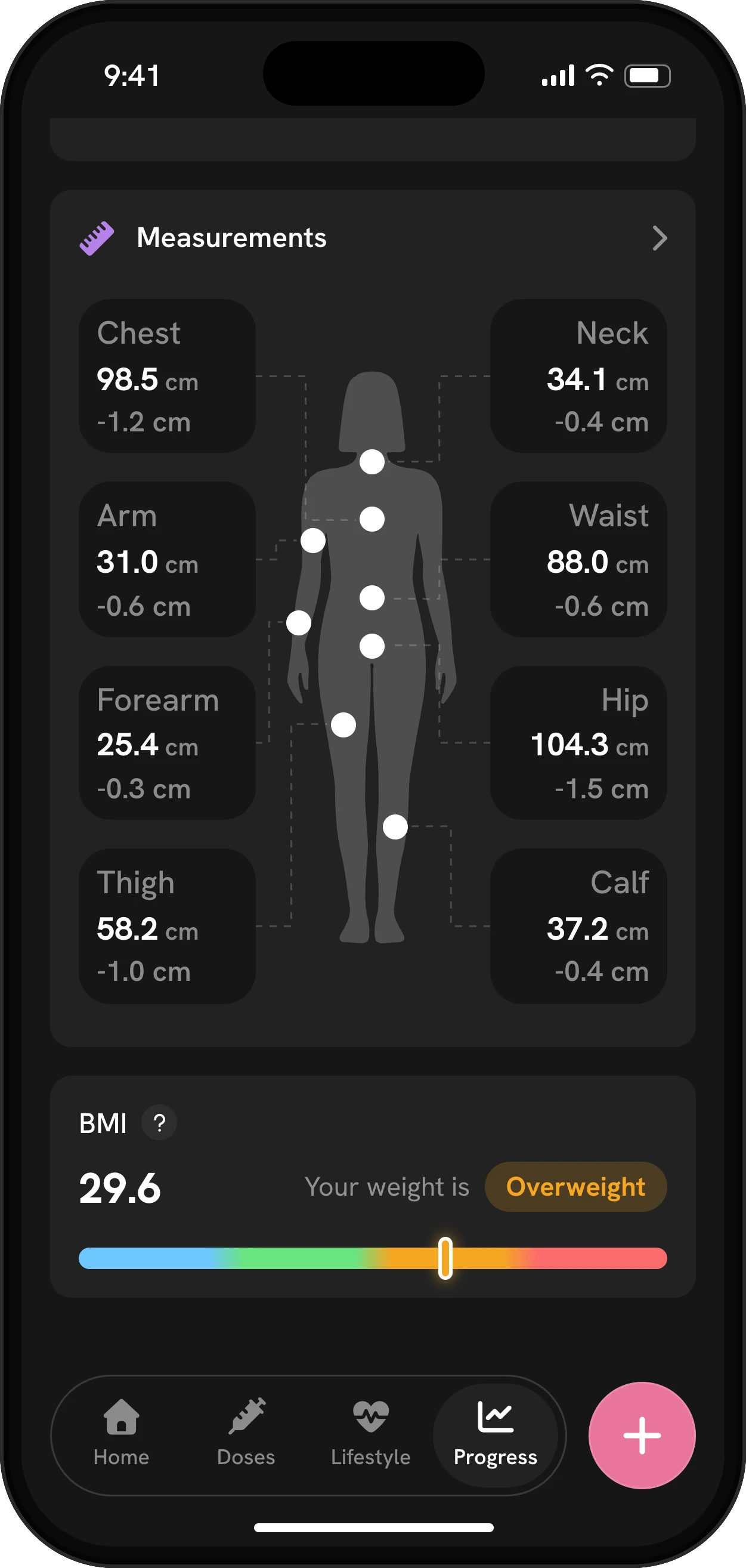
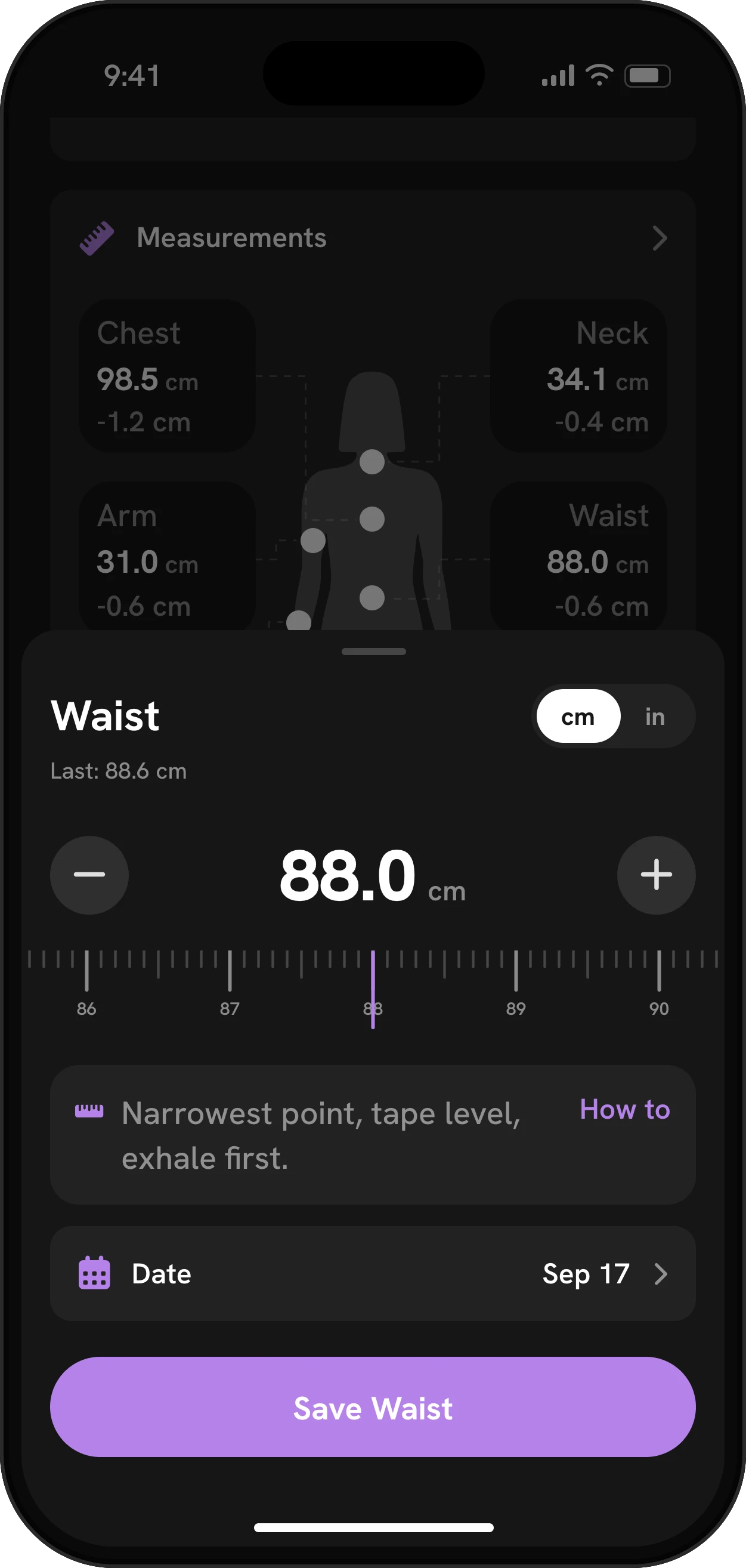
Mingo shows the eight spots as dots on a body outline. Tap one and the how-to opens, so you measure the same place every time:
| Spot | Where the tape goes |
|---|---|
| Waist | Narrowest point, tape level, after you breathe out |
| Hips | Widest part, feet together |
| Chest | Fullest part, tape level, arms relaxed |
| Arm | Widest part of the upper arm, relaxed at your side |
| Forearm | Widest part, arm relaxed |
| Thigh | Widest part, standing with your weight even |
| Calf | Widest part, standing relaxed |
| Neck | Narrowest area, head forward, shoulders down |
The waist has more than one “right” spot
Read three guides and you’ll find three waists. Some say the narrowest point, some say the belly button, and the NIH says just above the hip bones. They give different numbers on the same body, sometimes by a couple of inches.
For tracking, that doesn’t matter much. What matters is that week 12 is measured where week 1 was. If you want to compare yourself with the NIH cutoffs above, use their spot (just above the hip bones, after breathing out). If you’re only watching the trend, Mingo’s narrowest-point guide is fine. Pick one, note it, and don’t switch halfway.
Getting numbers you can trust
Small habits make the difference between a trend and noise:
- Same conditions. Mingo suggests the morning, after waking up and using the bathroom.
- A soft tape. A tailor’s tape, snug on the skin but not pressing in.
- Bare skin or thin clothing. Measure over the same layer every time.
- Twice, then average. If the two readings differ, take the middle.
- A mirror or a helper. Chest and hips are hard to keep level on your own.
- Weekly at most. Mingo’s hint says once a week is plenty. Daily inches mostly measure water and breathing.
If you’re pregnant, or your belly is swollen for a medical reason, waist numbers won’t mean what they usually do. Talk to your care team about what to track instead.
Body fat and muscle mass
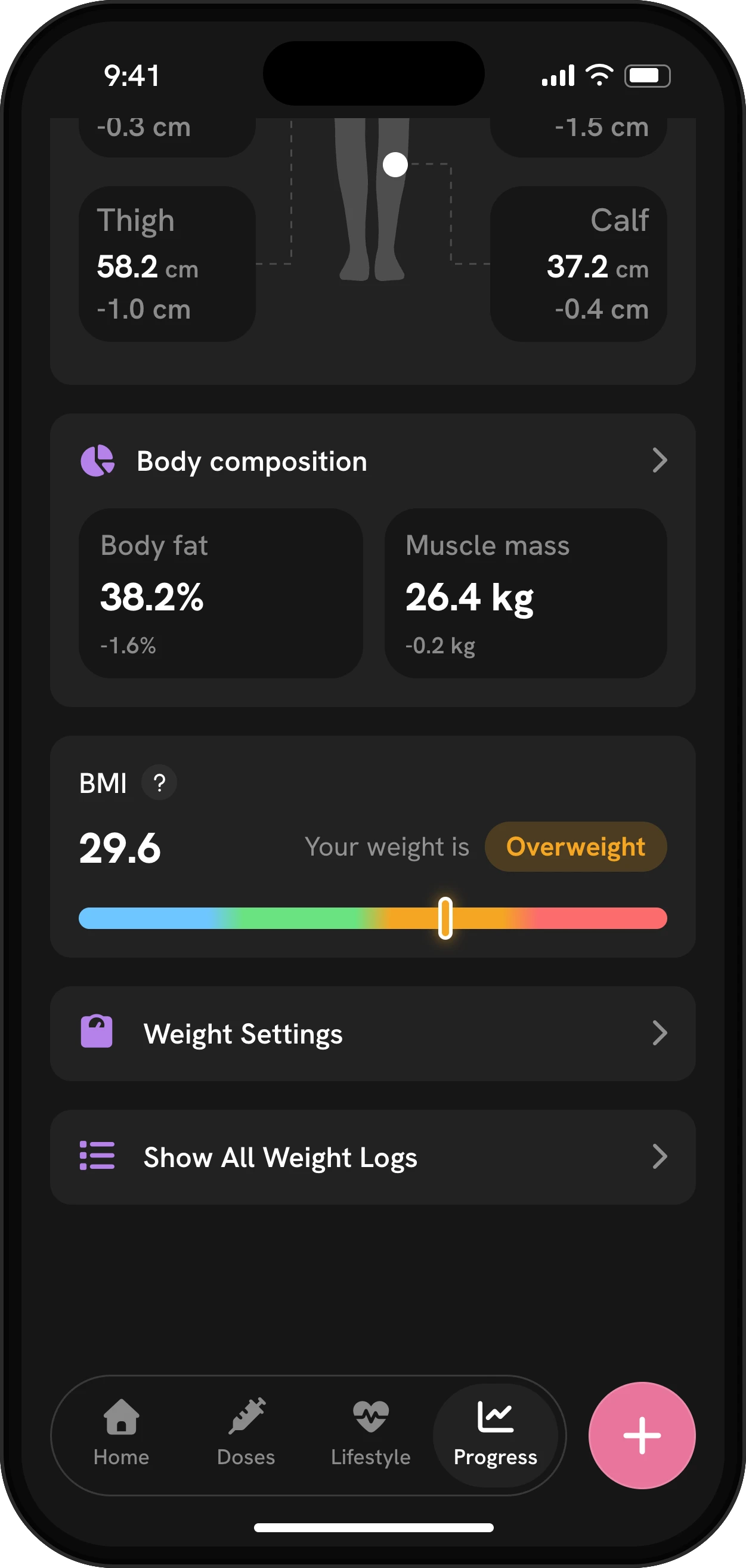
Many bathroom scales now estimate body fat and muscle mass. Mingo has a Body composition card where you log what the scale shows: body fat as a percentage, and muscle mass in pounds or kilograms, whichever you use for weight. Like the tape measurements, each shows the change since your last entry.
These scales estimate from an electrical signal, and readings shift with hydration, so a single number isn’t very reliable. The trend on the same scale, under the same conditions, is what to watch.
Muscle, fat and what the scans showed
A common worry on Ozempic, Wegovy, Mounjaro or Zepbound is losing muscle. Body-scan substudies of the big trials give a clearer picture. In SURMOUNT-1, about three quarters of the weight lost on tirzepatide was fat and about a quarter was lean mass, the same split seen on placebo. In STEP 1, fat mass fell 19.3% and lean mass 9.7% on semaglutide 2.4 mg, so lean mass made up a larger share of the body at the end than at the start. People do lose some lean mass, as with any weight loss, but most of what goes is fat.
If you want an estimate of your own lean mass, the lean body mass calculator uses a published formula. Protein is the usual focus for keeping muscle, and the protein tracker puts your daily target on the Home screen. Ask your care team what’s right for you.
Putting it together
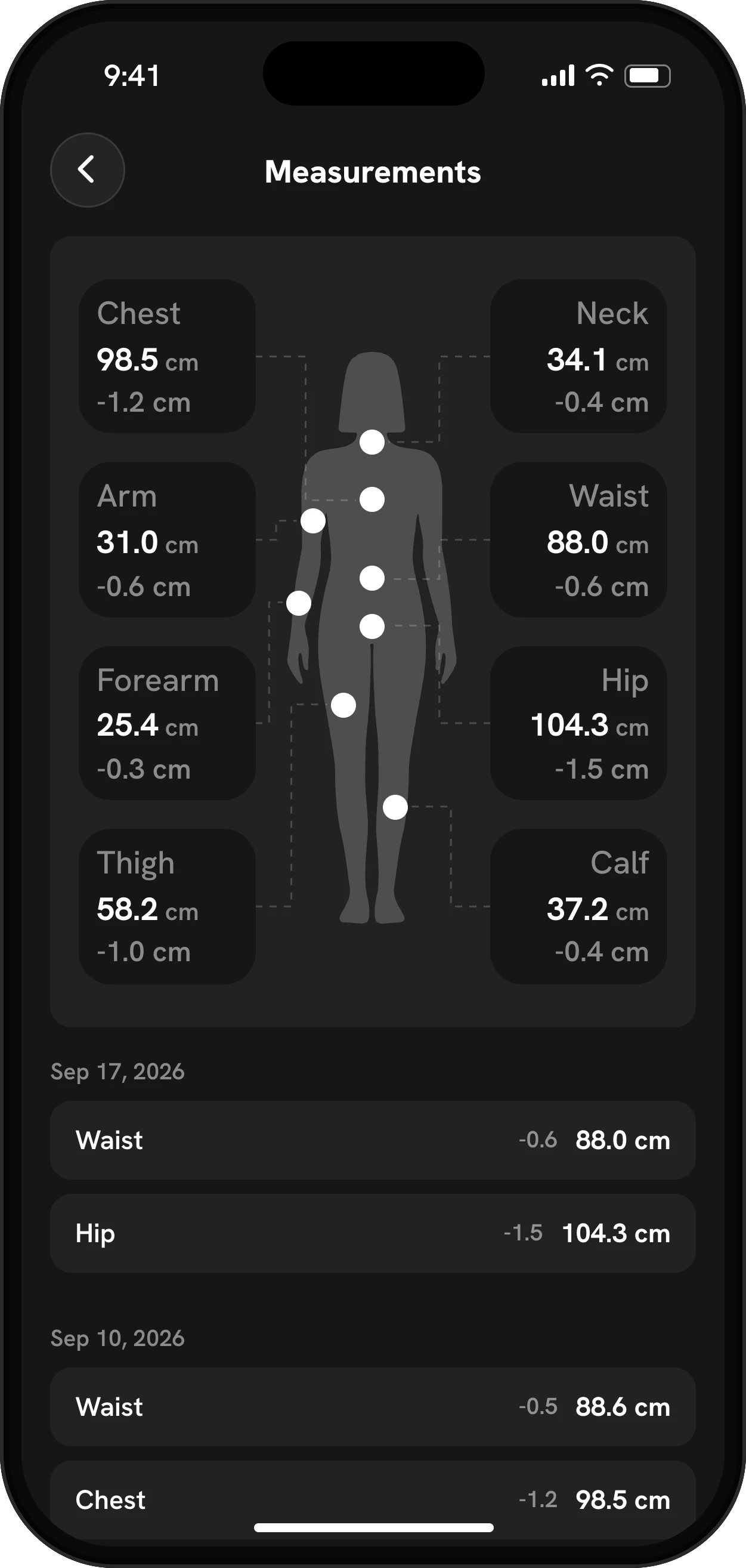
Measurements sit on the Progress tab with your weight chart, where the line is colored by the dose you were on, and next to your progress photos. Open the measurements history to see every entry by day with the change from the one before, and fix or delete a typo. When the scale stalls, look at all three before drawing conclusions. A month in which your weight held steady but your waist dropped an inch is a good month, and worth telling your prescriber about. Your BMI won’t show that; the tape will.
Mingo is a tracker, not medical advice.

